Taherkhani Shima, Valaei Kosar, Arazi Hamid, Suzuki Katsuhiko
Department of Exercise Physiology, Faculty of Sport Sciences, University of Guilan, Rasht 4199843653, Iran.
Faculty of Sport Sciences, Waseda University, 2-579-15 Mikajima, Tokorozawa 359-1192, Japan.
Antioxidants (Basel). 2021 Sep 27;10(10):1528. doi: 10.3390/antiox10101528.
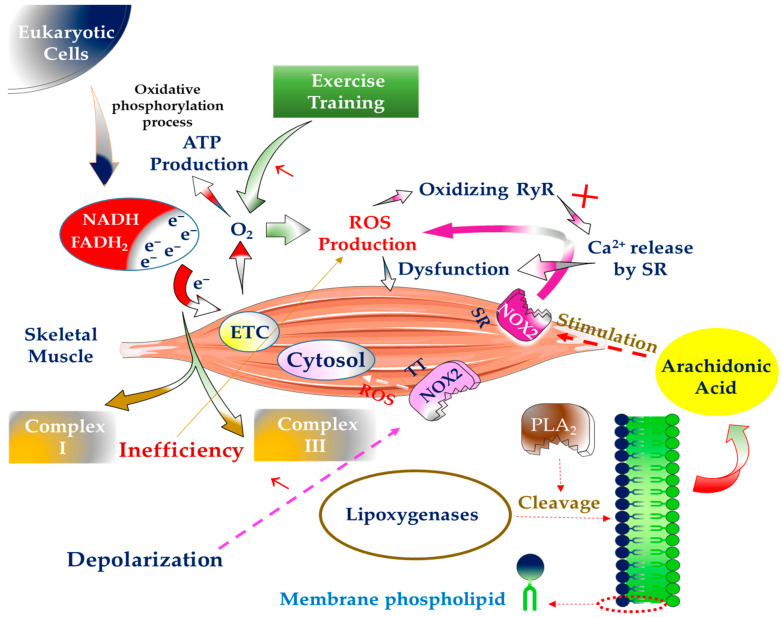
One of the essential injuries caused by moderate to high-intensity and short-duration physical activities is the overproduction of reactive oxygen species (ROS), damaging various body tissues such as skeletal muscle (SM). However, ROS is easily controlled by antioxidant defense systems during low to moderate intensity and long-term exercises. In stressful situations, antioxidant supplements are recommended to prevent ROS damage. We examined the response of SM to ROS generation during exercise using an antioxidant supplement treatment strategy in this study. The findings of this review research are paradoxical due to variances in antioxidant supplements dose and duration, intensity, length, frequency, types of exercise activities, and, in general, the lack of a regular exercise and nutrition strategy. As such, further research in this area is still being felt.
中高强度短时间体育活动造成的基本损伤之一是活性氧(ROS)的过度产生,这会损害各种身体组织,如骨骼肌(SM)。然而,在低至中等强度的长期运动中,ROS很容易被抗氧化防御系统控制。在压力情况下,建议使用抗氧化补充剂来预防ROS损伤。在本研究中,我们采用抗氧化补充剂治疗策略,研究了运动期间骨骼肌对ROS产生的反应。由于抗氧化补充剂的剂量和持续时间、强度、时长、频率、运动活动类型等方面存在差异,而且总体上缺乏常规的运动和营养策略,这项综述研究的结果自相矛盾。因此,该领域仍需进一步研究。