Freitas Lucas F, Ferreira Aryel H, Thipe Velaphi C, Varca Gustavo H C, Lima Caroline S A, Batista Jorge G S, Riello Fabiane N, Nogueira Kamila, Cruz Cassia P C, Mendes Giovanna O A, Rodrigues Adriana S, Sousa Thayna S, Alves Victoria M, Lugão Ademar B
Nuclear and Energy Research Institute, IPEN-CNEN/SP, Sao Paulo 05508-000, Brazil.
MackGraphe-Graphene and Nanomaterial Research Center, Mackenzie Presbyterian University, Sao Paulo 01302-907, Brazil.
Nanomaterials (Basel). 2021 Sep 30;11(10):2579. doi: 10.3390/nano11102579.
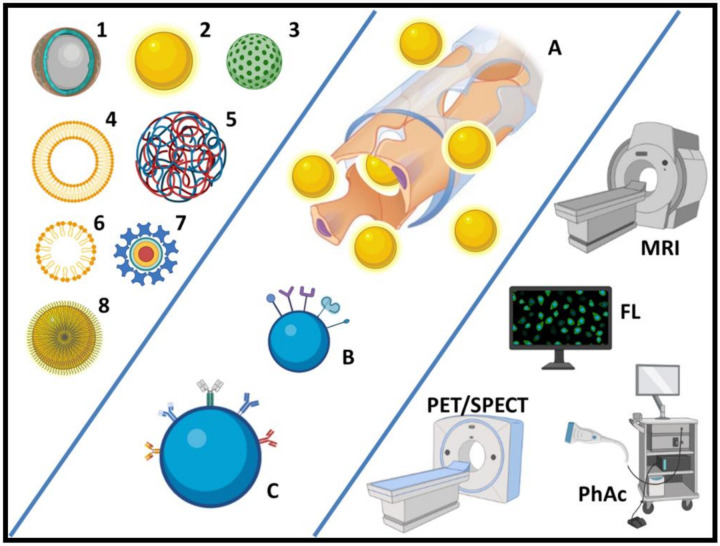
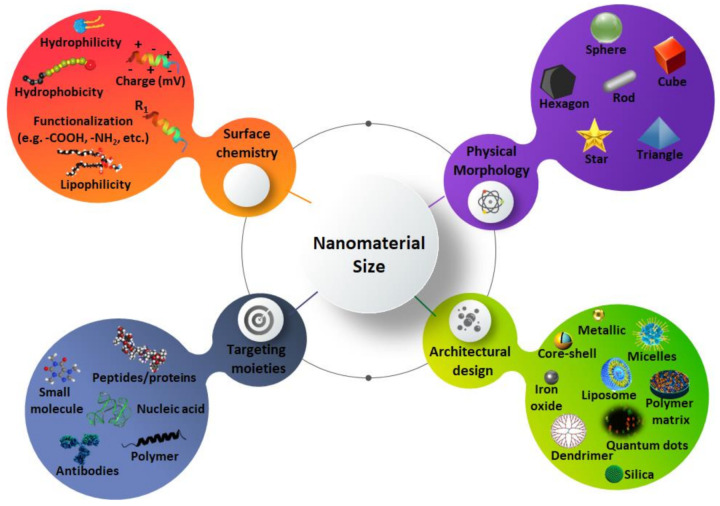
The synthesis and engineering of nanomaterials offer more robust systems for the treatment of cancer, with technologies that combine therapy with imaging diagnostic tools in the so-called nanotheranostics. Among the most studied systems, there are quantum dots, liposomes, polymeric nanoparticles, inorganic nanoparticles, magnetic nanoparticles, dendrimers, and gold nanoparticles. Most of the advantages of nanomaterials over the classic anticancer therapies come from their optimal size, which prevents the elimination by the kidneys and enhances their permeation in the tumor due to the abnormal blood vessels present in cancer tissues. Furthermore, the drug delivery and the contrast efficiency for imaging are enhanced, especially due to the increased surface area and the selective accumulation in the desired tissues. This property leads to the reduced drug dose necessary to exert the desired effect and for a longer action within the tumor. Finally, they are made so that there is no degradation into toxic byproducts and have a lower immune response triggering. In this article, we intend to review and discuss the state-of-the-art regarding the use of nanomaterials as therapeutic and diagnostic tools for lung, breast, and prostate cancer, as they are among the most prevalent worldwide.
纳米材料的合成与工程为癌症治疗提供了更强大的系统,其技术将治疗与成像诊断工具相结合,即所谓的纳米诊疗学。在研究最多的系统中,有量子点、脂质体、聚合物纳米颗粒、无机纳米颗粒、磁性纳米颗粒、树枝状大分子和金纳米颗粒。纳米材料相对于传统抗癌疗法的大多数优势源于其最佳尺寸,这可防止被肾脏清除,并由于癌组织中存在的异常血管而增强其在肿瘤中的渗透。此外,药物递送和成像的造影效率得到提高,特别是由于表面积增加以及在所需组织中的选择性积累。这种特性导致发挥预期效果所需的药物剂量减少,并且在肿瘤内的作用时间更长。最后,它们的制造方式使其不会降解为有毒副产物,并且引发的免疫反应较低。在本文中,我们打算回顾和讨论纳米材料作为肺癌、乳腺癌和前列腺癌治疗和诊断工具的最新进展,因为它们是全球最常见的癌症类型。