Bone and Soft Tissue Tumors Research Center of Yunnan Province, Department of Orthopaedics, Yunnan Cancer Hospital, The Third Affiliated Hospital of Kunming Medical University, Yunnan Cancer Center, Kunming, Yunnan, China.
Medical School, Kunming University of Science and Technology, Kunming, Yunnan, China.
Cell Death Dis. 2021 Oct 30;12(11):1037. doi: 10.1038/s41419-021-04324-0.
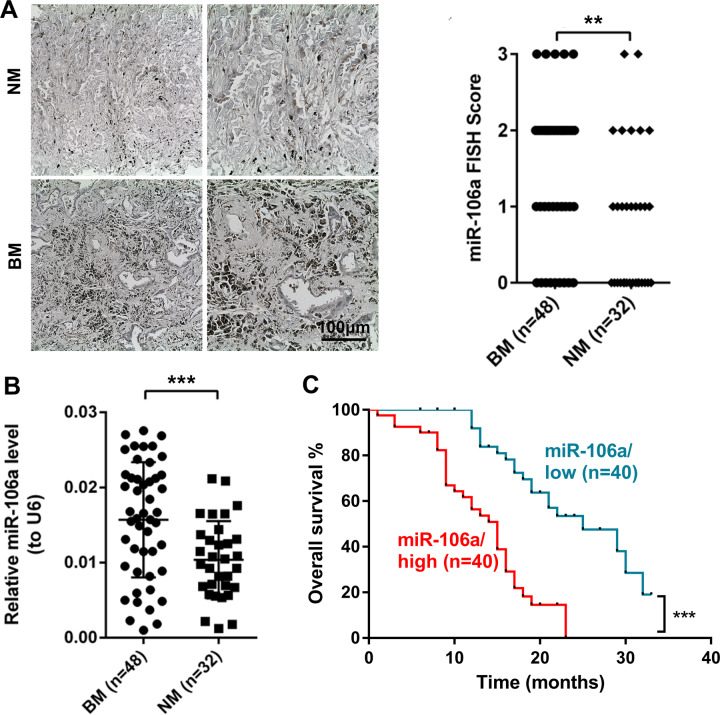
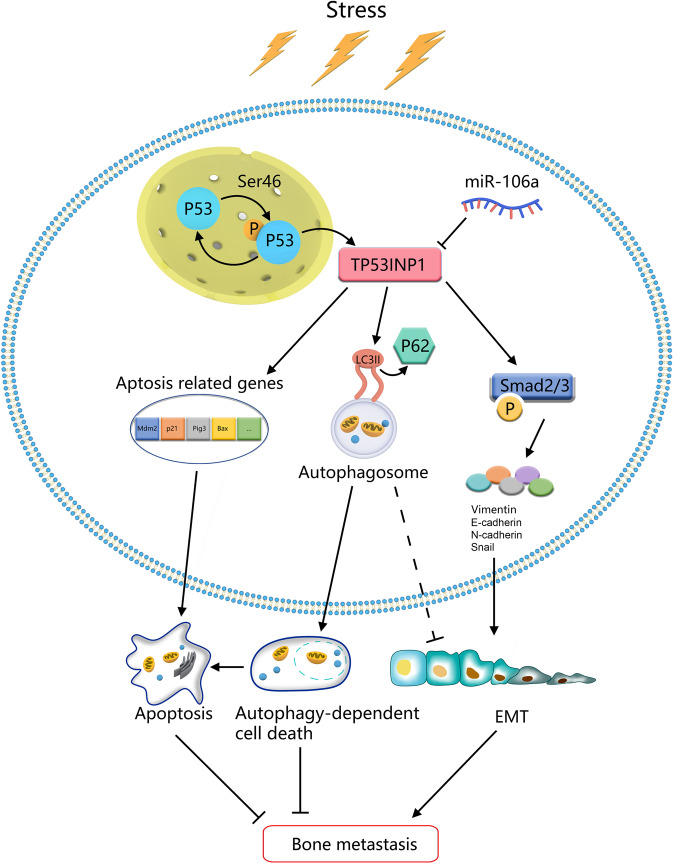
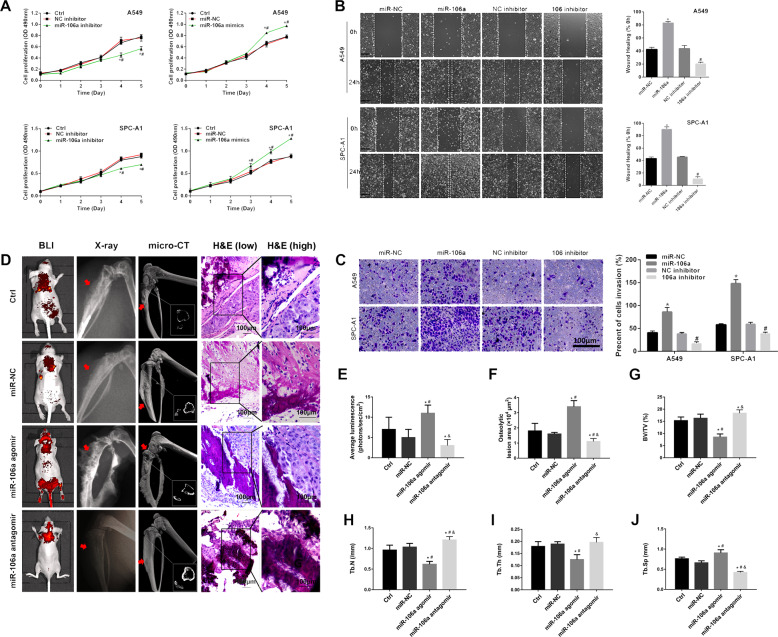
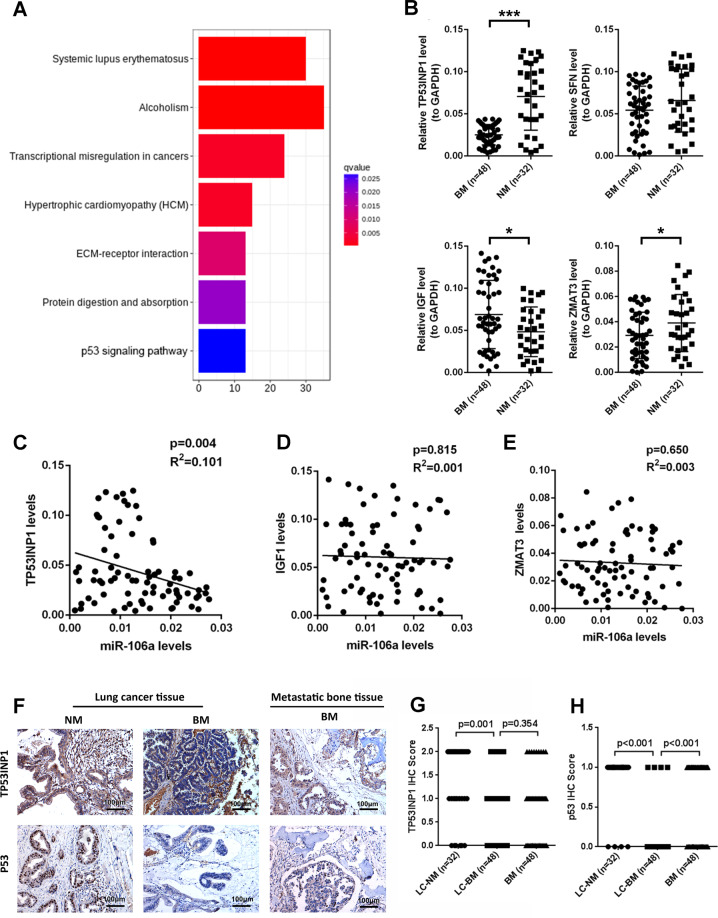
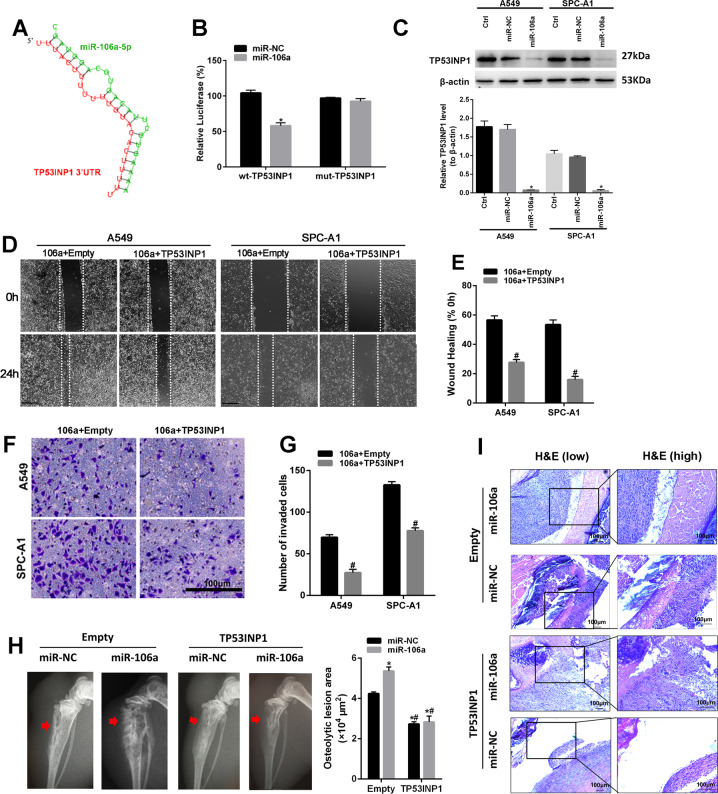
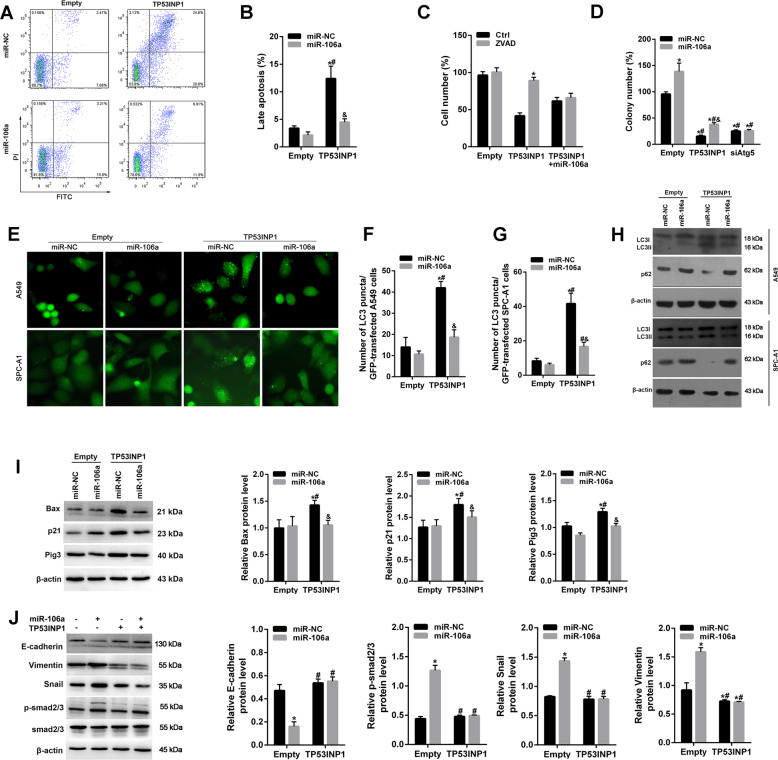
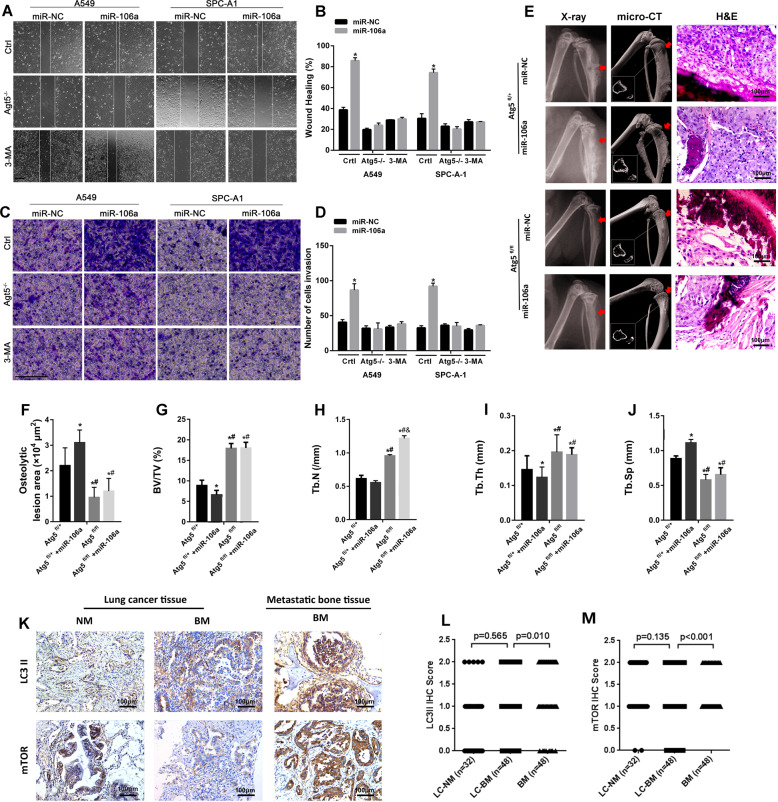
Bone metastasis is one of the most serious complications in lung cancer patients. MicroRNAs (miRNAs) play important roles in tumour development, progression and metastasis. A previous study showed that miR-106a is highly expressed in the tissues of lung adenocarcinoma with bone metastasis, but its mechanism remains unclear. In this study, we showed that miR-106a expression is dramatically increased in lung cancer patients with bone metastasis (BM) by immunohistochemical analysis. MiR-106a promoted A549 and SPC-A1 cell proliferation, migration and invasion in vitro. The results of bioluminescence imaging (BLI), micro-CT and X-ray demonstrated that miR-106a promoted bone metastasis of lung adenocarcinoma in vivo. Mechanistic investigations revealed that miR-106a upregulation promoted metastasis by targeting tumour protein 53-induced nuclear protein 1 (TP53INP1)-mediated metastatic progression, including cell migration, autophagy-dependent death and epithelial-mesenchymal transition (EMT). Notably, autophagy partially attenuated the effects of miR-106a on promoting bone metastasis in lung adenocarcinoma. These findings demonstrated that restoring the expression of TP53INP1 by silencing miR-106a may be a novel therapeutic strategy for bone metastatic in lung adenocarcinoma.
骨转移是肺癌患者最严重的并发症之一。微小 RNA(miRNAs)在肿瘤的发生、发展和转移中发挥着重要作用。先前的研究表明,miR-106a 在伴有骨转移的肺腺癌组织中高表达,但具体机制尚不清楚。本研究通过免疫组织化学分析表明,miR-106a 在伴有骨转移(BM)的肺癌患者中表达显著增加。miR-106a 在体外促进 A549 和 SPC-A1 细胞的增殖、迁移和侵袭。生物发光成像(BLI)、微 CT 和 X 射线的结果表明,miR-106a 促进了肺腺癌的骨转移。机制研究表明,miR-106a 通过靶向肿瘤蛋白 53 诱导核蛋白 1(TP53INP1)介导的转移进展,包括细胞迁移、自噬依赖性死亡和上皮-间充质转化(EMT),上调促进转移。值得注意的是,自噬部分减弱了 miR-106a 对促进肺腺癌骨转移的作用。这些发现表明,通过沉默 miR-106a 恢复 TP53INP1 的表达可能是治疗肺腺癌骨转移的一种新策略。