• 文献检索
  • 文档翻译
  • 深度研究
  • 学术资讯
  • Suppr Zotero 插件Zotero 插件
  • 邀请有礼
  • 套餐&价格
  • 历史记录
应用&插件
Suppr Zotero 插件Zotero 插件浏览器插件Mac 客户端Windows 客户端微信小程序
定价
高级版会员购买积分包购买API积分包
服务
文献检索文档翻译深度研究API 文档MCP 服务
关于我们
关于 Suppr公司介绍联系我们用户协议隐私条款
关注我们

Suppr 超能文献

核心技术专利:CN118964589B侵权必究
粤ICP备2023148730 号-1Suppr @ 2026

文献检索

告别复杂PubMed语法,用中文像聊天一样搜索,搜遍4000万医学文献。AI智能推荐,让科研检索更轻松。

立即免费搜索

文件翻译

保留排版,准确专业,支持PDF/Word/PPT等文件格式,支持 12+语言互译。

免费翻译文档

深度研究

AI帮你快速写综述,25分钟生成高质量综述,智能提取关键信息,辅助科研写作。

立即免费体验

微观诗歌与神经认知诗学:联想对诗歌接受的影响

Micropoetry Meets Neurocognitive Poetics: Influence of Associations on the Reception of Poetry.

作者信息

Hugentobler Katharina Gloria, Lüdtke Jana

机构信息

Department of Education and Psychology, Experimental and Neurocognitive Psychology, Freie Universität Berlin, Berlin, Germany.

出版信息

Front Psychol. 2021 Oct 20;12:737756. doi: 10.3389/fpsyg.2021.737756. eCollection 2021.

DOI:10.3389/fpsyg.2021.737756
PMID:34744908
原文链接:https://pmc.ncbi.nlm.nih.gov/articles/PMC8563571/
Abstract

Reading and understanding poetic texts is often described as an interactive process influenced by the words and phrases building the poems and all associations and images induced by them in the readers mind. Iser, for example, described the understanding process as the closing of a good Gestalt promoted by mental images. Here, we investigate the effect that semantic cohesion, that is the internal connection of a list words, has on understanding and appreciation of poetic texts. To do this, word lists are presented as modern micropoems to the participants and the (ease of) extraction of underlying concepts as well as the affective and aesthetic responses are implicitly and explicitly measured. We found that a unifying concept is found more easily and unifying concepts vary significantly less between participants when the words composing a micropoem are semantically related. Moreover these items are liked better and are understood more easily. Our study shows evidence for the assumed relationship between building spontaneous associations, forming mental imagery, and understanding and appreciation of poetic texts. In addition, we introduced a new method well-suited to manipulate backgrounding features independently of foregrounding features which allows to disentangle the effects of both on poetry reception.

摘要

阅读和理解诗歌文本通常被描述为一个互动过程,该过程受到构成诗歌的单词和短语以及它们在读者脑海中引发的所有联想和意象的影响。例如,伊瑟尔将理解过程描述为由心理意象促成的良好完形的闭合。在此,我们研究语义连贯(即一组单词的内部联系)对诗歌文本理解和欣赏的影响。为此,将单词列表作为现代微型诗呈现给参与者,并隐式和显式地测量潜在概念的(提取难易程度)以及情感和审美反应。我们发现,当构成微型诗的单词在语义上相关时,更容易找到统一的概念,并且参与者之间统一概念的差异显著更小。此外,这些项目更受喜爱且更容易理解。我们的研究为建立自发联想、形成心理意象与诗歌文本理解和欣赏之间的假定关系提供了证据。此外,我们引入了一种新方法,该方法非常适合独立于前景特征来操纵背景特征,从而能够区分两者对诗歌接受的影响。
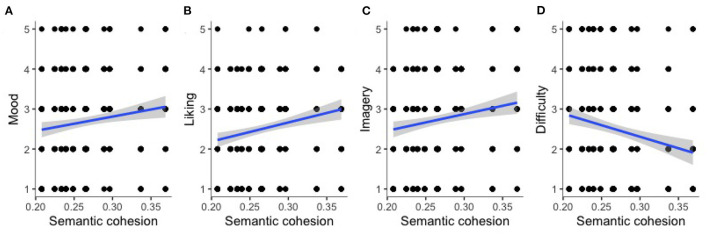
https://cdn.ncbi.nlm.nih.gov/pmc/blobs/c8df/8563571/fbbfdaf8f2f0/fpsyg-12-737756-g0003.jpg
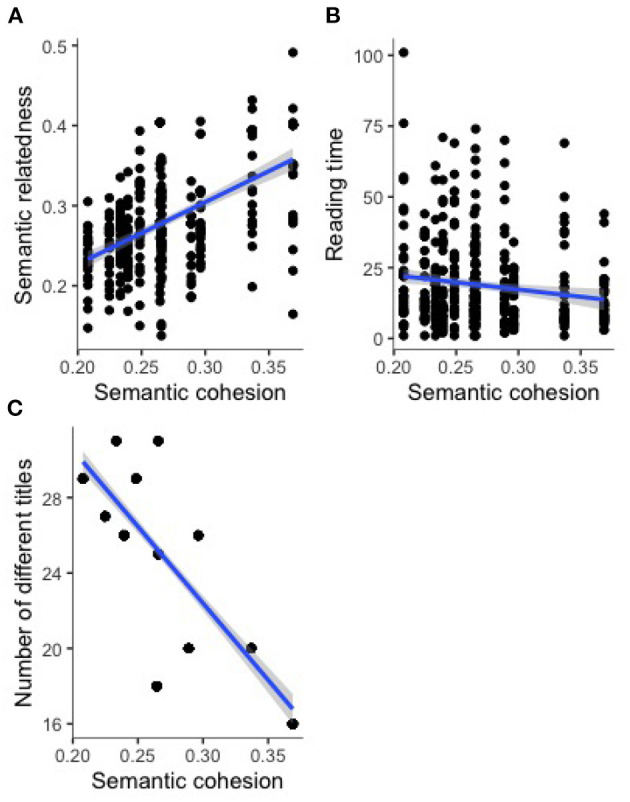
https://cdn.ncbi.nlm.nih.gov/pmc/blobs/c8df/8563571/fa7389935ef8/fpsyg-12-737756-g0001.jpg
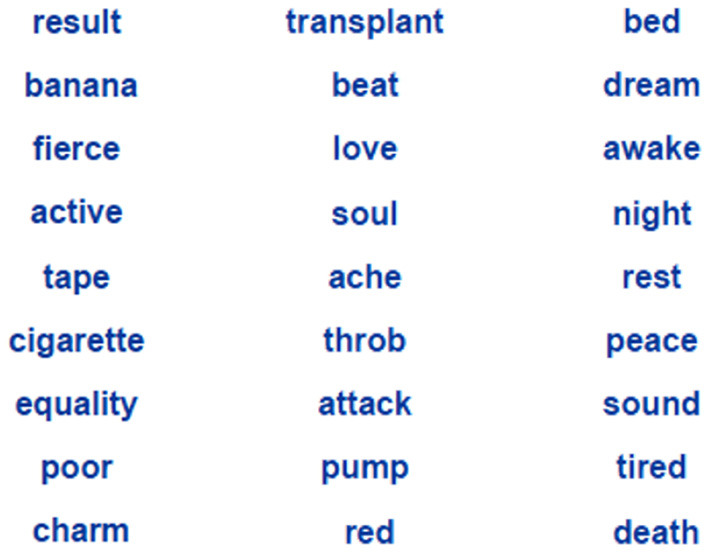
https://cdn.ncbi.nlm.nih.gov/pmc/blobs/c8df/8563571/44f691dde55a/fpsyg-12-737756-g0002.jpg
https://cdn.ncbi.nlm.nih.gov/pmc/blobs/c8df/8563571/fbbfdaf8f2f0/fpsyg-12-737756-g0003.jpg
https://cdn.ncbi.nlm.nih.gov/pmc/blobs/c8df/8563571/fa7389935ef8/fpsyg-12-737756-g0001.jpg
https://cdn.ncbi.nlm.nih.gov/pmc/blobs/c8df/8563571/44f691dde55a/fpsyg-12-737756-g0002.jpg
https://cdn.ncbi.nlm.nih.gov/pmc/blobs/c8df/8563571/fbbfdaf8f2f0/fpsyg-12-737756-g0003.jpg

相似文献

1
Micropoetry Meets Neurocognitive Poetics: Influence of Associations on the Reception of Poetry.微观诗歌与神经认知诗学:联想对诗歌接受的影响
Front Psychol. 2021 Oct 20;12:737756. doi: 10.3389/fpsyg.2021.737756. eCollection 2021.
2
Neurocognitive poetics: methods and models for investigating the neuronal and cognitive-affective bases of literature reception.神经认知诗学:研究文学接受的神经元和认知情感基础的方法和模型。
Front Hum Neurosci. 2015 Apr 16;9:186. doi: 10.3389/fnhum.2015.00186. eCollection 2015.
3
'Looking before and after': Can simple eye tracking patterns distinguish poetic from prosaic texts?“瞻前顾后”:简单的眼动追踪模式能否区分诗歌文本与散文文本?
Front Psychol. 2023 Jan 26;14:1066303. doi: 10.3389/fpsyg.2023.1066303. eCollection 2023.
4
"The Boundless Realm Where All Form Lies". Representing Imagination at the Crossway Between Literary and Neurocognitive Studies.“所有形式所在的无垠领域”。在文学与神经认知研究的交叉点上展现想象力。
Front Integr Neurosci. 2021 Jan 29;14:618605. doi: 10.3389/fnint.2020.618605. eCollection 2020.
5
Affinity for Poetry and Aesthetic Appreciation of Joyful and Sad Poems.对诗歌的喜爱以及对哀乐之诗的审美鉴赏
Front Psychol. 2017 Jan 10;7:2051. doi: 10.3389/fpsyg.2016.02051. eCollection 2016.
6
On the Relation between the General Affective Meaning and the Basic Sublexical, Lexical, and Inter-lexical Features of Poetic Texts-A Case Study Using 57 Poems of H. M. Enzensberger.论诗歌文本的一般情感意义与基本次词汇、词汇及词汇间特征的关系——以汉斯·马格努斯·恩岑斯贝格尔的57首诗歌为例的研究
Front Psychol. 2017 Jan 11;7:2073. doi: 10.3389/fpsyg.2016.02073. eCollection 2016.
7
Implicit Detection of Poetic Harmony by the Naïve Brain.幼稚大脑对诗歌韵律的隐性检测
Front Psychol. 2016 Nov 25;7:1859. doi: 10.3389/fpsyg.2016.01859. eCollection 2016.
8
Let's Read a Poem! What Type of Poetry Boosts Creativity?让我们读一首诗!哪种类型的诗歌能提升创造力?
Front Psychol. 2018 Sep 21;9:1781. doi: 10.3389/fpsyg.2018.01781. eCollection 2018.
9
Reading Russian poetry: An expert-novice study.阅读俄罗斯诗歌:一项专家与新手的研究。
J Eye Mov Res. 2022 May 16;13(3). doi: 10.16910/jemr.13.3.7. eCollection 2020.
10
Quantifying the Beauty of Words: A Neurocognitive Poetics Perspective.量化文字之美:神经认知诗学视角
Front Hum Neurosci. 2017 Dec 19;11:622. doi: 10.3389/fnhum.2017.00622. eCollection 2017.

引用本文的文献

1
Predicting subjective ratings of affect and comprehensibility with text features: a reader response study of narrative poetry.利用文本特征预测情感和可理解性的主观评分:叙事诗歌的读者反应研究
Front Psychol. 2024 Oct 8;15:1431764. doi: 10.3389/fpsyg.2024.1431764. eCollection 2024.

本文引用的文献

1
Eye movements and mental imagery during reading of literary texts with different narrative styles.阅读不同叙事风格文学文本时的眼动与心理意象
J Eye Mov Res. 2020 Mar 30;13(3). doi: 10.16910/jemr.13.3.3.
2
Reading English-Language Haiku: Processes of Meaning Construction Revealed by Eye Movements.阅读英文俳句:眼动揭示的意义构建过程
J Eye Mov Res. 2017 Feb 28;10(1). doi: 10.16910/jemr.10.1.4.
3
What Is the Difference? Rereading Shakespeare's Sonnets -An Eye Tracking Study.有何不同?重读莎士比亚十四行诗——一项眼动追踪研究。
Front Psychol. 2020 Mar 26;11:421. doi: 10.3389/fpsyg.2020.00421. eCollection 2020.
4
Activating words beyond the unfolding sentence: Contributions of event simulation and word associations to discourse reading.激活句子之外的词语:事件模拟和词语联想对语篇阅读的贡献。
Neuropsychologia. 2020 Apr;141:107409. doi: 10.1016/j.neuropsychologia.2020.107409. Epub 2020 Feb 27.
5
Let's Read a Poem! What Type of Poetry Boosts Creativity?让我们读一首诗!哪种类型的诗歌能提升创造力?
Front Psychol. 2018 Sep 21;9:1781. doi: 10.3389/fpsyg.2018.01781. eCollection 2018.
6
Bioaesthetics: The evolution of aesthetic cognition in humans and other animals.生物美学:人类及其他动物审美认知的演变
Prog Brain Res. 2018;237:3-24. doi: 10.1016/bs.pbr.2018.03.003. Epub 2018 Apr 24.
7
When Fiction Is Just as Real as Fact: No Differences in Reading Behavior between Stories Believed to be Based on True or Fictional Events.当虚构与事实一样真实时:人们阅读被认为基于真实或虚构事件的故事时,阅读行为并无差异。
Front Psychol. 2017 Sep 20;8:1618. doi: 10.3389/fpsyg.2017.01618. eCollection 2017.
8
The Berlin Affective Word List for Children (kidBAWL): Exploring Processing of Affective Lexical Semantics in the Visual and Auditory Modalities.儿童柏林情感词汇表(kidBAWL):探索视觉和听觉模态下情感词汇语义的加工过程。
Front Psychol. 2016 Jun 30;7:969. doi: 10.3389/fpsyg.2016.00969. eCollection 2016.
9
Single-Word Recognition Need Not Depend on Single-Word Features: Narrative Coherence Counteracts Effects of Single-Word Features that Lexical Decision Emphasizes.单字识别不一定依赖单字特征:叙事连贯性抵消了词汇判断所强调的单字特征的影响。
J Psycholinguist Res. 2016 Dec;45(6):1451-1472. doi: 10.1007/s10936-016-9416-4.
10
10 years of BAWLing into affective and aesthetic processes in reading: what are the echoes?十年来对阅读中情感与审美过程的大声疾呼:有哪些反响?
Front Psychol. 2015 Jun 3;6:714. doi: 10.3389/fpsyg.2015.00714. eCollection 2015.