Pai B S Jagadish, Krishnan Nithya R, Walveker Amit, Keeneri Sreedevi, Emmanuel Ansu, Krishnan Neethi R, Lira Menezes Anosca
Department of Periodontics and Implantology, Coorg Institute of Dental Sciences, Virajpet, Karnataka, India.
Contemp Clin Dent. 2021 Jul-Sep;12(3):276-281. doi: 10.4103/ccd.ccd_19_20. Epub 2021 Sep 21.
Sclerostin is an inhibitor of bone formation, and laser irradiation enhances osteoblast proliferation. The objective of this study was to assess and compare the gingival crevicular fluid (GCF) sclerostin level and clinical parameters of chronic periodontitis patients following the application of diode laser (810 nm) as an adjunct to scaling and root planing (SRP).
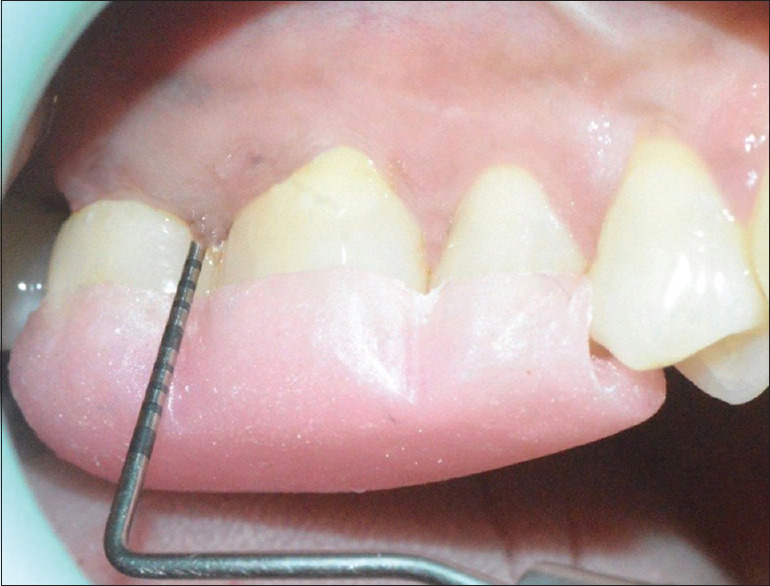
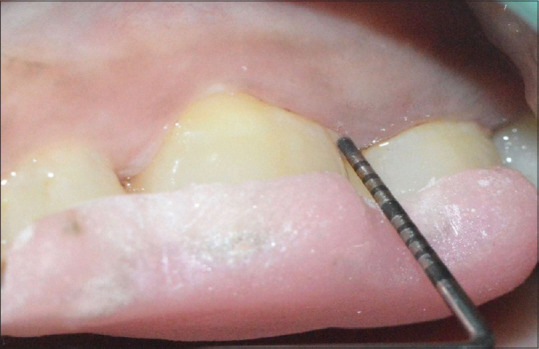
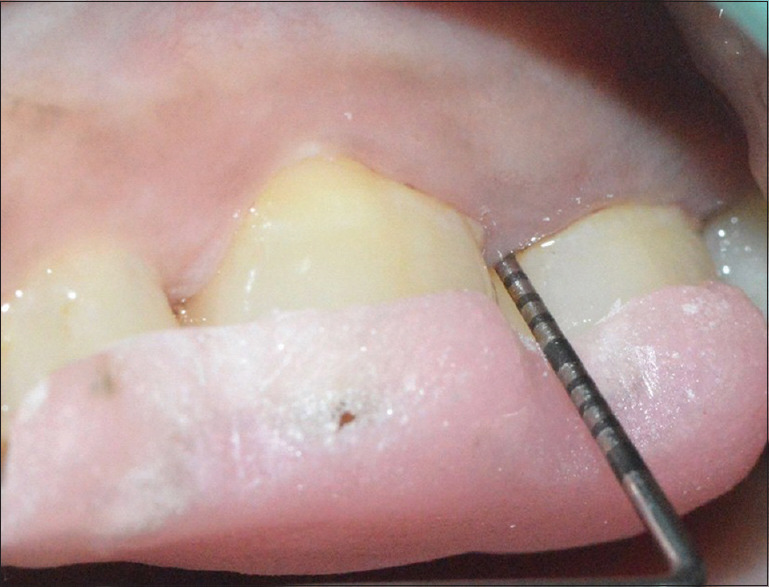
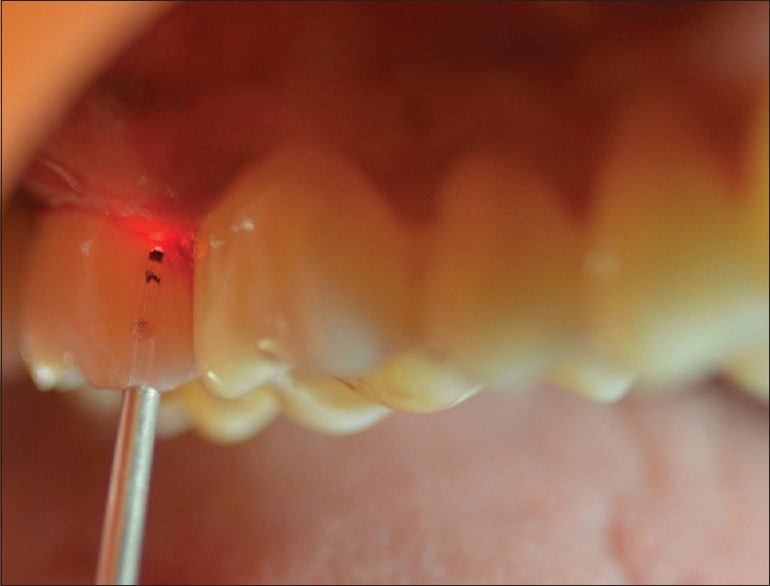
Fifteen systemically healthy chronic periodontitis patients (age 35-55 years) with probing pocket depth ≥5mm were included in this split-mouth study. SRP and pocket irradiation with diode laser were done in the test group and SRP alone in the control group at baseline. Low-level laser therapy application and saline irrigation were done in both the groups, respectively, in the 2 and 3 visits. Two microliters of GCF samples was collected from both the groups at baseline before treatment and on the 90 day for the assessment of sclerostin concentration.
This study showed a statistically significant reduction of clinical parameters in the test and control groups at the end of 3 months. Both the groups showed a statistically significant reduction of sclerostin levels in GCF after 3 months, in which the test group (125.80 ± 28.21 to 82.80 ± 9.31) showed a highly significant reduction ( = 0.000).
The adjunctive use of laser had shown a beneficial effect in terms of clinical parameters and osteoblast proliferation by the reduction in the levels of sclerostin in GCF. From the observations of this study, it can be concluded that the therapeutic effectiveness of diode laser as an adjunct to SRP is having a beneficial effect and sclerostin can be used as a potent biomarker.
硬化蛋白是骨形成的抑制剂,而激光照射可增强成骨细胞增殖。本研究的目的是评估和比较二极管激光(810nm)辅助龈下刮治术和根面平整术(SRP)后慢性牙周炎患者龈沟液(GCF)中硬化蛋白水平及临床参数。
本研究为一项自身对照研究,纳入15名全身健康的慢性牙周炎患者(年龄35 - 55岁),其探诊袋深度≥5mm。试验组在基线时进行SRP及二极管激光袋内照射,对照组仅进行SRP。在第2次和第3次就诊时,两组分别进行低强度激光治疗和生理盐水冲洗。在治疗前基线及90天时,从两组中各采集2微升GCF样本,以评估硬化蛋白浓度。
本研究显示,3个月末试验组和对照组的临床参数均有统计学意义的降低。3个月后,两组GCF中硬化蛋白水平均有统计学意义的降低,其中试验组(从125.80±28.21降至82.80±9.31)降低极为显著(P = 0.000)。
激光辅助治疗在临床参数和成骨细胞增殖方面显示出有益效果,表现为GCF中硬化蛋白水平降低。从本研究观察结果可得出结论,二极管激光辅助SRP的治疗效果具有有益作用,且硬化蛋白可作为一种有效的生物标志物。