Xu Xing Yue, Yi Eun Seob, Kang Chang Ho, Liu Ying, Lee Yeong-Geun, Choi Han Sol, Jang Hyun Bin, Huo Yue, Baek Nam-In, Yang Deok Chun, Kim Yeon-Ju
Graduate School of Biotechnology, and College of Life Science, Kyung Hee University, Yongin-si, Gyeonggi-do, Republic of Korea.
Division of Applied Life Science and PMBBRC, Gyeongsang National University, Jinju, Republic of Korea.
J Ginseng Res. 2021 Nov;45(6):631-641. doi: 10.1016/j.jgr.2021.02.007. Epub 2021 Mar 14.
Main bioactive constituents and pharmacological functions of ripened red ginseng berry ( Meyer) have been frequently reported. Yet, the research gap targeting the beneficial activities of transformed green ginseng berries has not reported elsewhere.
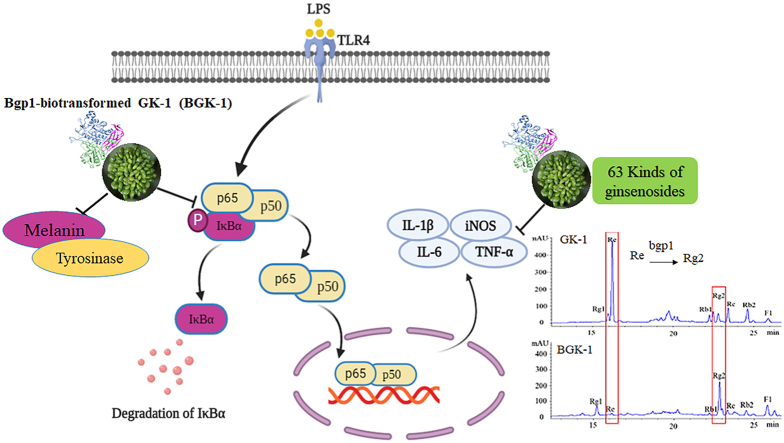
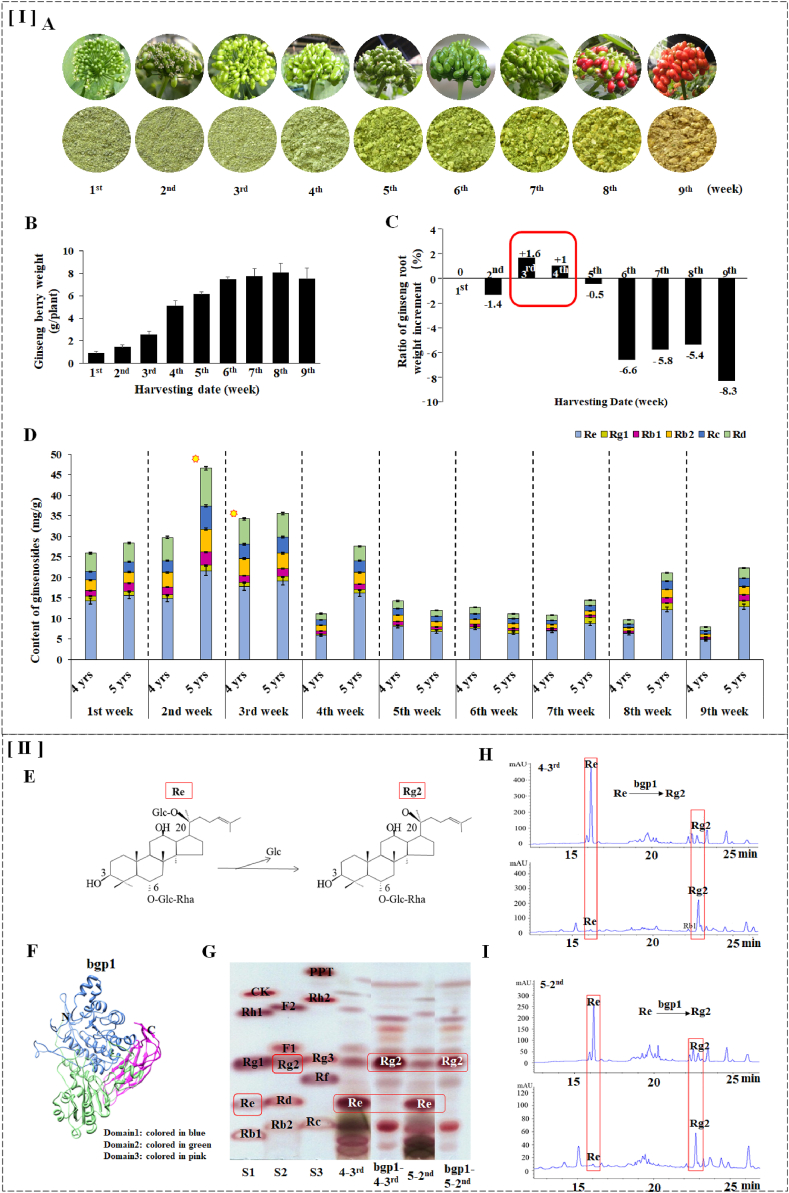
Ginsenosides of new green berry cultivar K-1 (GK-1) were identified by HPLC-QTOF/MS. Ginsenosides bioconversion in GK-1 by bgp1 enzyme was confirmed with HPLC and TLC. Then, mechanisms of GK-1 and β-glucosidase (bgp1) biotransformed GK-1 (BGK-1) were determined by Quantitative Reverse Transcription-Polymerase Chain Reaction and Western blot.
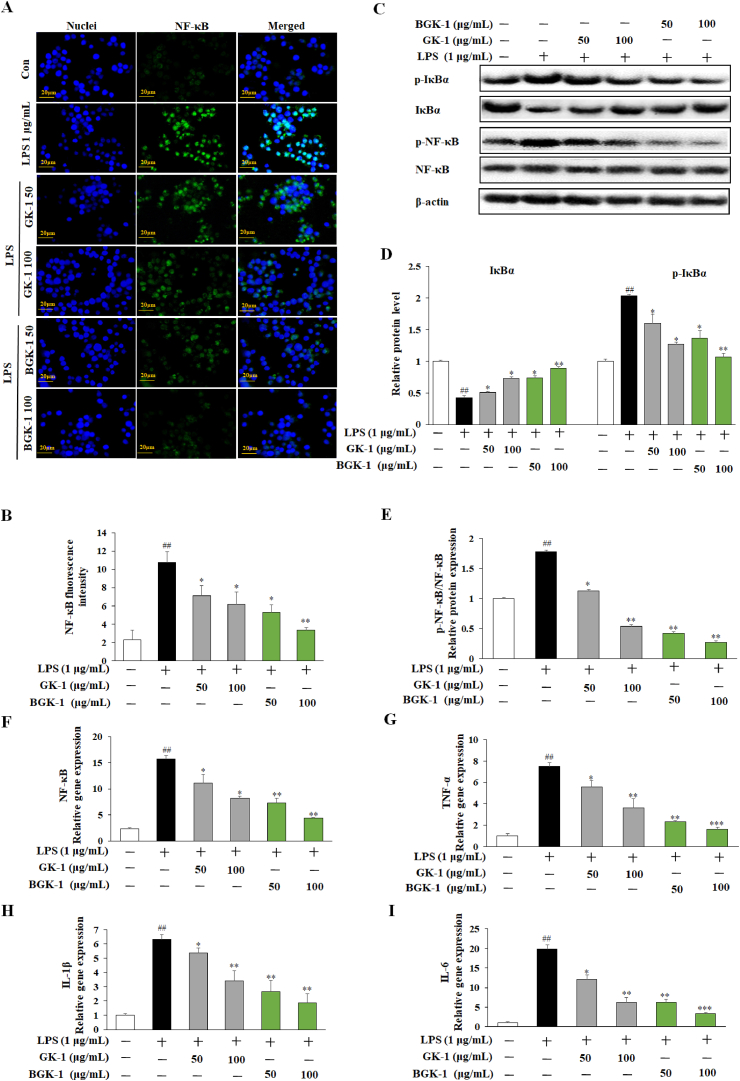
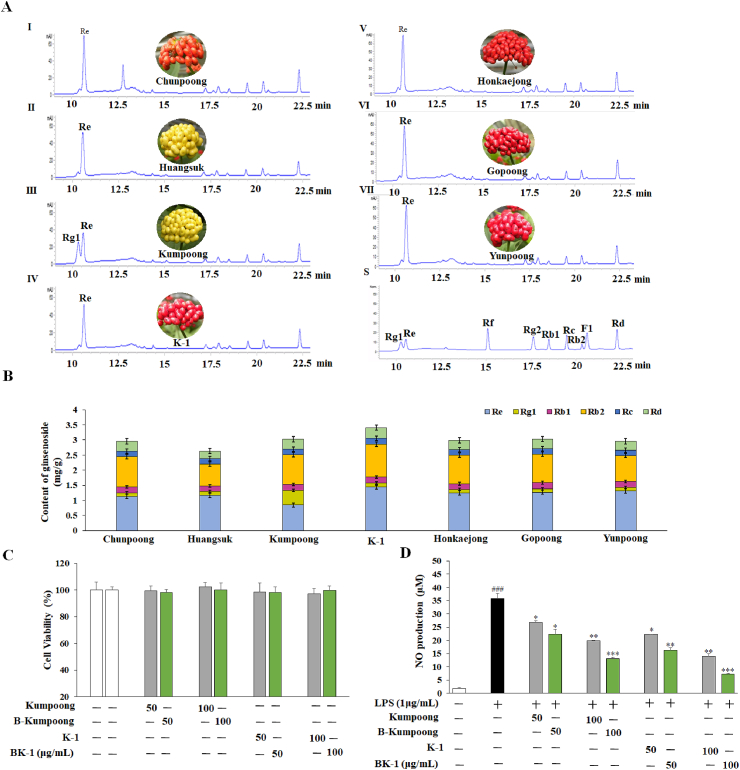
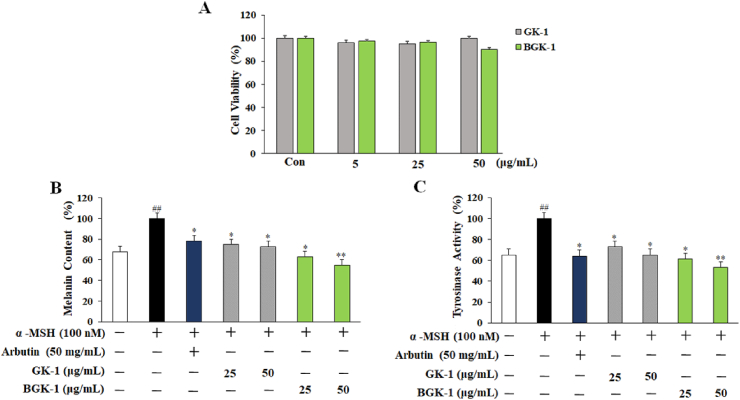
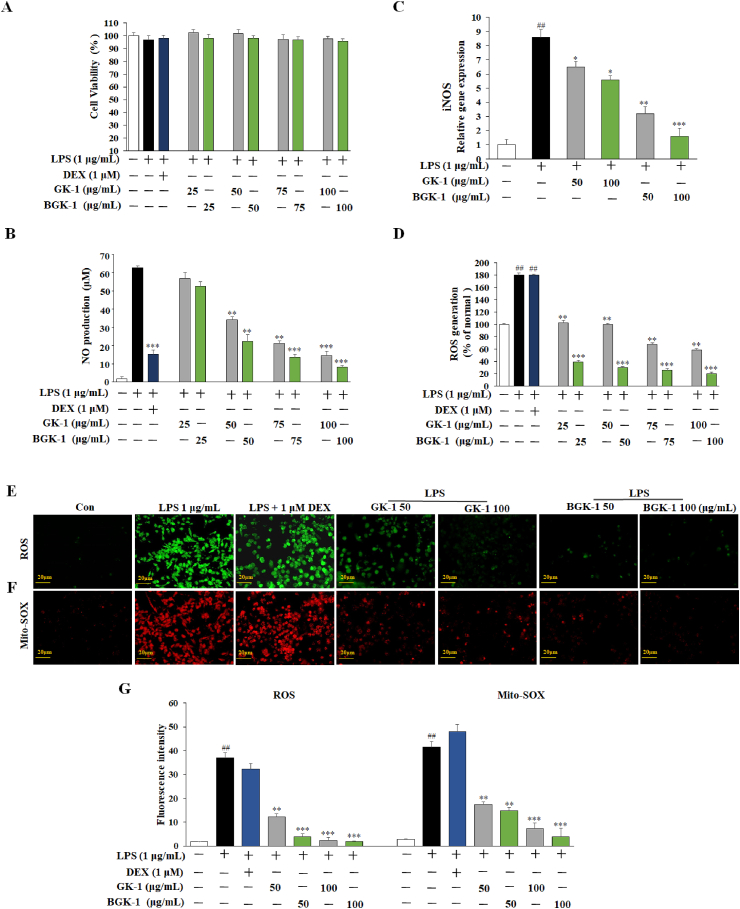
GK-1 possesses highest ginsenosides especially ginsenoside-Re amongst seven ginseng cultivars including (Chunpoong, Huangsuk, Kumpoong, K-1, Honkaejong, Gopoong, and Yunpoong). Ginseng root's biomass is not affected with the harvest of GK-1 at 3 weeks after flowering period. Then, Re is bio-converted into a promising pharmaceutical effect of Rg2 bgp1. According to the results of cell assays, BGK-1 shows decrease of tyrosinase and melanin content in α-melanocyte-stimulating hormone challenged-murine melanoma B16 cells. BGK-1 which is comparatively more effective than GK-1 extract shows significant suppression of the nuclear factor (NF)-κB activation and inflammatory target genes, in LPS-stimulated RAW 264.7 cells.
These results reported effective whitening and anti-inflammatory of BGK-1 as compared to GK-1.
成熟红参浆果(迈耶)的主要生物活性成分和药理功能已有诸多报道。然而,针对转化型绿参浆果有益活性的研究空白尚未见其他报道。
通过高效液相色谱-四极杆飞行时间质谱联用仪(HPLC-QTOF/MS)鉴定新型绿参浆果品种K-1(GK-1)中的人参皂苷。用高效液相色谱(HPLC)和薄层色谱(TLC)确认bgp1酶对GK-1中人参皂苷的生物转化。然后,通过定量逆转录-聚合酶链反应(Quantitative Reverse Transcription-Polymerase Chain Reaction)和蛋白质免疫印迹法(Western blot)确定GK-1和β-葡萄糖苷酶(bgp1)生物转化的GK-1(BGK-1)的作用机制。
在包括春波ong、皇竹、锦波ong、K-1、宏开jong、果波ong和云波ong在内的七个参品种中,GK-1的人参皂苷含量最高,尤其是人参皂苷-Re。花期后3周收获GK-1对人参根的生物量没有影响。然后,Re被生物转化为具有良好药理作用的Rg2 bgp1。根据细胞试验结果,BGK-1在α-黑素细胞刺激素刺激的小鼠黑色素瘤B16细胞中显示酪氨酸酶和黑色素含量降低。在脂多糖(LPS)刺激的RAW 264.7细胞中,比GK-1提取物更有效的BGK-1对核因子(NF)-κB激活和炎症靶基因有显著抑制作用。
这些结果表明,与GK-1相比,BGK-1具有有效的美白和抗炎作用。