Laboratory of Hearing and Technology, Research Institute of Audiology and Speech Pathology, College of Natural Sciences, Hallym University, Chuncheon 24252, Korea.
Division of Speech Pathology and Audiology, College of Natural Sciences, Hallym University, Chuncheon 24252, Korea.
Int J Environ Res Public Health. 2021 Nov 7;18(21):11693. doi: 10.3390/ijerph182111693.
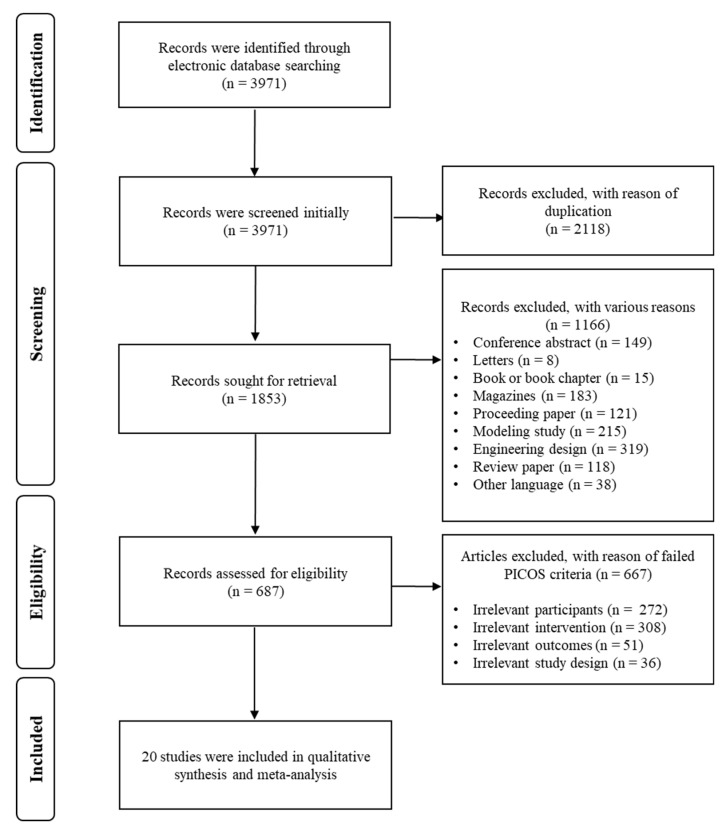
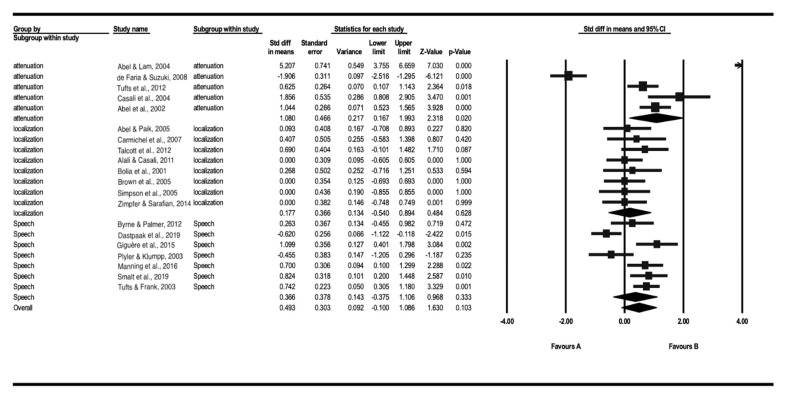
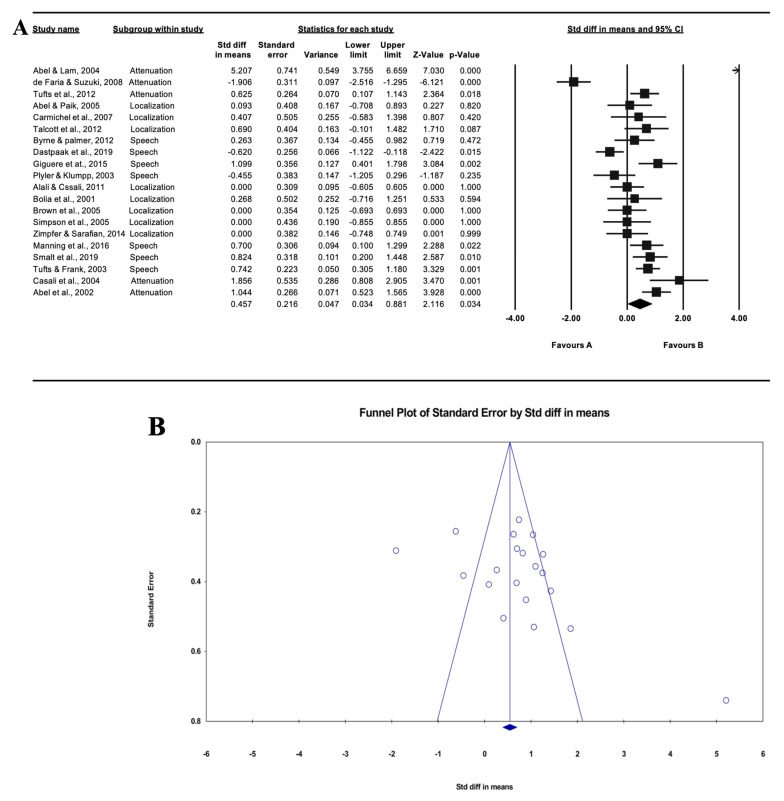
To prevent intensive noise exposure in advance and be safely controlled during such exposure, hearing protection devices (HPDs) have been widely used by workers. The present study evaluates the effectiveness of these HPDs, partitioned into three different outcomes, such as sound attenuation, sound localization, and speech perception. Seven electronic journal databases were used to search for published articles from 2000 to 2021. Based on inclusion criteria, 20 articles were chosen and then analyzed. For a systematic review and meta-analysis, standardized mean differences (SMDs) and effect size were calculated using a random-effect model. The funnel plot and Egger's regression analysis were conducted to assess the risk of bias. From the overall results of the included 20 articles, we found that the HPD function performed significantly well for their users (SMDs: 0.457, 95% confidence interval (CI): 0.034-0.881, < 0.05). Specifically, a subgroup analysis showed a meaningful difference in sound attenuation (SMDs: 1.080, 95% CI: 0.167-1.993, < 0.05) when to wear and not to wear HPDs, but indicated no significance between the groups for sound localization (SMDs: 0.177, 95% CI: 0.540-0.894, = 0.628) and speech perception (SMDs: 0.366, 95% CI: -0.100-1.086, = 0.103). The HPDs work well for their originally designated purposes without interfering to find the location of the sound sources and for talking between the workers. Taking into account various factors, such as the characteristics of the users, selection of appropriate types, and fitting methods for wearing in different circumstances, seems to be necessary for a reliable systematic analysis in terms of offering the most useful information to the workers.
为了在密集噪声暴露之前进行预防并在暴露期间安全控制,听力保护装置 (HPD) 已被工人广泛使用。本研究评估了这些 HPD 的有效性,分为三个不同的结果,如声音衰减、声音定位和语音感知。使用七个电子期刊数据库搜索了 2000 年至 2021 年发表的文章。根据纳入标准,选择了 20 篇文章进行分析。对于系统评价和荟萃分析,使用随机效应模型计算了标准化均数差 (SMD) 和效应量。使用漏斗图和 Egger 回归分析评估了偏倚风险。从纳入的 20 篇文章的总体结果来看,我们发现 HPD 对使用者的功能表现良好(SMD:0.457,95%置信区间 (CI):0.034-0.881, < 0.05)。具体来说,亚组分析表明,当佩戴和不佩戴 HPD 时,在声音衰减方面存在有意义的差异(SMD:1.080,95% CI:0.167-1.993, < 0.05),但在声音定位方面(SMD:0.177,95% CI:0.540-0.894, = 0.628)和语音感知方面(SMD:0.366,95% CI:-0.100-1.086, = 0.103)无显著性差异。HPD 在不干扰声源定位和工人之间交谈的情况下,对其最初指定的目的效果良好。考虑到各种因素,例如使用者的特点、选择适当的类型以及在不同情况下佩戴的贴合方法,似乎有必要进行可靠的系统分析,为工人提供最有用的信息。