Guadagni Veronica, Umilta' Alberto, Iaria Giuseppe
Department of Physiology and Pharmacology, Cumming School of Medicine, University of Calgary, Calgary, AB, Canada.
Hotchkiss Brain Institute, Cumming School of Medicine, University of Calgary, Calgary, AB, Canada.
Front Glob Womens Health. 2020 Oct 23;1:585938. doi: 10.3389/fgwh.2020.585938. eCollection 2020.
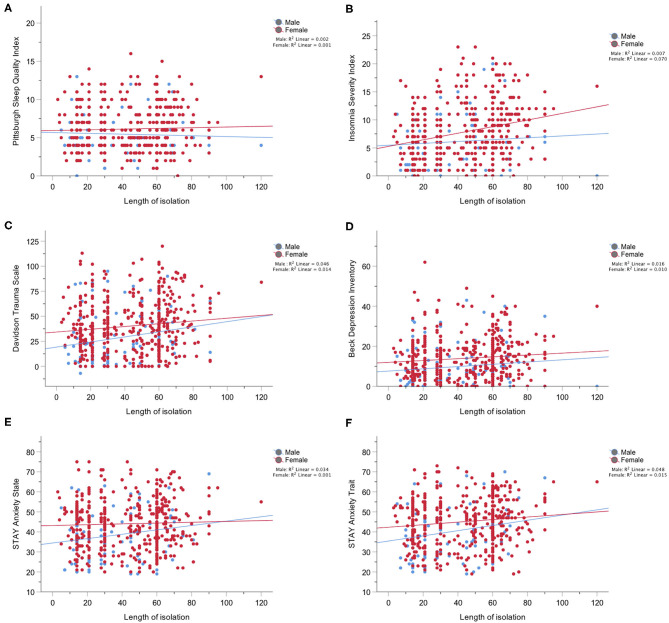
To investigate the sex and gender differences in the impact of the isolation period implemented in response to the COVID-19 pandemic on individuals' sleep quality, empathy, and mood. Data were collected between March 23 and June 7, 2020 on a sample of volunteers in the Canadian population. Six hundred and thirty-eight volunteers completed an online survey (~30 min). We first examined biological sex, gender, and sexual identity differences (both components of the ampler concept of gender) in sleep, empathy, and mood disturbances. Then, we assessed changes in sleep and mood over the course of the isolation period and tested for significant relationships between sleep variables, mood, and empathy. We analyzed complete data for 573 participants (112 males and 459 females, 2 undisclosed, mean ± SD age = 25.9 ± 10.5 years, mean ± SD education = 16.2 ± 2.9 years). As compared to males, female participants reported lower quality of sleep, lower sleep efficiency, and greater symptoms of insomnia, anxiety, depression, and trauma. In addition, females reported higher scores than males on the IRI empathy scale and all its subcomponents. Similar results were found when stratifying by gender. Sleep and mood disturbances increased over the course of the isolation period in the whole sample. The most significant predictors of poor quality of sleep and insomnia were depression, anxiety, and trauma scores, especially in females; higher empathy trait was associated with higher depression, anxiety, and trauma scores, perhaps indicating a more positive role of fear and anxiety responses to the pandemic crisis. Sex and gender differences seem to play a role in the individuals' psychological and behavioral reactions to the COVID-19 pandemic. These differences need to be considered in planning targeted psychological interventions.
为了研究因应对新冠疫情而实施的隔离期对个人睡眠质量、同理心和情绪影响方面的性别差异。2020年3月23日至6月7日期间,对加拿大人群中的志愿者样本进行了数据收集。638名志愿者完成了一项在线调查(约30分钟)。我们首先研究了睡眠、同理心和情绪障碍方面的生物性别、社会性别和性身份差异(社会性别这一更广泛概念的两个组成部分)。然后,我们评估了隔离期内睡眠和情绪的变化,并测试了睡眠变量、情绪和同理心之间的显著关系。我们分析了573名参与者的完整数据(112名男性和459名女性,2名未披露,平均±标准差年龄 = 25.9 ± 10.5岁,平均±标准差受教育年限 = 16.2 ± 2.9年)。与男性相比,女性参与者报告的睡眠质量较低、睡眠效率较低,且失眠、焦虑、抑郁和创伤症状更严重。此外,女性在人际反应指数(IRI)同理心量表及其所有子分量表上的得分均高于男性。按社会性别分层时也发现了类似结果。在整个样本中,隔离期内睡眠和情绪障碍有所增加。睡眠质量差和失眠的最显著预测因素是抑郁、焦虑和创伤得分,尤其是在女性中;较高的同理心特质与较高的抑郁、焦虑和创伤得分相关,这可能表明对疫情危机的恐惧和焦虑反应起到了更积极的作用。性别差异似乎在个体对新冠疫情的心理和行为反应中发挥作用。在规划有针对性的心理干预措施时需要考虑这些差异。