• 文献检索
  • 文档翻译
  • 深度研究
  • 学术资讯
  • Suppr Zotero 插件Zotero 插件
  • 邀请有礼
  • 套餐&价格
  • 历史记录
应用&插件
Suppr Zotero 插件Zotero 插件浏览器插件Mac 客户端Windows 客户端微信小程序
定价
高级版会员购买积分包购买API积分包
服务
文献检索文档翻译深度研究API 文档MCP 服务
关于我们
关于 Suppr公司介绍联系我们用户协议隐私条款
关注我们

Suppr 超能文献

核心技术专利:CN118964589B侵权必究
粤ICP备2023148730 号-1Suppr @ 2026

文献检索

告别复杂PubMed语法,用中文像聊天一样搜索,搜遍4000万医学文献。AI智能推荐,让科研检索更轻松。

立即免费搜索

文件翻译

保留排版,准确专业,支持PDF/Word/PPT等文件格式,支持 12+语言互译。

免费翻译文档

深度研究

AI帮你快速写综述,25分钟生成高质量综述,智能提取关键信息,辅助科研写作。

立即免费体验

基于家庭(虚拟)的康复可改善脑卒中患者的运动和认知功能:Elements(EDNA-22 系统)的一项随机对照试验。

Home-based (virtual) rehabilitation improves motor and cognitive function for stroke patients: a randomized controlled trial of the Elements (EDNA-22) system.

机构信息

Healthy Brain and Mind Research Centre (HBMRC) and School of Behavioural and Health Sciences, Australian Catholic University, Melbourne, VIC, Australia.

Faculty of Health Sciences, The University of Sydney, Sydney, NSW, Australia.

出版信息

J Neuroeng Rehabil. 2021 Nov 25;18(1):165. doi: 10.1186/s12984-021-00956-7.

DOI:10.1186/s12984-021-00956-7
PMID:34823545
原文链接:https://pmc.ncbi.nlm.nih.gov/articles/PMC8613521/
Abstract

BACKGROUND

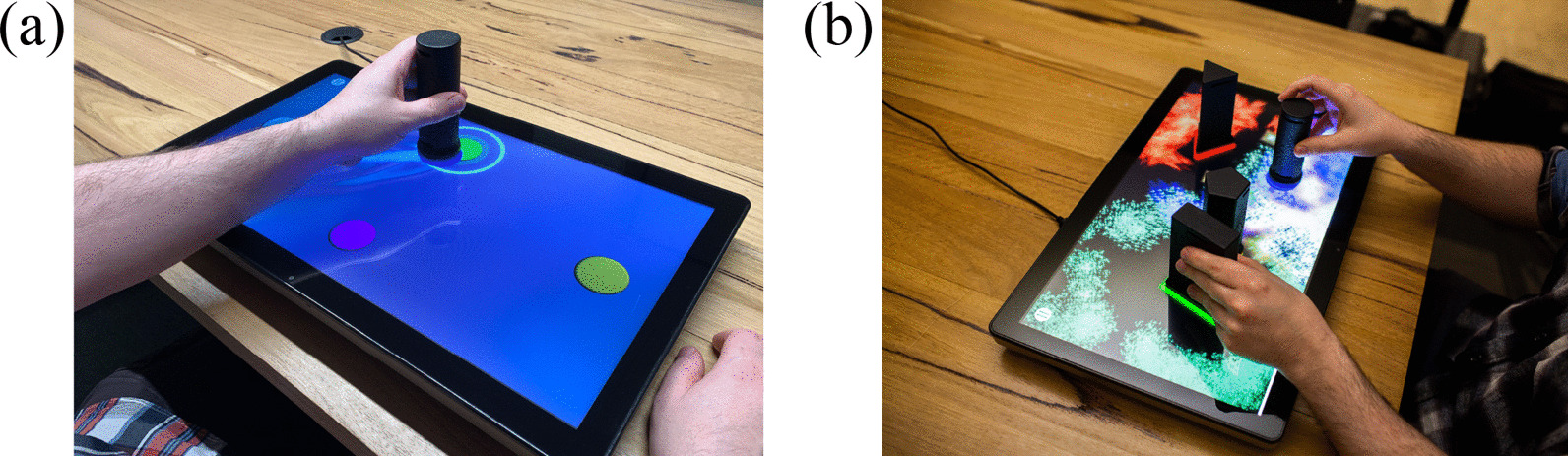
Home-based rehabilitation of arm function is a significant gap in service provision for adult stroke. The EDNA-22 tablet is a portable virtual rehabilitation-based system that provides a viable option for home-based rehabilitation using a suite of tailored movement tasks, and performance monitoring via cloud computing data storage. The study reported here aimed to compare use of the EDNA system with an active control (Graded Repetitive Arm Supplementary Program-GRASP training) group using a parallel RCT design.

METHODS

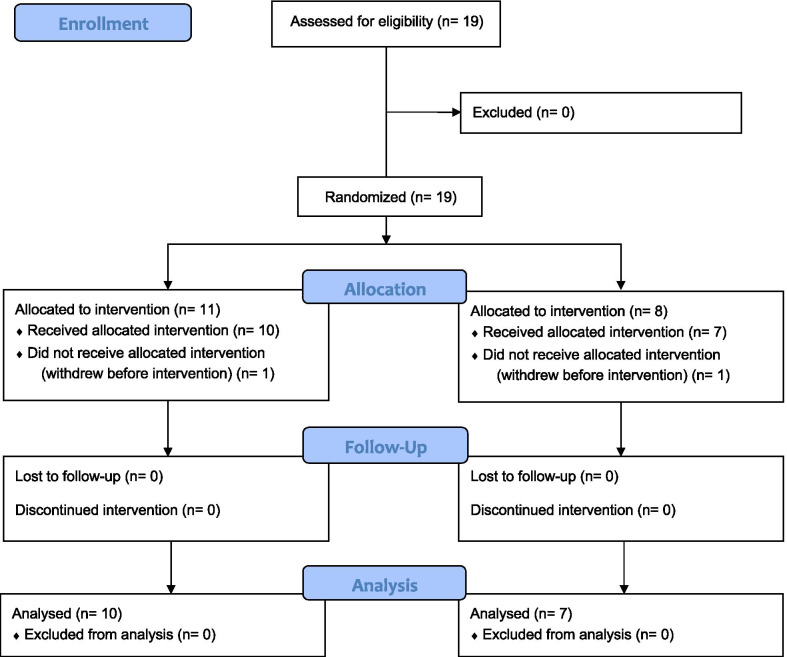
Of 19 originally randomized, 17 acute-care patients with upper-extremity dysfunction following unilateral stroke completed training in either the treatment (n = 10) or active control groups (n = 7), each receiving 8-weeks of in-home training involving 30-min sessions scheduled 3-4 times weekly. Performance was assessed across motor, cognitive and functional behaviour in the home. Primary motor measures, collected by a blinded assessor, were the Box and Blocks Task (BBT) and 9-Hole Pegboard Test (9HPT), and for cognition the Montreal Cognitive Assessment (MoCA). Functional behaviour was assessed using the Stroke Impact Scale (SIS) and Neurobehavioural Functioning Inventory (NFI).

RESULTS

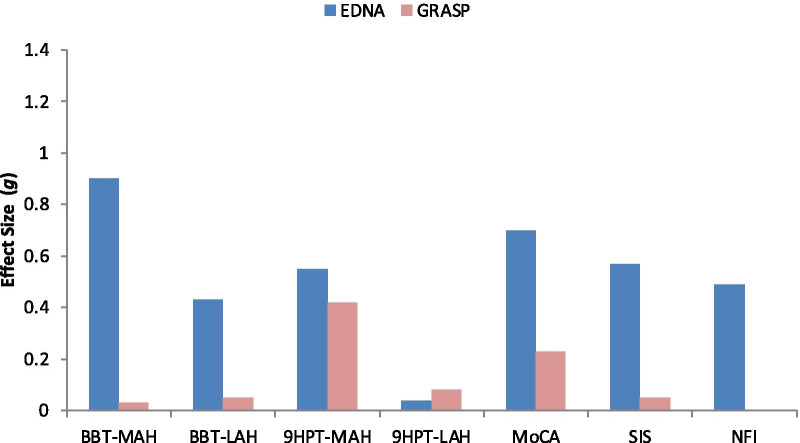
One participant from each group withdrew for personal reasons. No adverse events were reported. Results showed a significant and large improvement in performance on the BBT for the more-affected hand in the EDNA training group, only (g = 0.90). There was a mild-to-moderate effect of training on the 9HPT for EDNA (g = 0.55) and control (g = 0.42) groups, again for the more affected hand. In relation to cognition, performance on the MoCA improved for the EDNA group (g = 0.70). Finally, the EDNA group showed moderate (but non-significant) improvement in functional behaviour on the SIS (g = 0.57) and NFI (g = 0.49).

CONCLUSION

A short course of home-based training using the EDNA-22 system can yield significant gains in motor and cognitive performance, over and above an active control training that also targets upper-limb function. Intriguingly, these changes in performance were corroborated only tentatively in the reports of caregivers. We suggest that future research consider how the implementation of home-based rehabilitation technology can be optimized. We contend that self-administered digitally-enhanced training needs to become part of the health literacy of all stakeholders who are impacted by stroke and other acquired brain injuries. Trial registration Australian New Zealand Clinical Trials Registry (ANZCTR) Number: ACTRN12619001557123. Registered 12 November 2019, http://www.anzctr.org.au/Trial/Registration/TrialReview.aspx?id=378298&isReview=true.
https://cdn.ncbi.nlm.nih.gov/pmc/blobs/d9e9/8613954/a1dcb542b77c/12984_2021_956_Fig3_HTML.jpg
https://cdn.ncbi.nlm.nih.gov/pmc/blobs/d9e9/8613954/a64167d9e80f/12984_2021_956_Fig1_HTML.jpg
https://cdn.ncbi.nlm.nih.gov/pmc/blobs/d9e9/8613954/f6d279fa9141/12984_2021_956_Fig2_HTML.jpg
https://cdn.ncbi.nlm.nih.gov/pmc/blobs/d9e9/8613954/a1dcb542b77c/12984_2021_956_Fig3_HTML.jpg
https://cdn.ncbi.nlm.nih.gov/pmc/blobs/d9e9/8613954/a64167d9e80f/12984_2021_956_Fig1_HTML.jpg
https://cdn.ncbi.nlm.nih.gov/pmc/blobs/d9e9/8613954/f6d279fa9141/12984_2021_956_Fig2_HTML.jpg
https://cdn.ncbi.nlm.nih.gov/pmc/blobs/d9e9/8613954/a1dcb542b77c/12984_2021_956_Fig3_HTML.jpg
摘要

背景

家庭康复是成人中风服务提供中的一个重大空白。EDNA-22 平板电脑是一种便携式虚拟康复系统,它提供了一种可行的选择,可以使用一系列量身定制的运动任务以及通过云计算数据存储进行性能监测来进行家庭康复。本研究旨在使用平行 RCT 设计,将 EDNA 系统与主动对照组(分级重复手臂补充程序-GRASP 训练)进行比较。

方法

在最初随机的 19 名患者中,有 17 名单侧中风后上肢功能障碍的急性护理患者完成了治疗组(n=10)或主动对照组(n=7)的训练,每组接受 8 周的家庭训练,包括每周 3-4 次 30 分钟的课程。在家中评估运动、认知和功能行为。主要运动测量由一名盲法评估者收集,包括盒子和块任务(BBT)和 9 孔钉板测试(9HPT),认知测量采用蒙特利尔认知评估(MoCA)。功能行为采用中风影响量表(SIS)和神经行为功能量表(NFI)进行评估。

结果

每组各有一名参与者因个人原因退出。没有报告不良事件。结果显示,EDNA 训练组的更受影响的手上 BBT 的表现有显著且较大的提高,仅为(g=0.90)。EDNA(g=0.55)和对照组(g=0.42)组的 9HPT 训练对更受影响的手有轻度至中度的影响。关于认知,EDNA 组的 MoCA 表现有所提高(g=0.70)。最后,EDNA 组在 SIS(g=0.57)和 NFI(g=0.49)上的功能行为有适度(但无统计学意义)的改善。

结论

使用 EDNA-22 系统进行短期家庭训练可以显著提高运动和认知表现,超过了也针对上肢功能的主动对照组训练。有趣的是,这些表现的变化仅在照顾者的报告中得到了初步证实。我们建议未来的研究考虑如何优化家庭康复技术的实施。我们认为,自我管理的数字化增强训练需要成为所有受中风和其他获得性脑损伤影响的利益相关者健康素养的一部分。

试验注册

澳大利亚和新西兰临床试验注册中心(ANZCTR)编号:ACTRN12619001557123。注册于 2019 年 11 月 12 日,http://www.anzctr.org.au/Trial/Registration/TrialReview.aspx?id=378298&isReview=true。

相似文献

1
Home-based (virtual) rehabilitation improves motor and cognitive function for stroke patients: a randomized controlled trial of the Elements (EDNA-22) system.基于家庭(虚拟)的康复可改善脑卒中患者的运动和认知功能:Elements(EDNA-22 系统)的一项随机对照试验。
J Neuroeng Rehabil. 2021 Nov 25;18(1):165. doi: 10.1186/s12984-021-00956-7.
2
Elements virtual rehabilitation improves motor, cognitive, and functional outcomes in adult stroke: evidence from a randomized controlled pilot study.元素虚拟康复可改善成年脑卒中患者的运动、认知和功能结局:一项随机对照初步研究的证据。
J Neuroeng Rehabil. 2019 May 15;16(1):56. doi: 10.1186/s12984-019-0531-y.
3
Augmented efficacy of intermittent theta burst stimulation on the virtual reality-based cycling training for upper limb function in patients with stroke: a double-blinded, randomized controlled trial.基于虚拟现实的间歇性 theta 爆发刺激对脑卒中患者上肢功能的自行车训练增效作用的双盲、随机对照试验。
J Neuroeng Rehabil. 2021 May 31;18(1):91. doi: 10.1186/s12984-021-00885-5.
4
Home exercise programmes supported by video and automated reminders compared with standard paper-based home exercise programmes in patients with stroke: a randomized controlled trial.视频和自动提醒支持的家庭运动计划与基于标准纸张的家庭运动计划在中风患者中的比较:一项随机对照试验。
Clin Rehabil. 2017 Aug;31(8):1068-1077. doi: 10.1177/0269215516680856. Epub 2016 Dec 5.
5
Influence of New Technologies on Post-Stroke Rehabilitation: A Comparison of Armeo Spring to the Kinect System.新技术对脑卒中康复的影响:Armeo Spring 与 Kinect 系统的比较。
Medicina (Kaunas). 2019 Apr 9;55(4):98. doi: 10.3390/medicina55040098.
6
Evaluating the effect and mechanism of upper limb motor function recovery induced by immersive virtual-reality-based rehabilitation for subacute stroke subjects: study protocol for a randomized controlled trial.评估基于沉浸式虚拟现实的康复对亚急性中风患者上肢运动功能恢复的效果及机制:一项随机对照试验的研究方案
Trials. 2019 Feb 6;20(1):104. doi: 10.1186/s13063-019-3177-y.
7
Repetitive reaching training combined with transcranial Random Noise Stimulation in stroke survivors with chronic and severe arm paresis is feasible: a pilot, triple-blind, randomised case series.重复伸展训练联合经颅随机噪声刺激用于慢性重度手臂麻痹的中风幸存者是可行的:一项试点、三盲、随机病例系列研究。
J Neuroeng Rehabil. 2017 May 30;14(1):46. doi: 10.1186/s12984-017-0253-y.
8
SENSory re-learning of the UPPer limb after stroke (SENSUPP): study protocol for a pilot randomized controlled trial.中风后上肢感觉再学习(SENSUPP):一项试点随机对照试验的研究方案。
Trials. 2018 Apr 17;19(1):229. doi: 10.1186/s13063-018-2628-1.
9
Using mixed methods to evaluate efficacy and user expectations of a virtual reality-based training system for upper-limb recovery in patients after stroke: a study protocol for a randomised controlled trial.采用混合方法评估基于虚拟现实的中风后患者上肢康复训练系统的疗效和用户期望:一项随机对照试验的研究方案
Trials. 2014 Sep 6;15:350. doi: 10.1186/1745-6215-15-350.
10
Effects of virtual reality training on occupational performance and self-efficacy of patients with stroke: a randomized controlled trial.虚拟现实训练对脑卒中患者职业表现和自我效能的影响:一项随机对照试验。
J Neuroeng Rehabil. 2020 Nov 13;17(1):150. doi: 10.1186/s12984-020-00783-2.

引用本文的文献

1
Impact of cognitive rehabilitation interventions on memory improvement in patients after stroke: A systematic review.认知康复干预对中风后患者记忆改善的影响:一项系统评价。
World J Methodol. 2025 Sep 20;15(3):98132. doi: 10.5662/wjm.v15.i3.98132.
2
Digital Interventions for Cognitive Dysfunction in Patients With Stroke: Systematic Review and Meta-Analysis.中风患者认知功能障碍的数字干预措施:系统评价与荟萃分析
J Med Internet Res. 2025 Jul 24;27:e73687. doi: 10.2196/73687.
3
The Safety of Telerehabilitation: Systematic Review.远程康复的安全性:系统评价

本文引用的文献

1
Impact of Telerehabilitation for Stroke-Related Deficits.远程康复对中风相关缺陷的影响。
Telemed J E Health. 2021 Mar;27(3):239-246. doi: 10.1089/tmj.2020.0019. Epub 2020 Apr 23.
2
Using telerehabilitation to improve cognitive function in post-stroke survivors: is this the time for the continuity of care?利用远程康复改善中风后幸存者的认知功能:现在是实现连续护理的时候了吗?
Int J Rehabil Res. 2019 Dec;42(4):344-351. doi: 10.1097/MRR.0000000000000369.
3
Home-based virtual reality training after discharge from hospital-based stroke rehabilitation: a parallel randomized feasibility trial.
JMIR Rehabil Assist Technol. 2025 Jul 9;12:e68681. doi: 10.2196/68681.
4
Novel therapies for post-stroke cognitive impairment: a systematic review.中风后认知障碍的新型疗法:一项系统综述。
Front Neurol. 2025 May 27;16:1569329. doi: 10.3389/fneur.2025.1569329. eCollection 2025.
5
The study of the effect of virtual reality technology combined with sports games on improving cognitive function in patients with brain injury: a meta analysis of randomized controlled trials.虚拟现实技术结合体育游戏对改善脑损伤患者认知功能的影响研究:一项随机对照试验的荟萃分析
Front Neurol. 2025 May 13;16:1579909. doi: 10.3389/fneur.2025.1579909. eCollection 2025.
6
Effect of Home-Based Virtual Reality Training on Upper Extremity Recovery in Patients With Stroke: Systematic Review.基于家庭的虚拟现实训练对中风患者上肢恢复的影响:系统评价
J Med Internet Res. 2025 Apr 4;27:e69003. doi: 10.2196/69003.
7
A systematic review of cognitive telerehabilitation in patients with cognitive dysfunction.认知功能障碍患者认知远程康复的系统评价
Front Neurol. 2025 Jan 15;15:1450977. doi: 10.3389/fneur.2024.1450977. eCollection 2024.
8
Adverse events associated with the delivery of telerehabilitation across rehabilitation populations: A scoping review.远程康复治疗在康复人群中应用相关的不良事件:范围综述。
PLoS One. 2024 Nov 19;19(11):e0313440. doi: 10.1371/journal.pone.0313440. eCollection 2024.
9
Using a tablet to understand the spatial and temporal characteristics of complex upper limb movements in chronic stroke.使用平板电脑了解慢性中风患者复杂上肢运动的时空特征。
PLoS One. 2024 Nov 18;19(11):e0311773. doi: 10.1371/journal.pone.0311773. eCollection 2024.
10
Post-rehabilitation programme to support upper limb recovery in community-dwelling stroke survivors: a mixed methods cluster-feasibility controlled trial.社区居住的脑卒中幸存者上肢康复后支持计划:一项混合方法聚类可行性对照试验。
BMJ Open. 2024 Oct 15;14(10):e088301. doi: 10.1136/bmjopen-2024-088301.
基于家庭的虚拟现实训练在医院脑卒中康复后的应用:一项平行随机可行性试验。
Trials. 2019 Jun 7;20(1):333. doi: 10.1186/s13063-019-3438-9.
4
Responsiveness, Minimal Clinically Important Difference, and Validity of the MoCA in Stroke Rehabilitation.蒙特利尔认知评估量表(MoCA)在脑卒中康复中的反应性、最小临床重要差异及效度
Occup Ther Int. 2019 Apr 14;2019:2517658. doi: 10.1155/2019/2517658. eCollection 2019.
5
Elements virtual rehabilitation improves motor, cognitive, and functional outcomes in adult stroke: evidence from a randomized controlled pilot study.元素虚拟康复可改善成年脑卒中患者的运动、认知和功能结局:一项随机对照初步研究的证据。
J Neuroeng Rehabil. 2019 May 15;16(1):56. doi: 10.1186/s12984-019-0531-y.
6
Home-based technologies for stroke rehabilitation: A systematic review.基于家庭的脑卒中康复技术:系统评价。
Int J Med Inform. 2019 Mar;123:11-22. doi: 10.1016/j.ijmedinf.2018.12.001. Epub 2018 Dec 11.
7
Telerehabilitation for Stroke Survivors: Systematic Review and Meta-Analysis.中风幸存者的远程康复:系统评价与荟萃分析
J Med Internet Res. 2018 Oct 26;20(10):e10867. doi: 10.2196/10867.
8
Is Environmental Enrichment Ready for Clinical Application in Human Post-stroke Rehabilitation?环境富集是否已准备好应用于人类中风后康复的临床实践?
Front Behav Neurosci. 2018 Jul 11;12:135. doi: 10.3389/fnbeh.2018.00135. eCollection 2018.
9
What do randomized controlled trials say about virtual rehabilitation in stroke? A systematic literature review and meta-analysis of upper-limb and cognitive outcomes.随机对照试验对脑卒中的虚拟康复有何评价?上肢和认知结局的系统文献复习和荟萃分析。
J Neuroeng Rehabil. 2018 Mar 27;15(1):29. doi: 10.1186/s12984-018-0370-2.
10
Stroke survivors' experiences of using the Graded Repetitive Arm Supplementary Program (GRASP) in an Australian acute hospital setting: A mixed-methods pilot study.中风幸存者在澳大利亚一家急症医院使用渐进性重复手臂辅助计划(GRASP)的体验:一项混合方法试点研究。
Aust Occup Ther J. 2017 Aug;64(4):305-313. doi: 10.1111/1440-1630.12363. Epub 2017 Apr 5.