School of Materials Science & Engineering, the Key Laboratory of Advanced Ceramics and Machining Technology by the Ministry of Education of China, Tianjin University, 300072, Tianjin, China.
School of Life Science and Health Engineering, Hebei University of Technology, Xiping Avenue 5340, Beichen District, 300401, Tianjin, China.
Nat Commun. 2021 Nov 25;12(1):6907. doi: 10.1038/s41467-021-27217-4.
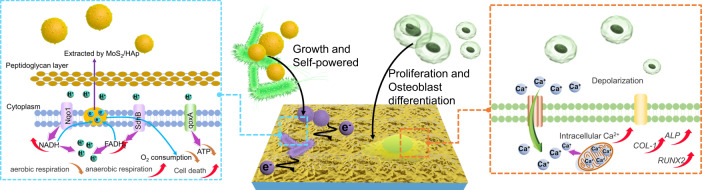
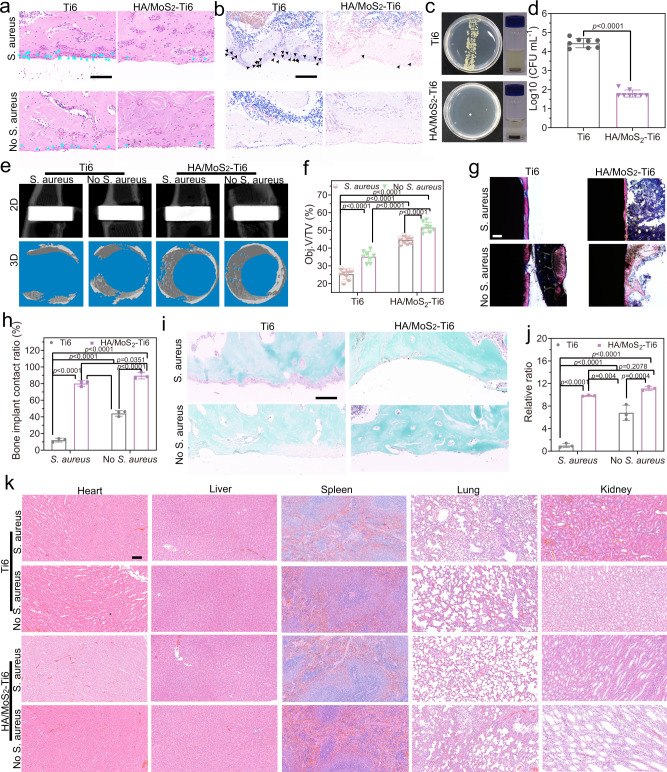
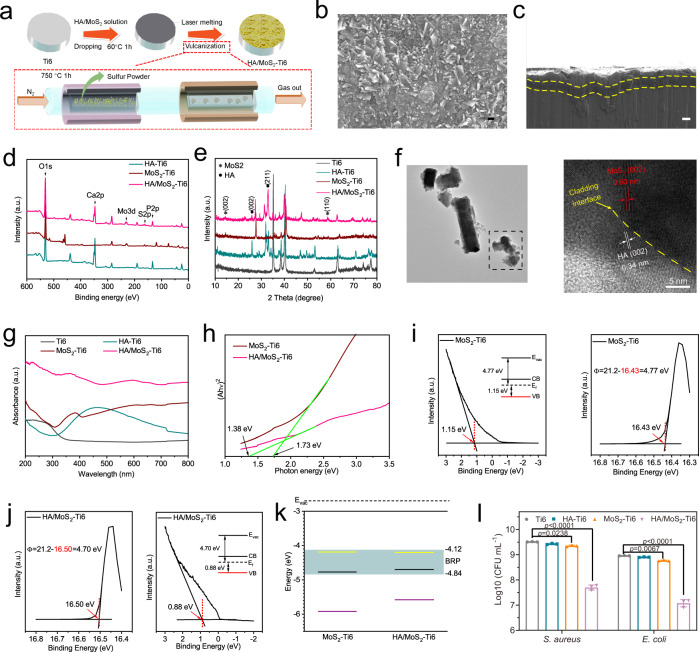
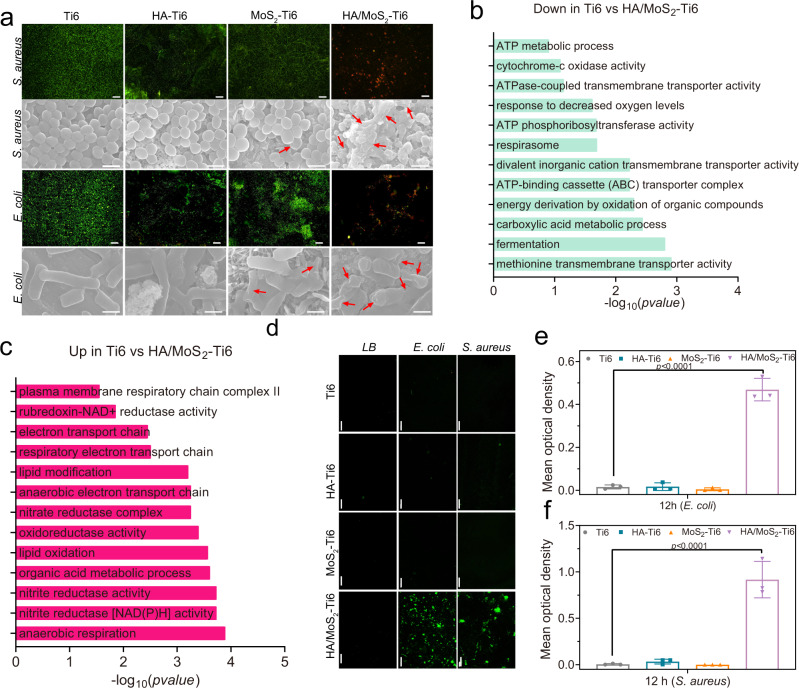
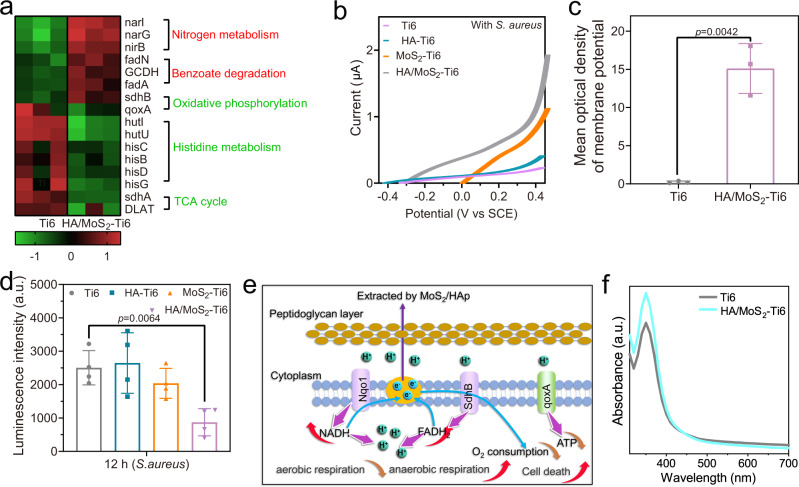
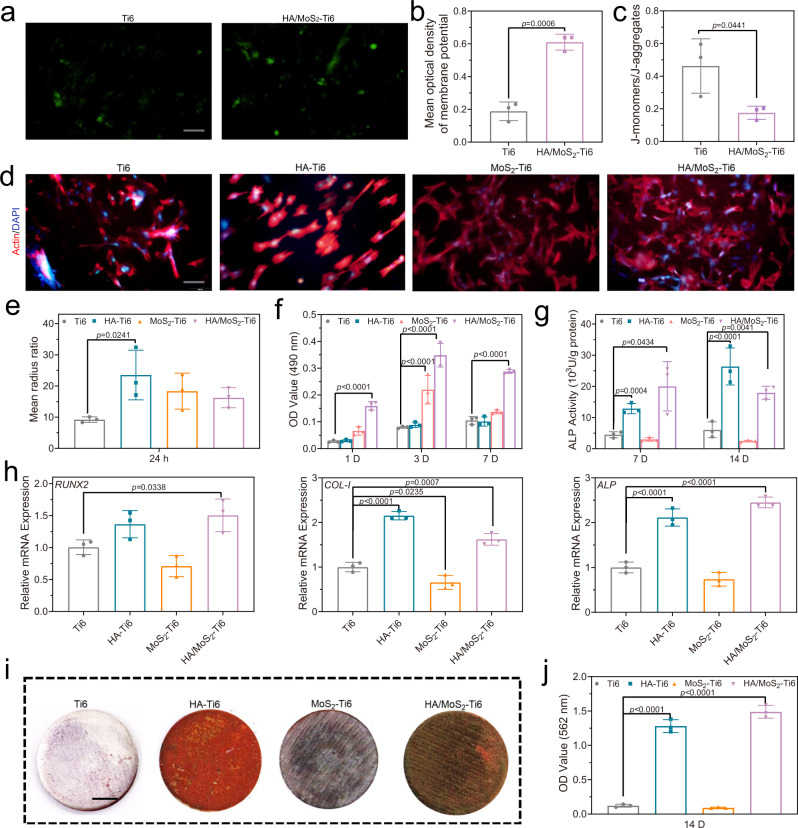
Clinically, it is difficult to endow implants with excellent osteogenic ability and antibacterial activity simultaneously. Herein, the self-activating implants modified with hydroxyapatite (HA)/MoS coating are designed to prevent Staphylococcus aureus (S. aureus) and Escherichia coli (E. coli) infections and accelerate bone regeneration simultaneously. The electron transfer between bacteria and HA/MoS is triggered when bacteria contacted with the material. RNA sequencing data reveals that the expression level of anaerobic respiration-related genes is up-regulated and the expression level of aerobic respiration-related genes is down-regulated when bacteria adhere to the implants. HA/MoS presents a highly effective antibacterial efficacy against both S. aureus and E. coli because of bacterial respiration-activated metabolic pathway changes. Meanwhile, this coating promotes the osteoblastic differentiation of mesenchymal stem cells by altering the potentials of cell membrane and mitochondrial membrane. The proposed strategy exhibits great potential to endow implants with self-activating anti-infection performance and osteogenic ability simultaneously.
临床上,很难同时赋予植入物优异的成骨能力和抗菌活性。在此,设计了具有羟基磷灰石(HA)/MoS 涂层的自激活植入物,以同时预防金黄色葡萄球菌(S. aureus)和大肠杆菌(E. coli)感染并加速骨再生。当细菌与材料接触时,细菌和 HA/MoS 之间发生电子转移。RNA 测序数据显示,当细菌附着在植入物上时,与厌氧呼吸相关的基因的表达水平上调,而与需氧呼吸相关的基因的表达水平下调。由于细菌呼吸激活的代谢途径改变,HA/MoS 对金黄色葡萄球菌和大肠杆菌均表现出高效的抗菌功效。同时,这种涂层通过改变细胞膜和线粒体膜的电位来促进间充质干细胞的成骨细胞分化。所提出的策略具有很大的潜力,可以同时赋予植入物自激活抗感染性能和成骨能力。