Pavelquesi Sabrina Lunara Santos, de Oliveira Ferreira Ana Carolina Almeida, Rodrigues Angeislenie Ricelle Magalhães, de Souza Silva Calliandra Maria, Orsi Daniela Castilho, da Silva Izabel Cristina Rodrigues
Laboratory of Food Control, University of Brasilia (UnB), Centro Metropolitano, Conjunto A, lote 01, Ceilandia, Brasilia CEP, Brasília 72220-900, DF, Brazil.
Antibiotics (Basel). 2021 Oct 28;10(11):1314. doi: 10.3390/antibiotics10111314.
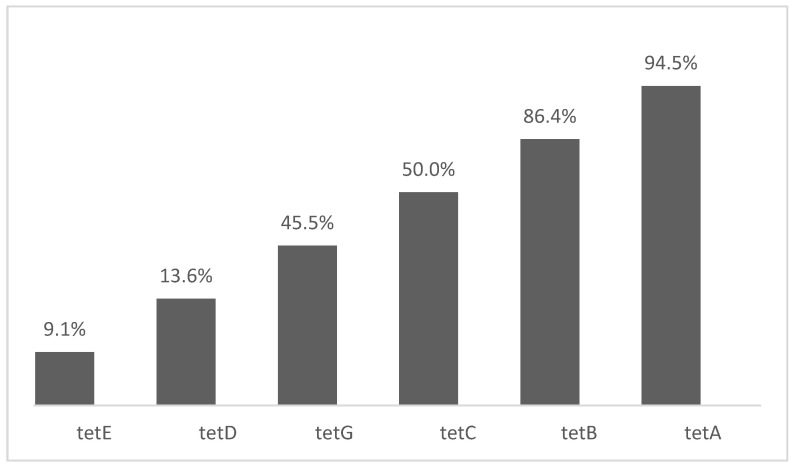
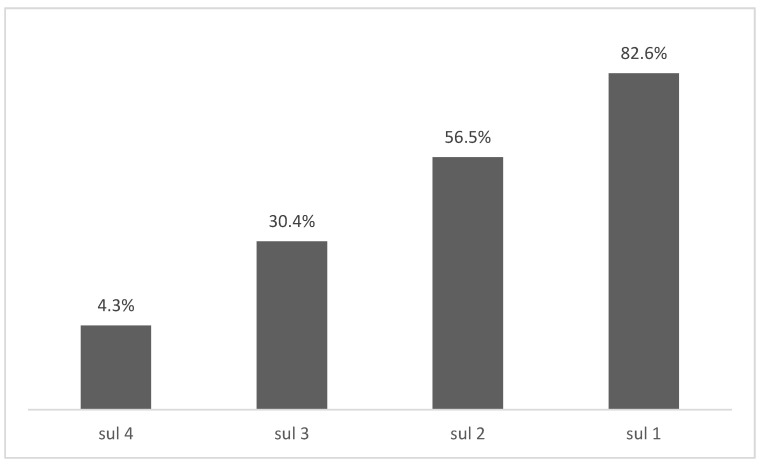
Tetracyclines and sulfonamides are broad-spectrum antibacterial agents which have been used to treat bacterial infections for over half a century. The widespread use of tetracyclines and sulfonamides led to the emergence of resistance in a diverse group of bacteria. This resistance can be studied by searching for resistance genes present in the bacteria responsible for different resistance mechanisms. is one of the leading bacteria causing foodborne diseases worldwide, and its resistance to tetracyclines and sulfonamides has been widely reported. The literature review searched the Virtual Health Library for articles with specific data in the studied samples: the resistance genes found, the primers used in PCR, and the thermocycler conditions. The results revealed that presented high rates of resistance to tetracycline and sulfonamide, and the most frequent samples used to isolate were poultry and pork. The tetracycline resistance genes most frequently detected from spp. were followed by . The gene followed by were the most frequently sulfonamide resistance genes present in . These genes are associated with plasmids, transposons, or both, and are often conjugative, highlighting the transference potential of these genes to other bacteria, environments, animals, and humans.
四环素和磺胺类药物是广谱抗菌剂,已用于治疗细菌感染半个多世纪。四环素和磺胺类药物的广泛使用导致多种细菌产生耐药性。这种耐药性可以通过寻找负责不同耐药机制的细菌中存在的耐药基因来研究。是全球范围内导致食源性疾病的主要细菌之一,其对四环素和磺胺类药物的耐药性已被广泛报道。文献综述在虚拟健康图书馆中搜索了在所研究样本中具有特定数据的文章:发现的耐药基因、PCR中使用的引物以及热循环仪条件。结果显示,对四环素和磺胺类药物呈现出高耐药率,用于分离的最常见样本是家禽和猪肉。从 spp. 中最常检测到的四环素耐药基因是 ,其次是 。基因 其次是 是 中最常出现的磺胺类耐药基因。这些基因与质粒、转座子或两者都有关联,并且通常具有接合性,突出了这些基因向其他细菌、环境、动物和人类转移的潜力。