Tang Lu, He Shun, Yin Yue, Liu Hening, Hu Jingyi, Cheng Jie, Wang Wei
State Key Laboratory of Natural Medicines, Department of Pharmaceutics, School of Pharmacy, China Pharmaceutical University, Nanjing 211198, China.
NMPA Key Laboratory for Research and Evaluation of Pharmaceutical Preparations and Excipients, China Pharmaceutical University, Nanjing 211198, China.
Pharmaceutics. 2021 Nov 8;13(11):1888. doi: 10.3390/pharmaceutics13111888.
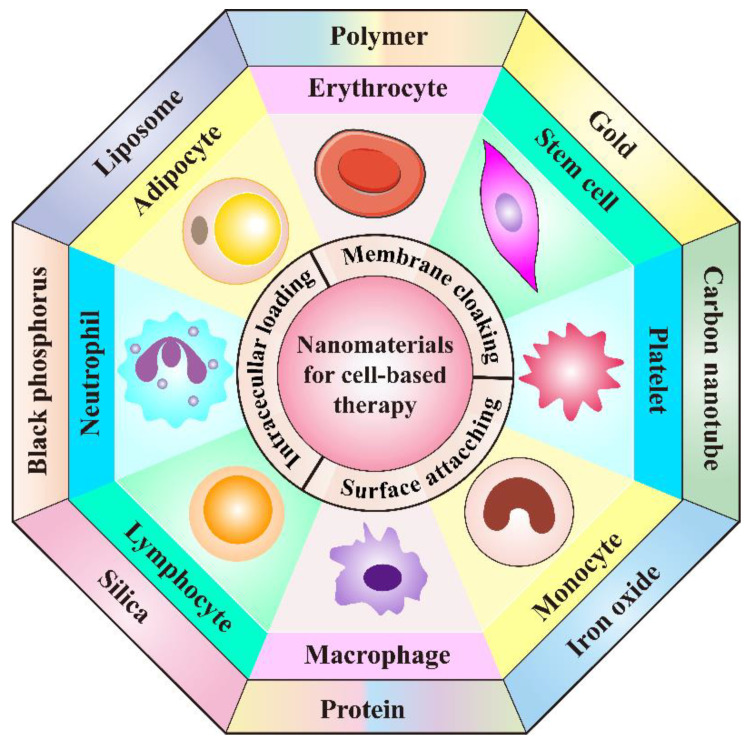
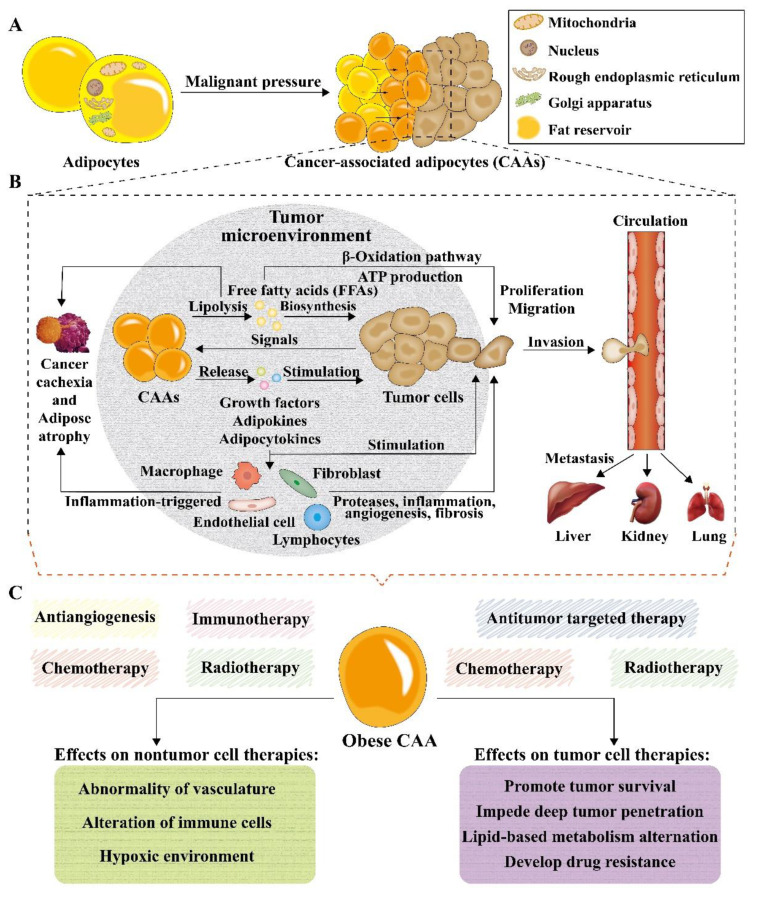
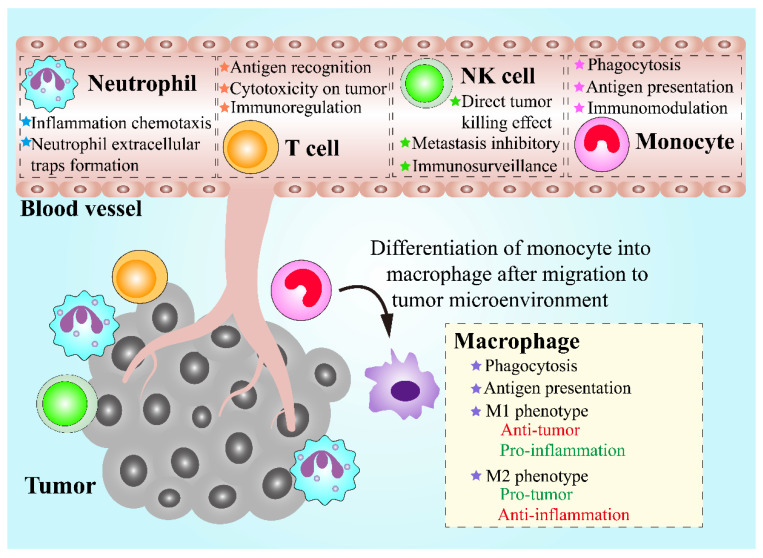
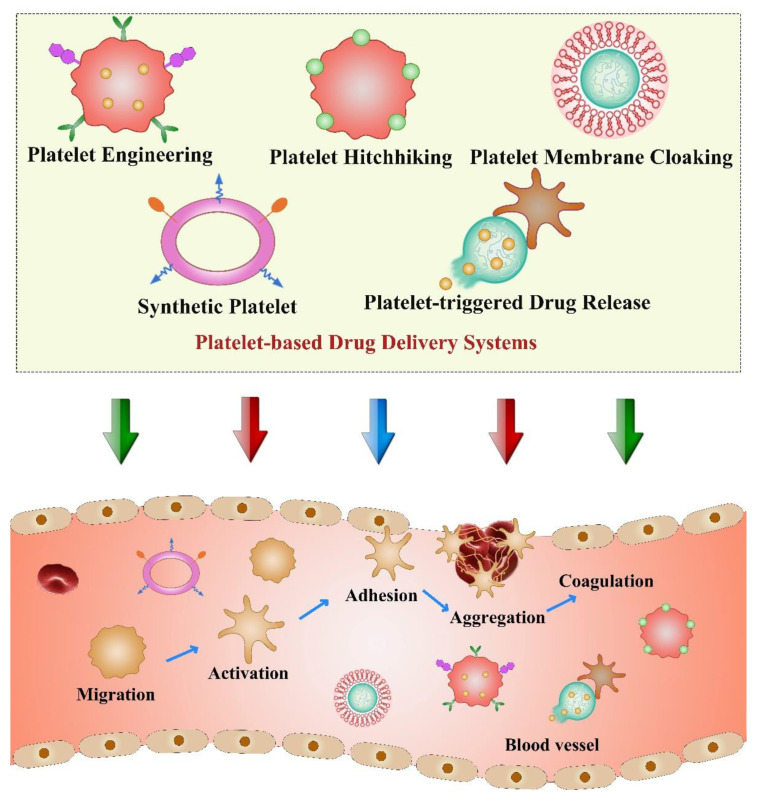
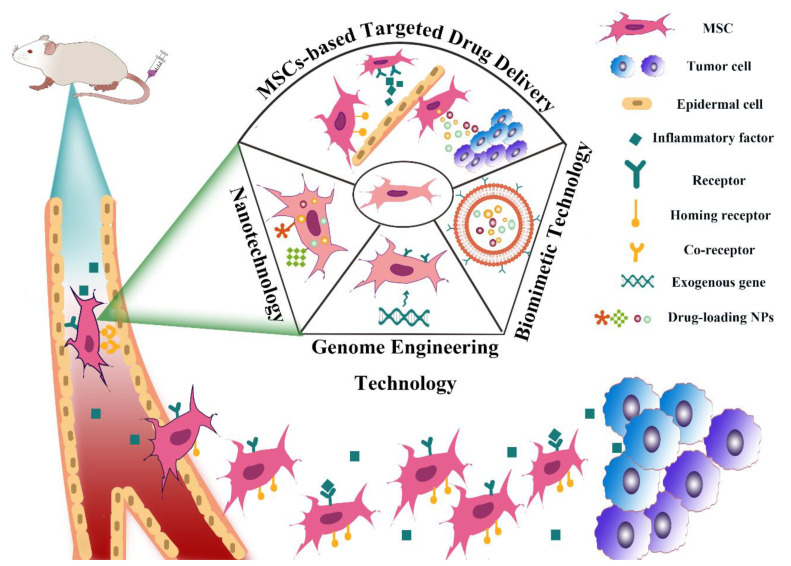
Cell-based drug delivery systems have shown tremendous advantages in cancer treatment due to their distinctive properties. For instance, delivery of therapeutics using tumor-tropic cells like neutrophils, lymphocytes and mesenchymal stem cells can achieve specific tumor targeting due to the "Trojan Horse" effect. Other circulatory cells like erythrocytes and platelets can greatly improve the circulation time of nanoparticles due to their innate long circulation property. Adipocytes, especially cancer-associated adipocytes, play key roles in tumor development and metabolism, therefore, adipocytes are regarded as promising bio-derived nanoplatforms for anticancer targeted drug delivery. Nanomaterials are important participants in cell-based drug delivery because of their unique physicochemical characteristics. Therefore, the integration of various nanomaterials with different cell types will endow the constructed delivery systems with many attractive properties due to the merits of both. In this review, a number of strategies based on nanomaterial-involved cell-mediated drug delivery systems for cancer treatment will be summarized. This review discusses how nanomaterials can be a benefit to cell-based therapies and how cell-derived carriers overcome the limitations of nanomaterials, which highlights recent advancements and specific biomedical applications based on nanomaterial-mediated, cell-based drug delivery systems.
基于细胞的药物递送系统因其独特的性质在癌症治疗中显示出巨大优势。例如,使用嗜中性粒细胞、淋巴细胞和间充质干细胞等肿瘤趋向性细胞递送治疗药物,由于“特洛伊木马”效应可实现特异性肿瘤靶向。红细胞和血小板等其他循环细胞因其固有的长循环特性,可大大延长纳米颗粒的循环时间。脂肪细胞,尤其是癌症相关脂肪细胞,在肿瘤发展和代谢中起关键作用,因此,脂肪细胞被视为用于抗癌靶向药物递送的有前景的生物衍生纳米平台。纳米材料因其独特的物理化学特性,是基于细胞的药物递送中的重要参与者。因此,将各种纳米材料与不同细胞类型整合,将因两者的优点而赋予构建的递送系统许多吸引人的特性。在本综述中,将总结一些基于纳米材料参与的细胞介导药物递送系统用于癌症治疗的策略。本综述讨论了纳米材料如何有益于基于细胞的疗法,以及细胞衍生载体如何克服纳米材料的局限性,这突出了基于纳米材料介导的、基于细胞的药物递送系统的最新进展和具体生物医学应用。