Department of Psychology, Royal Holloway, University of London, Egham Hill, Egham, Surrey, UK.
Department of Health Sciences, Kristiana University College, Oslo, Norway.
Prim Health Care Res Dev. 2021 Dec 9;22:e79. doi: 10.1017/S1463423621000827.
To assess the effectiveness of supported employment interventions for improving competitive employment in populations of people with conditions other than only severe mental illness.
Supported employment interventions have been extensively tested in severe mental illness populations. These approaches may be beneficial outside of these populations.
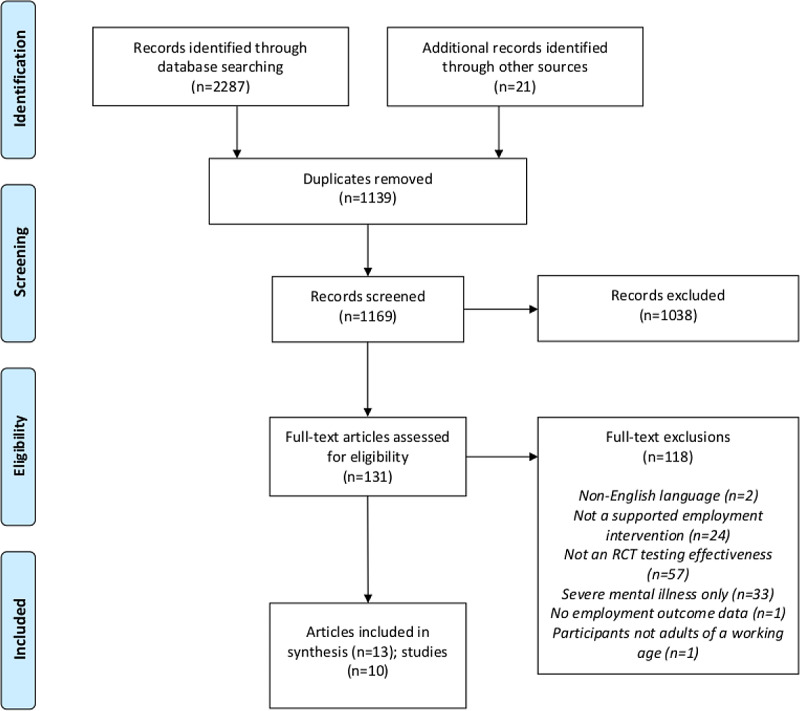
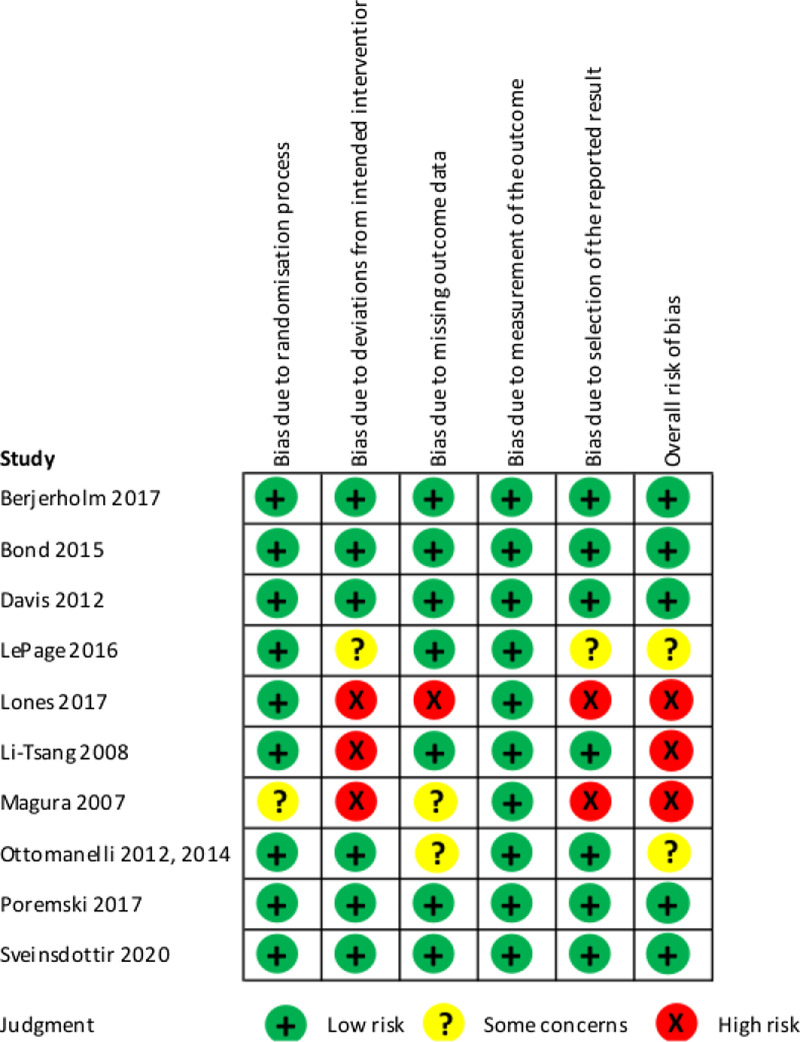
We searched PubMed, Embase, CINAHL, PsycInfo, Web of Science, Scopus, JSTOR, PEDro, OTSeeker, and NIOSHTIC for trials including unemployed people with any condition and including severe mental illness if combined with other co-morbidities or other specific circumstances (e.g., homelessness). We excluded trials where inclusion was based on severe mental illness alone. Two reviewers independently assessed risk of bias (RoB v2.0) and four reviewers extracted data. We assessed rates of competitive employment as compared to traditional vocational rehabilitation or waiting list/services as usual.
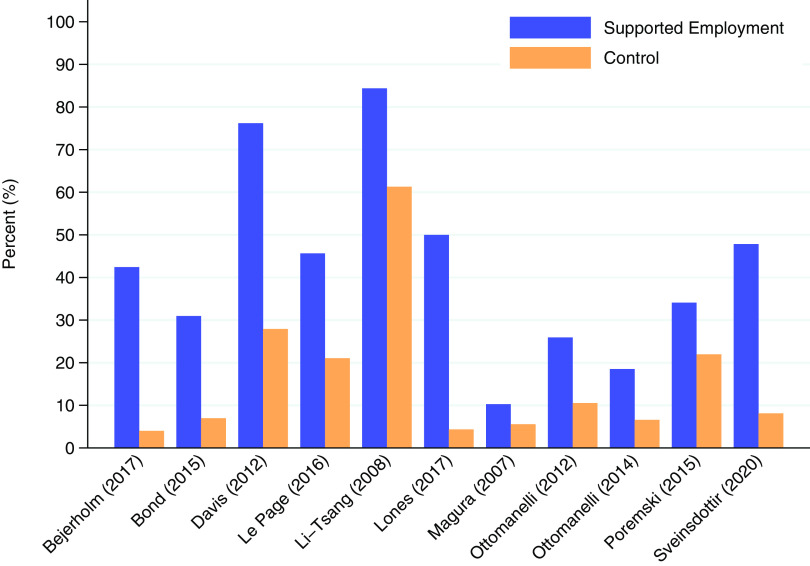
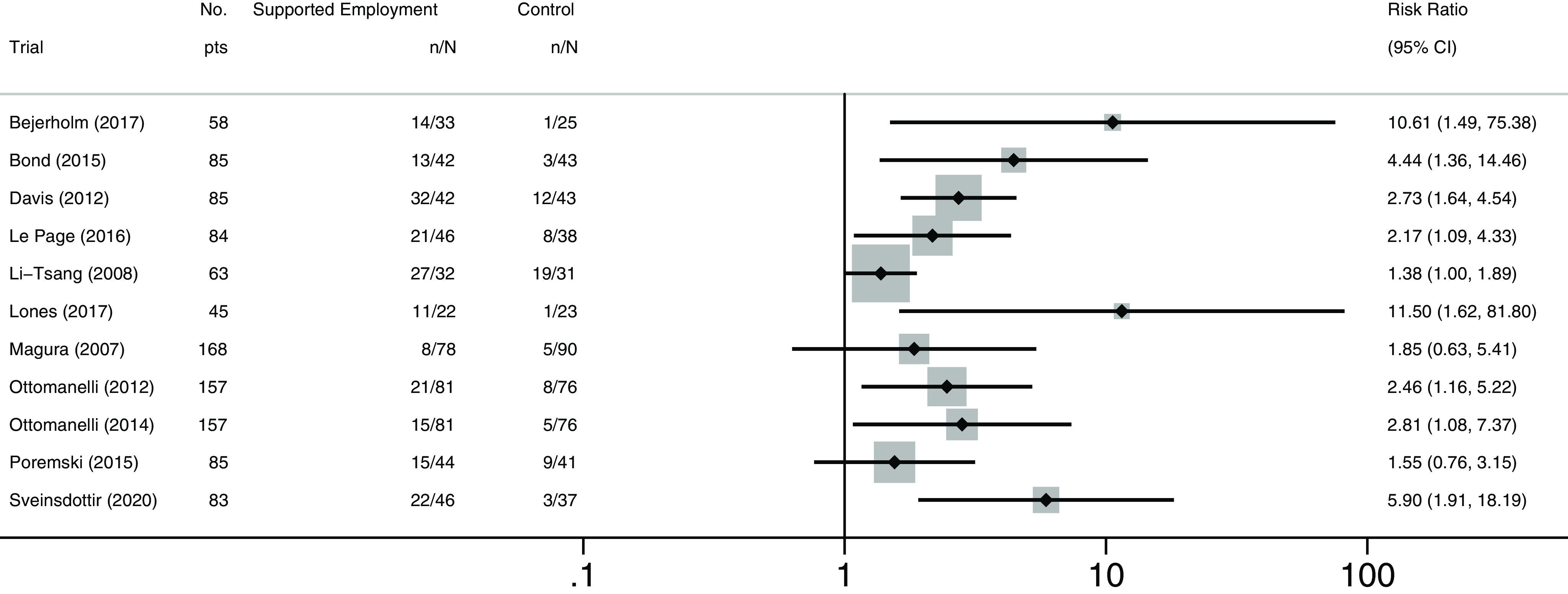
Ten randomised controlled trials (913 participants) were included. Supported employment was more effective than control interventions for improving competitive employment in seven trials: in people with affective disorders [risk ratio (RR) 10.61 (1.49, 75.38)]; mental disorders and justice involvement [RR 4.44 (1.36,14.46)]; veterans with posttraumatic stress disorder (PTSD) [RR 2.73 (1.64, 4.54)]; formerly incarcerated veterans [RR 2.17 (1.09, 4.33)]; people receiving methadone treatment [RR 11.5 (1.62, 81.8)]; veterans with spinal cord injury at 12 months [RR 2.46 (1.16, 5.22)] and at 24 months [RR 2.81 (1.98, 7.37)]; and young people not in employment, education, or training [RR 5.90 (1.91-18.19)]. Three trials did not show significant benefits from supported employment: populations of workers with musculoskeletal injuries [RR 1.38 (1.00, 1.89)]; substance abuse [RR 1.85 (0.65, 5.41)]; and formerly homeless people with mental illness [RR 1.55 (0.76, 3.15)]. Supported employment interventions may be beneficial to people from more diverse populations than those with severe mental illness alone. Defining competitive employment and increasing (and standardising) measurement of non-vocational outcomes may help to improve research in this area.
评估支持性就业干预措施在改善除严重精神疾病以外的人群获得竞争性就业方面的效果。
支持性就业干预措施已在严重精神疾病人群中得到广泛测试。这些方法在这些人群之外可能是有益的。
我们在 PubMed、Embase、CINAHL、PsycInfo、Web of Science、Scopus、JSTOR、PEDro、OTSeeker 和 NIOSHTIC 中搜索了包括失业人员和任何疾病的试验,包括如果与其他合并症或其他特定情况(例如,无家可归)相结合的严重精神疾病。我们排除了仅基于严重精神疾病纳入的试验。两位审查员独立评估了偏倚风险(RoB v2.0),四位审查员提取了数据。我们评估了与传统职业康复或等待名单/服务常规相比获得竞争性就业的比率。
纳入了 10 项随机对照试验(913 名参与者)。在七项试验中,支持性就业比对照组干预更有效地提高了竞争性就业:在情感障碍患者中[风险比(RR)10.61(1.49,75.38)];精神障碍和司法参与患者[RR 4.44(1.36,14.46)];创伤后应激障碍(PTSD)退伍军人[RR 2.73(1.64,4.54)];以前被监禁的退伍军人[RR 2.17(1.09,4.33)];接受美沙酮治疗的患者[RR 11.5(1.62,81.8)];脊髓损伤后 12 个月的退伍军人[RR 2.46(1.16,5.22)]和 24 个月[RR 2.81(1.98,7.37)];未就业、未接受教育或培训的年轻人[RR 5.90(1.91-18.19)]。三项试验未显示支持性就业的显著益处:肌肉骨骼损伤患者[RR 1.38(1.00,1.89)];药物滥用[RR 1.85(0.65,5.41)];和以前有精神疾病的无家可归者[RR 1.55(0.76,3.15)]。支持性就业干预措施可能对除严重精神疾病以外的人群有益。定义竞争性就业和增加(并标准化)非职业结果的测量可能有助于改善该领域的研究。