Unit of Epidemiological Psychiatry and Evaluation, IRCCS Istituto Centro San Giovanni di Dio Fatebenefratelli, Brescia, Italy.
Department of Psychiatry and Behavioral Sciences; Research Service, University of Miami Miller School of Medicine, Miami, FL, USA.
Transl Psychiatry. 2021 Dec 8;11(1):620. doi: 10.1038/s41398-021-01749-1.
Neurocognitive impairment has been extensively studied in people with schizophrenia spectrum disorders and seems to be one of the major determinants of functional outcome in this clinical population. Data exploring the link between neuropsychological deficits and the risk of violence in schizophrenia has been more inconsistent. In this study, we analyse the differential predictive potential of neurocognition and social cognition to discriminate patients with schizophrenia spectrum disorders with and without a history of severe violence.
Overall, 398 (221 cases and 177 controls) patients were recruited in forensic and general psychiatric settings across five European countries and assessed using a standardized battery.
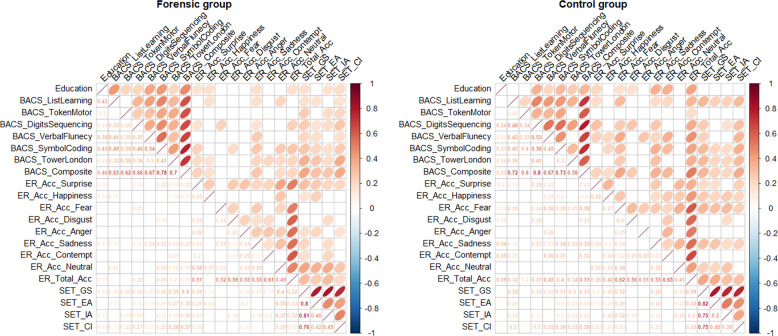
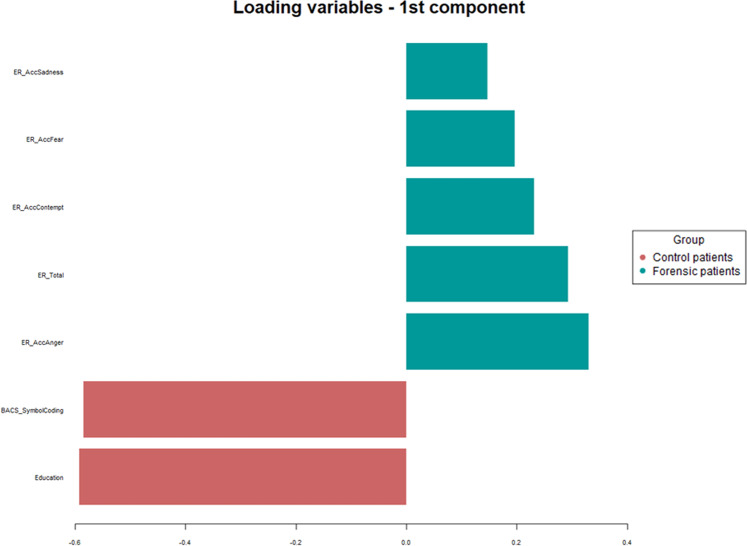
Education and processing speed were the strongest discriminators between forensic and non-forensic patients, followed by emotion recognition. In particular, increased accuracy for anger recognition was the most distinctive feature of the forensic group.
These results may have important clinical implications, suggesting potential enhancements of the assessment and treatment of patients with schizophrenia spectrum disorders with a history of violence, who may benefit from consideration of socio-cognitive skills commonly neglected in ordinary clinical practice.
神经认知障碍在精神分裂症谱系障碍患者中得到了广泛研究,似乎是该临床人群功能结局的主要决定因素之一。探索神经心理学缺陷与精神分裂症患者暴力风险之间关联的数据一直不太一致。在这项研究中,我们分析了神经认知和社会认知的差异预测潜力,以区分有和没有严重暴力史的精神分裂症谱系障碍患者。
总体而言,在五个欧洲国家的法医和一般精神病学环境中招募了 398 名(221 例病例和 177 例对照)患者,并使用标准化的测试工具进行评估。
教育程度和处理速度是区分法医和非法医患者的最强判别因素,其次是情绪识别。特别是,愤怒识别准确性的提高是法医组的最显著特征。
这些结果可能具有重要的临床意义,表明对于有暴力史的精神分裂症谱系障碍患者的评估和治疗可能会有所增强,这些患者可能会受益于考虑在普通临床实践中经常被忽视的社会认知技能。