Department of Biological Sciences, Faculty of Science, King Abdulaziz University, P.O. Box 80203, Jeddah 21589, Saudi Arabia.
Molecules. 2021 Dec 6;26(23):7407. doi: 10.3390/molecules26237407.
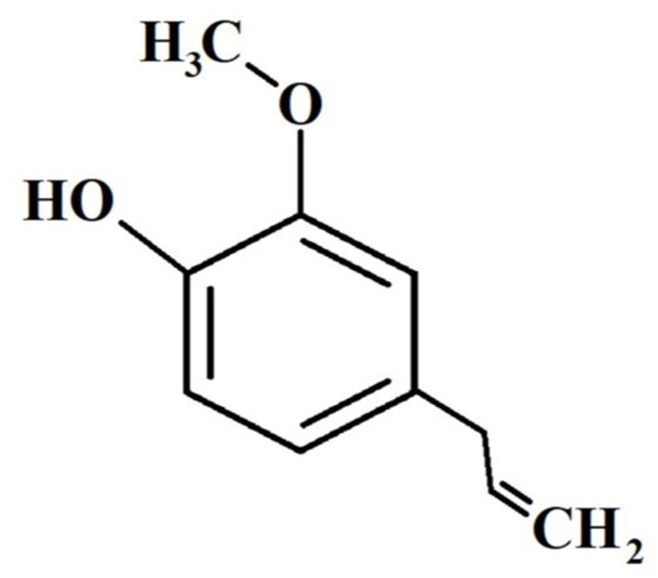
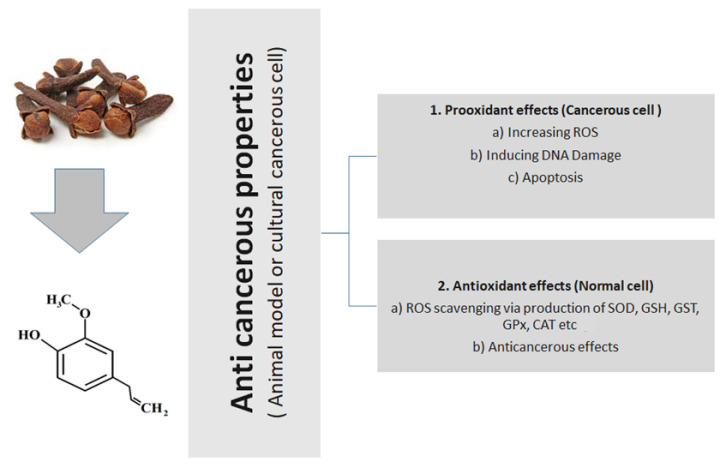
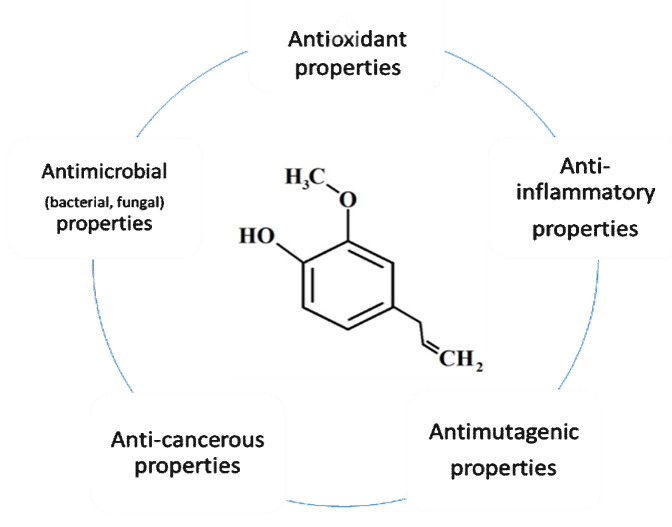
Conventional cancer treatments have shown several unfavourable adverse effects, as well as an increase in anticancer drug resistance, which worsens the impending cancer therapy. Thus, the emphasis is currently en route for natural products. There is currently great interest in the natural bioactive components from medicinal plants possessing anticancer characteristics. For example, clove ( L.) (Family Myrtaceae) is a highly prized spice that has been historically utilized as a food preservative and for diverse medical uses. It is reckoned amongst the valued sources of phenolics. It is indigenous to Indonesia but currently is cultivated in various places of the world. Among diverse active components, eugenol, the principal active component of , has optimistic properties comprising antioxidant, anti-inflammatory, and anticancer actions. Eugenol (4-allyl-2-methoxyphenol) is a musky oil that is mainly obtained from clove. It has long been utilized all over the world as a result of its broad properties like antioxidant, anticancer, anti-inflammatory, and antimicrobial activities. Eugenol continues to pique investigators' interest because of its multidirectional activities, which suggests it could be used in medications to treat different ailments. Anticancer effects of eugenol are accomplished by various mechanisms like inducing cell death, cell cycle arrest, inhibition of migration, metastasis, and angiogenesis on several cancer cell lines. Besides, eugenol might be utilized as an adjunct remedy for patients who are treated with conventional chemotherapy. This combination leads to a boosted effectiveness with decreased toxicity. The present review focuses on the anticancer properties of eugenol to treat several cancer types and their possible mechanisms.
传统的癌症治疗方法已经显示出多种不良的副作用,以及抗癌药物耐药性的增加,这使得即将进行的癌症治疗更加恶化。因此,目前的重点是天然产物。目前,人们对具有抗癌特性的药用植物的天然生物活性成分非常感兴趣。例如,丁香(L.)(桃金娘科)是一种非常珍贵的香料,历史上一直被用作食品防腐剂和多种医疗用途。它被认为是酚类的重要来源之一。它原产于印度尼西亚,但目前在世界上许多地方都有种植。在多种活性成分中,丁香酚是丁香的主要活性成分,具有抗氧化、抗炎和抗癌作用。丁香酚(4-丙烯基-2-甲氧基苯酚)是一种麝香油,主要从丁香中提取。由于其具有抗氧化、抗癌、抗炎和抗菌等广泛的特性,它在全世界得到了长期的应用。丁香酚因其多向性活动继续引起研究人员的兴趣,这表明它可以用于治疗不同疾病的药物。丁香酚的抗癌作用是通过多种机制实现的,如诱导细胞死亡、细胞周期停滞、抑制迁移、转移和血管生成在几种癌细胞系。此外,丁香酚可作为接受常规化疗的患者的辅助治疗药物。这种联合使用可以提高疗效,降低毒性。本文综述了丁香酚治疗多种癌症类型及其可能机制的抗癌特性。