Chang Meiqi, Feng Wei, Ding Li, Zhang Hongguang, Dong Caihong, Chen Yu, Shi Jianlin
State Key Laboratory of High Performance Ceramics and Superfine Microstructure, Shanghai Institute of Ceramics, Chinese Academy of Sciences, Shanghai, 200050, PR China.
Materdicine Lab, School of Life Sciences, Shanghai University, Shanghai, 200444, PR China.
Bioact Mater. 2021 Sep 4;10:131-144. doi: 10.1016/j.bioactmat.2021.08.030. eCollection 2022 Apr.
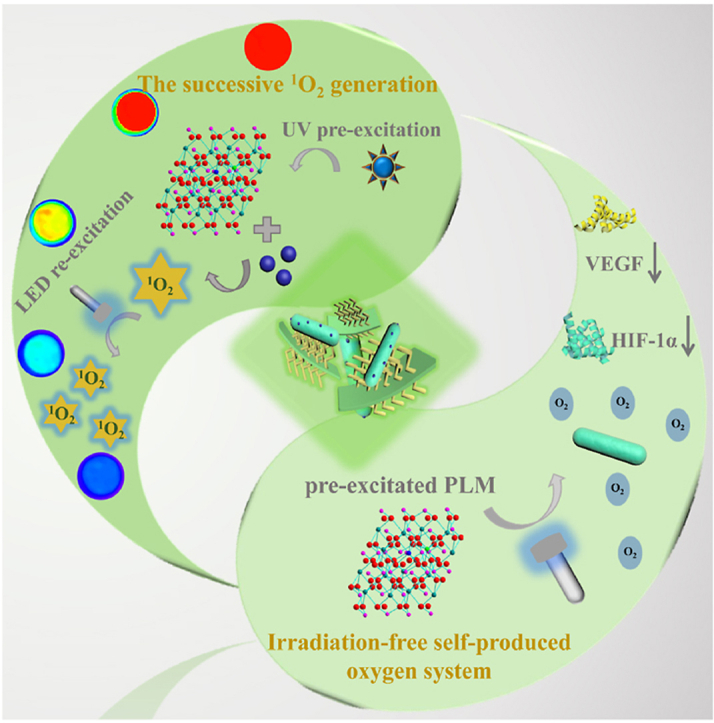
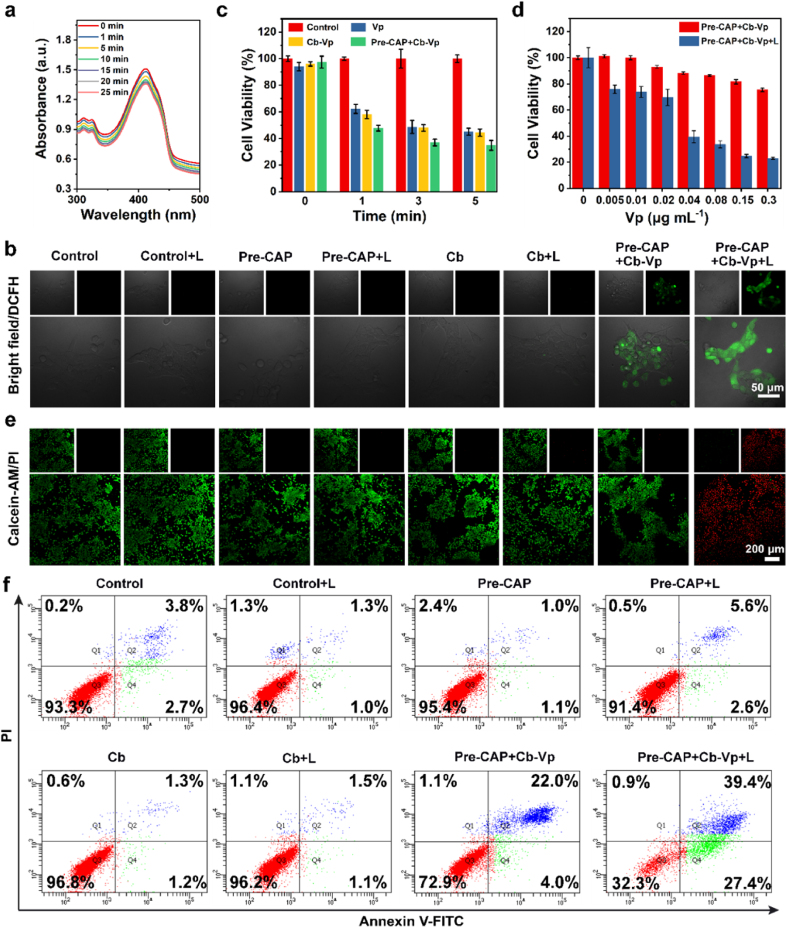
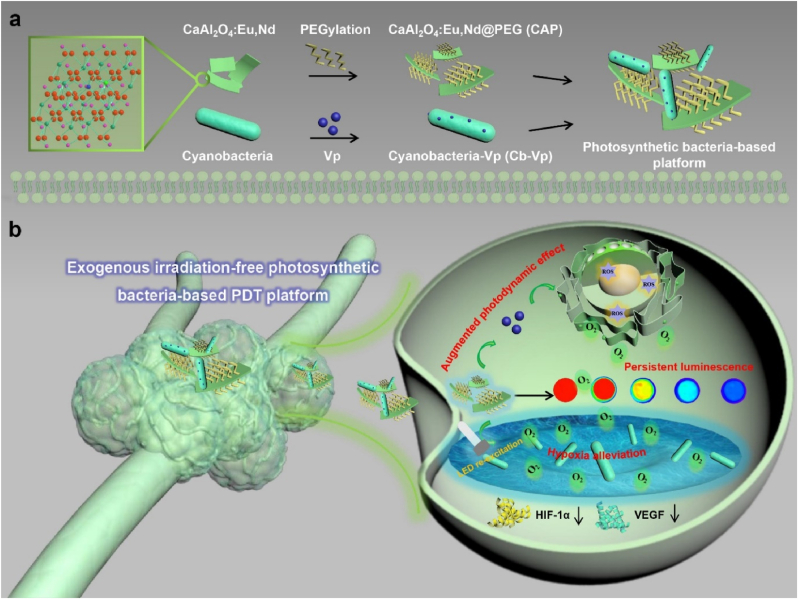
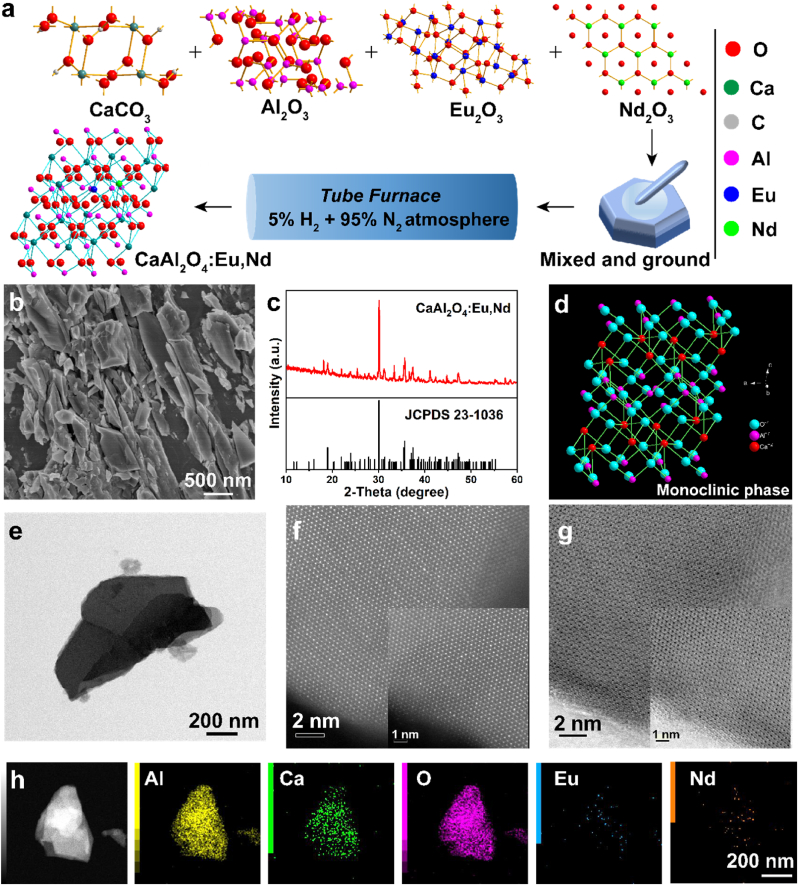
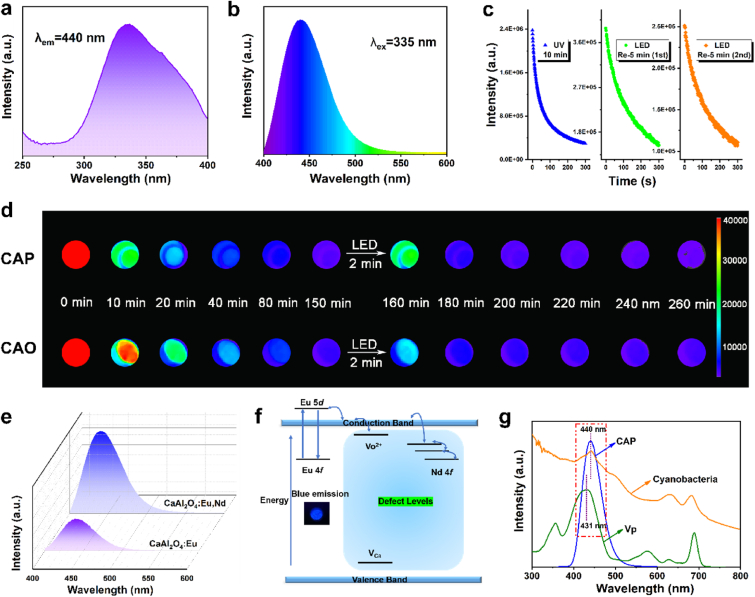
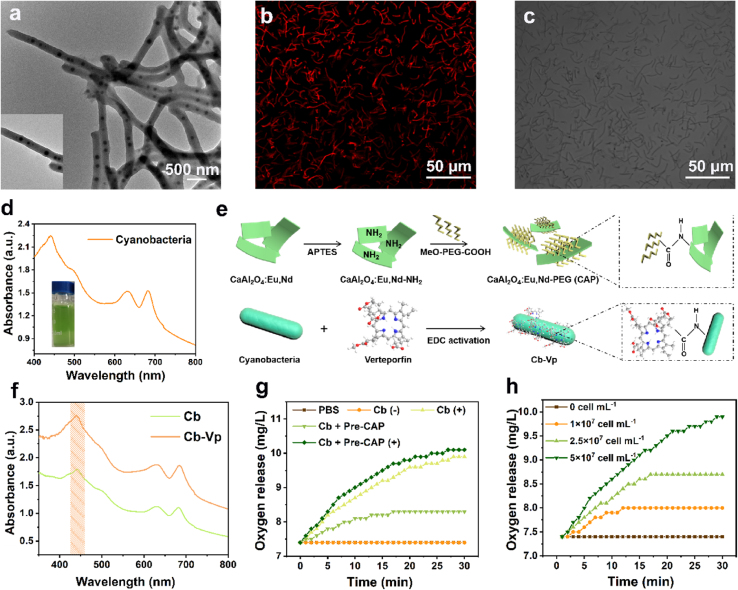
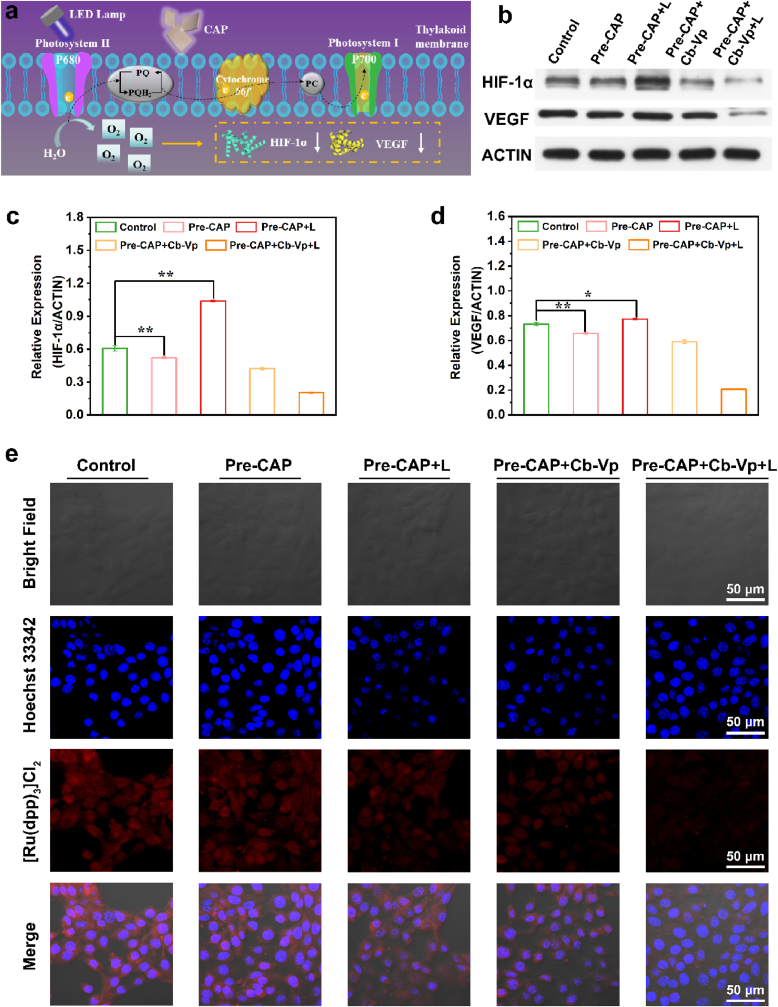
Tumor oxygenation level has been regarded as an attractive target to elevate the efficiency of photodynamic therapy (PDT). Cyanobacterial photosynthesis-mediated reversal of tumor hypoxia could enable an oxygen-boosted PDT, but is limited by scant penetration depth and efficiency of external light. Herein, aiming at the dual purposes of reducing biological toxicity induced by long-term light irradiation and alleviating hypoxia, we here introduce a novel-designed CaAlO:Eu,Nd blue persistent luminescence material (PLM) as the light source after pre-excited . The ingenious construction of blue-emitting PLM with "optical battery" characteristics activates cyanobacterial cells and verteporfin simultaneously, which performs the successive oxygen supply and singlet oxygen generation without the long-term external excitation, resulting in the modulated tumor hypoxic microenvironment and enhanced photodynamic tumor proliferation inhibition efficiency. Both cellular assessment and tumor evaluation results affirm the advantages of self-produced oxygen PDT system and evidence the notable antineoplastic outcome. This work develops an irradiation-free photosynthetic bacteria-based PDT platform for the optimization of both oxygen production capacity and light utilization efficiency in cancer treatment, which is expected to promote the clinical progress of microbial-based photonic therapy.
肿瘤氧合水平被视为提高光动力疗法(PDT)效率的一个有吸引力的靶点。蓝藻光合作用介导的肿瘤缺氧逆转可实现增氧光动力疗法,但受限于外部光的穿透深度和效率不足。在此,为了实现减少长期光照诱导的生物毒性和缓解缺氧这两个目的,我们引入一种新设计的CaAlO:Eu,Nd蓝色长余辉发光材料(PLM),在预激发后作为光源。具有“光学电池”特性的蓝色发光PLM的巧妙构建同时激活蓝藻细胞和维替泊芬,在无需长期外部激发的情况下实现连续供氧和单线态氧生成,从而调节肿瘤缺氧微环境并提高光动力肿瘤增殖抑制效率。细胞评估和肿瘤评估结果均证实了自产氧光动力疗法系统的优势,并证明了显著的抗肿瘤效果。这项工作开发了一个基于无照射光合细菌的光动力疗法平台,用于优化癌症治疗中的产氧能力和光利用效率,有望推动基于微生物的光子治疗的临床进展。