Department of Public Health, College of Medicine, Korea University, Seoul, Republic of Korea.
Veterinary Epidemiology Division, Animal and Plant Quarantine Agency, Gimcheon, Republic of Korea.
Sci Rep. 2021 Dec 17;11(1):24163. doi: 10.1038/s41598-021-03284-x.
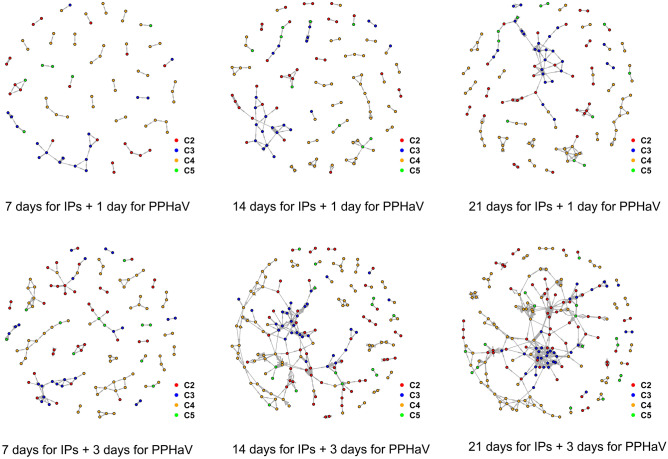
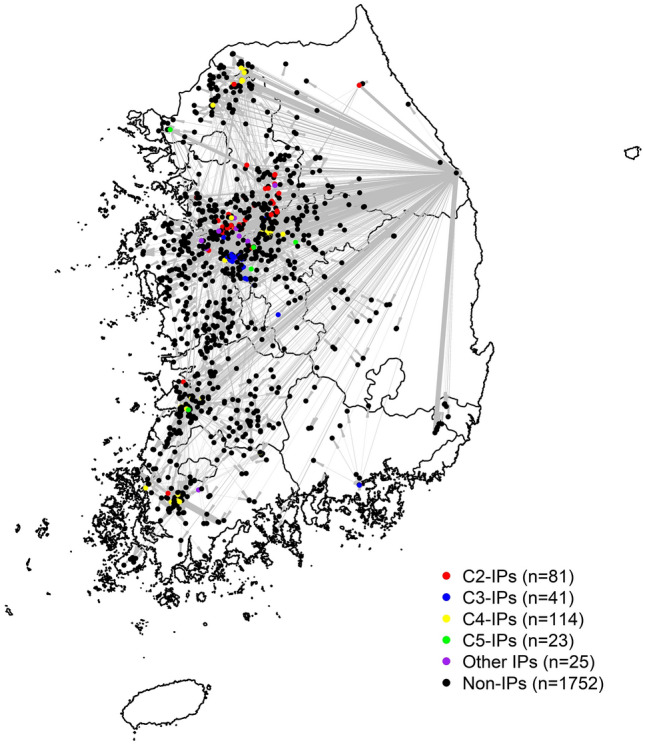
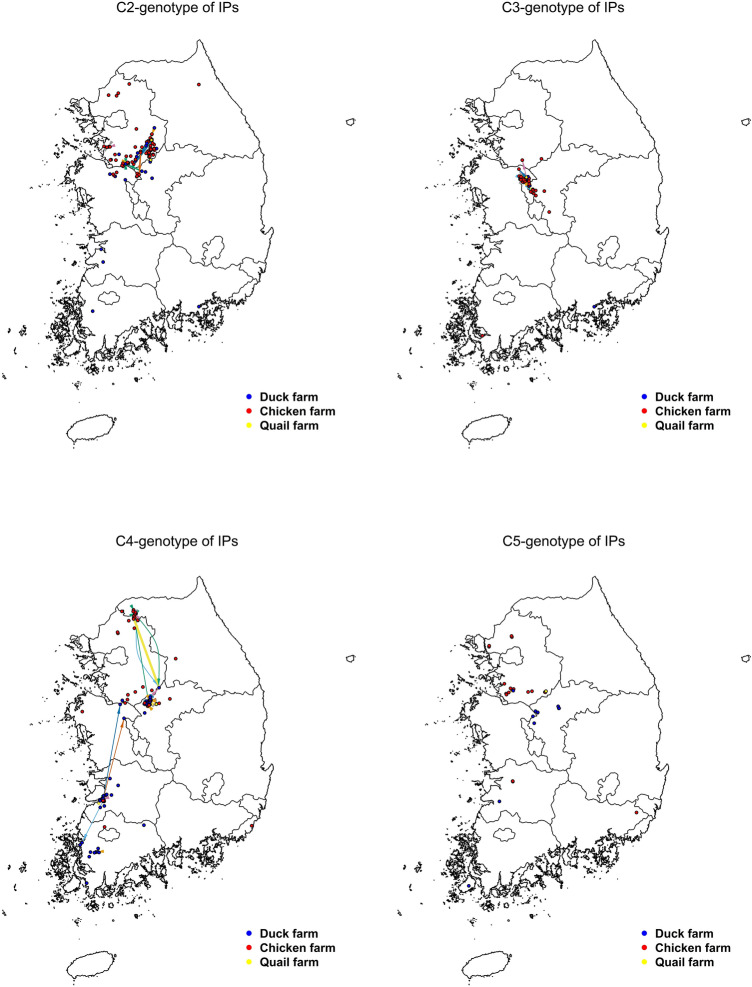
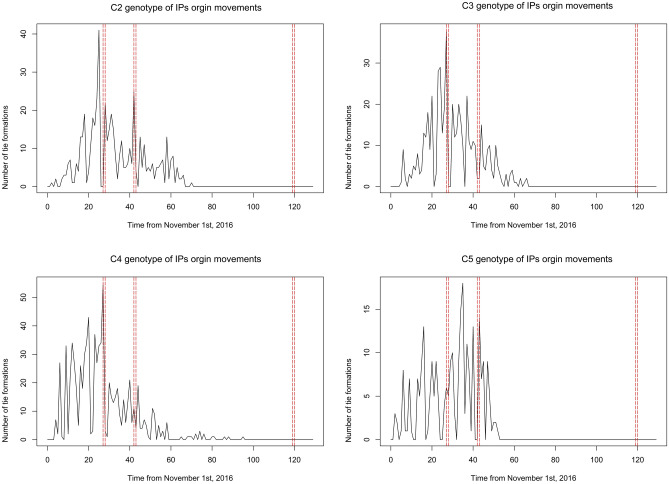
Highly pathogenic avian influenza (HPAI) in poultry holdings commonly spreads through animal trade, and poultry production and health-associated vehicle (PPHaV) movement. To effectively control the spread of disease, it is essential that the contact structure via those movements among farms is thoroughly explored. However, few attempts have been made to scrutinize PPHaV movement compared to poultry trade. Therefore, our study aimed to elucidate the role of PPHaV movement on HPAI transmission. We performed network analysis using PPHaV movement data based on a global positioning system, with phylogenetic information of the isolates during the 2016-2017 HPAI H5N6 epidemic in the Republic of Korea. Moreover, the contribution of PPHaV movement to the spread of HPAI was estimated by Bayesian modeling. The network analysis revealed that there was the relationship between phylogenetic clusters and the contact network via PPHaV movement. Furthermore, the similarity of farm poultry species and the shared integrators between inter-linked infected premises (IPs) were associated with ties within the same phylogenetic clusters. Additionally, PPHaV movement among phylogenetically clustered IPs was estimated to contribute to approximately 30% of HPAI H5N6 infections in IPs on average. This study provides insight into how HPAI spread via PPHaV movement and scientific basis for control strategies.
高致病性禽流感(HPAI)在禽类养殖场中通常通过动物贸易以及与禽类生产和健康相关的车辆(PPHaV)传播。为了有效控制疾病的传播,彻底探索这些养殖场之间的动物接触结构至关重要。然而,与禽类贸易相比,很少有尝试来仔细研究 PPHaV 的运动情况。因此,我们的研究旨在阐明 PPHaV 运动对 HPAI 传播的作用。我们使用基于全球定位系统的 PPHaV 运动数据进行了网络分析,并结合 2016-2017 年韩国 HPAI H5N6 疫情期间的分离株的系统发育信息进行了分析。此外,我们还通过贝叶斯建模估计了 PPHaV 运动对 HPAI 传播的贡献。网络分析表明,PPHaV 运动与通过 PPHaV 运动的接触网络之间存在关系。此外,农场家禽种类的相似性以及相互关联的感染场(IP)之间的共享整合器与同一系统发育簇内的联系有关。此外,估计 PPHaV 在系统发育聚类的 IP 之间的运动平均约占 IP 中 HPAI H5N6 感染的 30%。这项研究深入了解了 HPAI 如何通过 PPHaV 运动传播,并为控制策略提供了科学依据。