• 文献检索
  • 文档翻译
  • 深度研究
  • 学术资讯
  • Suppr Zotero 插件Zotero 插件
  • 邀请有礼
  • 套餐&价格
  • 历史记录
应用&插件
Suppr Zotero 插件Zotero 插件浏览器插件Mac 客户端Windows 客户端微信小程序
定价
高级版会员购买积分包购买API积分包
服务
文献检索文档翻译深度研究API 文档MCP 服务
关于我们
关于 Suppr公司介绍联系我们用户协议隐私条款
关注我们

Suppr 超能文献

核心技术专利:CN118964589B侵权必究
粤ICP备2023148730 号-1Suppr @ 2026

文献检索

告别复杂PubMed语法,用中文像聊天一样搜索,搜遍4000万医学文献。AI智能推荐,让科研检索更轻松。

立即免费搜索

文件翻译

保留排版,准确专业,支持PDF/Word/PPT等文件格式,支持 12+语言互译。

免费翻译文档

深度研究

AI帮你快速写综述,25分钟生成高质量综述,智能提取关键信息,辅助科研写作。

立即免费体验

红茶摄入对尿结石形成风险因素的影响。

Effect of Black Tea Consumption on Urinary Risk Factors for Kidney Stone Formation.

机构信息

Department of Urology, University Stone Center, University Hospital Bonn, 53127 Bonn, Germany.

出版信息

Nutrients. 2021 Dec 11;13(12):4434. doi: 10.3390/nu13124434.

DOI:10.3390/nu13124434
PMID:34959987
原文链接:https://pmc.ncbi.nlm.nih.gov/articles/PMC8708000/
Abstract

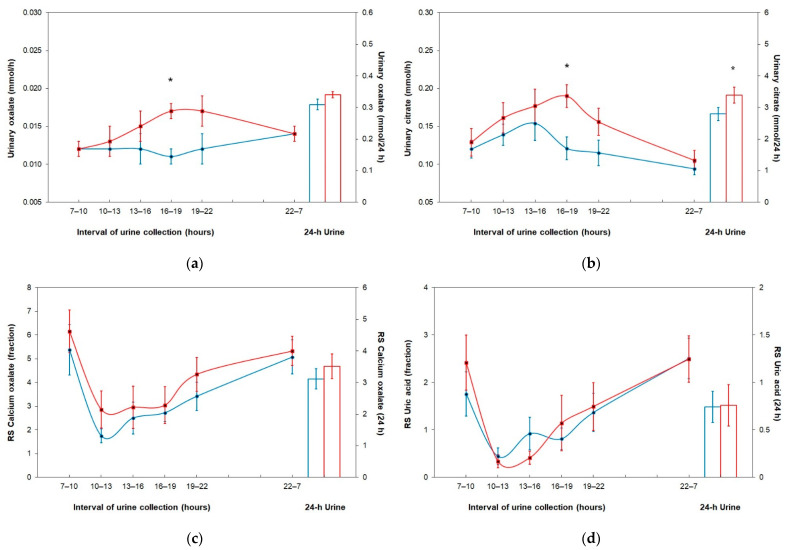
Copious fluid intake is the most essential nutritional measure in the treatment of urolithiasis, and is suggested to be a protective factor in the primary prevention of urinary stone formation. Although the intake of black tea contributes to daily fluid intake, the high oxalate content could outweigh the beneficial effect of urine dilution. The present study investigated the effect of black tea consumption on urinary risk factors for kidney stone formation. Ten healthy men received a standardized diet for a period of ten days. Subjects consumed 1.5 L/day of fruit tea (0 mg/day oxalate) during the 5-day control phase, which was replaced by 1.5 L/day of black tea (86 mg/day oxalate) during the 5-day test phase. Fractional and 24-h urines were obtained. The intake of black tea did not significantly alter 24-h urinary oxalate excretion. Urinary citrate, an important inhibitor of calcium stone formation, increased significantly, while the relative supersaturation of calcium oxalate, uric acid, and struvite remained unchanged. No significantly increased risk for kidney stone formation could be derived from the ingestion of black tea in normal subjects. Further research is needed to evaluate the impact of black tea consumption in kidney stone patients with intestinal hyperabsorption of oxalate.

摘要

大量饮水是治疗尿路结石最重要的营养措施,并且被建议是预防尿路结石形成的保护因素。虽然红茶的摄入有助于日常液体摄入,但高草酸含量可能超过尿液稀释的有益作用。本研究调查了红茶消费对肾结石形成的尿危险因素的影响。十名健康男性在十天的时间内接受了标准化饮食。在 5 天的对照期内,受试者每天饮用 1.5 升果茶(草酸 0 毫克/天),在 5 天的试验期内,用 1.5 升红茶(草酸 86 毫克/天)代替。收集了部分和 24 小时尿液。红茶的摄入并没有显著改变 24 小时尿草酸排泄量。尿枸橼酸盐,一种重要的钙结石形成抑制剂,显著增加,而钙草酸、尿酸和鸟粪石的相对过饱和度保持不变。正常受试者摄入红茶不会导致肾结石形成的风险显著增加。需要进一步研究来评估在肠道草酸过度吸收的肾结石患者中饮用红茶的影响。
https://cdn.ncbi.nlm.nih.gov/pmc/blobs/948f/8708000/ebc2dd93bfe1/nutrients-13-04434-g001.jpg

相似文献

1
Effect of Black Tea Consumption on Urinary Risk Factors for Kidney Stone Formation.红茶摄入对尿结石形成风险因素的影响。
Nutrients. 2021 Dec 11;13(12):4434. doi: 10.3390/nu13124434.
2
Dietary treatment of urinary risk factors for renal stone formation. A review of CLU Working Group.肾结石形成的尿液危险因素的饮食治疗。CLU工作组综述
Arch Ital Urol Androl. 2015 Jul 7;87(2):105-20. doi: 10.4081/aiua.2015.2.105.
3
Changes in urinary stone risk factors in hypocitraturic calcium oxalate stone formers treated with dietary sodium supplementation.饮食中补充钠治疗的低枸橼酸钙草酸钙结石患者尿结石危险因素的变化
J Urol. 2009 Mar;181(3):1140-4. doi: 10.1016/j.juro.2008.11.020. Epub 2009 Jan 18.
4
24-Hour Urinary Chemistries and Kidney Stone Risk.24 小时尿液化学成分分析与肾结石风险。
Am J Kidney Dis. 2024 Aug;84(2):164-169. doi: 10.1053/j.ajkd.2024.02.010. Epub 2024 Apr 5.
5
Metabolic Profile of Calcium Oxalate Stone Patients with Enteric Hyperoxaluria and Impact of Dietary Intervention.肠源性高草酸尿症草酸钙结石患者的代谢特征及饮食干预的影响。
Nutrients. 2024 Aug 13;16(16):2688. doi: 10.3390/nu16162688.
6
Daily Green Tea Infusions in Hypercalciuric Renal Stone Patients: No Evidence for Increased Stone Risk Factors or Oxalate-Dependent Stones.每日给高钙尿症肾结石患者饮用绿茶:未发现结石风险因素增加或草酸依赖性结石的证据。
Nutrients. 2019 Jan 24;11(2):256. doi: 10.3390/nu11020256.
7
Different dietary calcium intake and relative supersaturation of calcium oxalate in the urine of patients forming renal stones.形成肾结石的患者尿液中不同的膳食钙摄入量与草酸钙的相对过饱和度。
Clin Sci (Lond). 1997 Sep;93(3):257-63. doi: 10.1042/cs0930257.
8
Diet and renal stone formation.饮食与肾结石形成。
Minerva Med. 2013 Feb;104(1):41-54.
9
Idiopathic recurrent calcium urolithiasis (IRCU): variation of fasting urinary protein is a window to pathophysiology or simple consequence of renal stones in situ? A tripartite study in male patients providing insight into oxidative metabolism as possible driving force towards alteration of urine composition, calcium salt crystallization and stone formation.特发性复发性钙尿路结石(IRCU):空腹尿蛋白的变化是病理生理学的窗口,还是肾结石原位的简单结果?一项针对男性患者的三方研究,深入探讨氧化代谢作为尿液成分改变、钙盐结晶和结石形成的可能驱动力。
Eur J Med Res. 2009 Sep 1;14(9):378-92. doi: 10.1186/2047-783x-14-9-378.
10
Intestinal Oxalate Absorption, Enteric Hyperoxaluria, and Risk of Urinary Stone Formation in Patients with Crohn's Disease.肠草酸吸收、肠道高草酸尿和克罗恩病患者尿路结石形成的风险。
Nutrients. 2024 Jan 16;16(2):264. doi: 10.3390/nu16020264.

引用本文的文献

1
The potential functions of ferroptosis on urinary stones: mechanisms and therapeutic implications.铁死亡在泌尿系统结石中的潜在作用:机制及治疗意义
Front Physiol. 2025 Aug 20;16:1633468. doi: 10.3389/fphys.2025.1633468. eCollection 2025.
2
Association of tea consumption with all-cause/cardiovascular disease mortality in the chronic kidney disease population: an assessment of participation in the national cohort.慢性肾脏病患者中茶消费与全因/心血管疾病死亡率的关联:一项全国队列参与情况评估
Ren Fail. 2025 Dec;47(1):2449578. doi: 10.1080/0886022X.2025.2449578. Epub 2025 Jan 13.
3
Impact of diet on renal stone formation.

本文引用的文献

1
The Associations Between Tea and Coffee Drinking and Risk of Calcium-Oxalate Renal Stones.茶与咖啡饮用与草酸钙肾结石风险之间的关联
Plant Foods Hum Nutr. 2021 Dec;76(4):516-522. doi: 10.1007/s11130-021-00933-4. Epub 2021 Nov 4.
2
Nutrition and Kidney Stone Disease.营养与肾结石疾病
Nutrients. 2021 Jun 3;13(6):1917. doi: 10.3390/nu13061917.
3
The Impact of Diet on Urinary Risk Factors for Cystine Stone Formation.饮食对胱氨酸结石形成的尿危险因素的影响。
饮食对肾结石形成的影响。
J Family Med Prim Care. 2024 Nov;13(11):4800-4809. doi: 10.4103/jfmpc.jfmpc_770_24. Epub 2024 Nov 18.
4
Oxalates: Dietary Oxalates and Kidney Inflammation: A Literature Review.草酸盐:膳食草酸盐与肾脏炎症:文献综述
Integr Med (Encinitas). 2024 May;23(2):36-44.
5
Current Dietary and Medical Prevention of Renal Calcium Oxalate Stones.当前草酸钙肾结石的饮食与医学预防
Int J Gen Med. 2024 Apr 29;17:1635-1649. doi: 10.2147/IJGM.S459155. eCollection 2024.
6
Association between tea consumption and risk of kidney stones: results from dose-response meta-analysis of prospective studies and Mendelian randomization analysis.饮茶与肾结石风险的关联:前瞻性研究的剂量-反应荟萃分析和孟德尔随机化分析结果。
Int Urol Nephrol. 2024 Jun;56(6):1835-1841. doi: 10.1007/s11255-023-03918-1. Epub 2024 Jan 12.
7
Association between oxidative balance score and kidney stone in United States adults: analysis from NHANES 2007-2018.美国成年人氧化平衡评分与肾结石之间的关联:来自2007 - 2018年美国国家健康与营养检查调查(NHANES)的分析
Front Physiol. 2023 Nov 3;14:1275750. doi: 10.3389/fphys.2023.1275750. eCollection 2023.
8
Association between marijuana use and kidney stone: a cross-sectional study of NHANES 2009 to 2018.大麻使用与肾结石之间的关联:一项针对2009年至2018年美国国家健康与营养检查调查(NHANES)的横断面研究。
Front Pharmacol. 2023 Sep 7;14:1214647. doi: 10.3389/fphar.2023.1214647. eCollection 2023.
9
Univariable and multivariable mendelian randomization study revealed the modifiable risk factors of urolithiasis.单变量和多变量孟德尔随机化研究揭示了尿石症的可调节危险因素。
PLoS One. 2023 Aug 25;18(8):e0290389. doi: 10.1371/journal.pone.0290389. eCollection 2023.
10
SLC26 family: a new insight for kidney stone disease.溶质载体家族26:肾结石疾病的新见解
Front Physiol. 2023 May 25;14:1118342. doi: 10.3389/fphys.2023.1118342. eCollection 2023.
Nutrients. 2021 Feb 6;13(2):528. doi: 10.3390/nu13020528.
4
Tea and coffee consumption and the risk of urinary stones-a systematic review of the epidemiological data.茶和咖啡的摄入与尿路结石风险的关系:一项流行病学数据的系统综述。
World J Urol. 2021 Aug;39(8):2895-2901. doi: 10.1007/s00345-020-03561-w. Epub 2021 Jan 17.
5
Tea and coffee consumption and pathophysiology related to kidney stone formation: a systematic review.茶和咖啡的摄入与肾结石形成的病理生理学:系统评价。
World J Urol. 2021 Jul;39(7):2417-2426. doi: 10.1007/s00345-020-03466-8. Epub 2020 Oct 14.
6
Trends in the prevalence of kidney stones in the United States from 2007 to 2016.2007 年至 2016 年美国肾结石患病率趋势。
Urolithiasis. 2021 Feb;49(1):27-39. doi: 10.1007/s00240-020-01210-w. Epub 2020 Sep 1.
7
Dietary and lifestyle factors for primary prevention of nephrolithiasis: a systematic review and meta-analysis.饮食和生活方式因素在肾结石的一级预防中的作用:系统评价和荟萃分析。
BMC Nephrol. 2020 Jul 11;21(1):267. doi: 10.1186/s12882-020-01925-3.
8
Epidemiology and economics of nephrolithiasis.肾结石的流行病学和经济学。
Investig Clin Urol. 2017 Sep;58(5):299-306. doi: 10.4111/icu.2017.58.5.299. Epub 2017 Aug 10.
9
Dietary and Lifestyle Risk Factors Associated with Incident Kidney Stones in Men and Women.饮食和生活方式风险因素与男性和女性肾结石的发生相关。
J Urol. 2017 Oct;198(4):858-863. doi: 10.1016/j.juro.2017.03.124. Epub 2017 Mar 30.
10
Effect of L-Methionine on the Risk of Phosphate Stone Formation.L-蛋氨酸对磷酸盐结石形成风险的影响。
Urology. 2016 Dec;98:39-43. doi: 10.1016/j.urology.2016.08.007. Epub 2016 Aug 9.