Department of Entomology, Michigan State University, East Lansing, MI, USA.
Department of Microbiology and Molecular Genetics, Michigan State University, East Lansing, MI, USA.
Malar J. 2022 Jan 5;21(1):7. doi: 10.1186/s12936-021-04030-4.
A malaria control programme based on distribution of long-lasting insecticidal bed nets (LLINs) and artemisinin combination therapy began in Papua New Guinea in 2009. After implementation of the programme, substantial reductions in vector abundance and malaria transmission intensity occurred. The research reported here investigated whether these reductions remained after seven years of sustained effort.
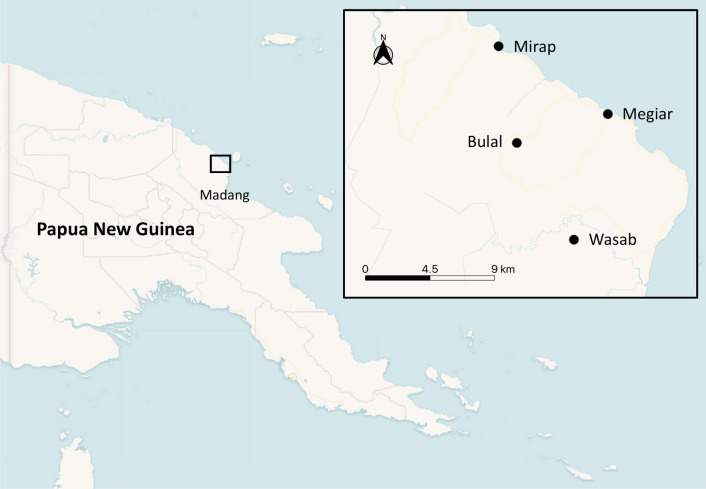
All-night (18:00 to 06:00) mosquito collections were conducted using human landing catches and barrier screen methods in four villages of Madang Province between September 2016 and March 2017. Anopheles species identification and sporozoite infection with Plasmodium vivax and Plasmodium falciparum were determined with molecular methods. Vector composition was expressed as the relative proportion of different species in villages, and vector abundance was quantified as the number of mosquitoes per barrier screen-night and per person-night. Transmission intensity was quantified as the number of sporozoite-infective vector bites per person-night.
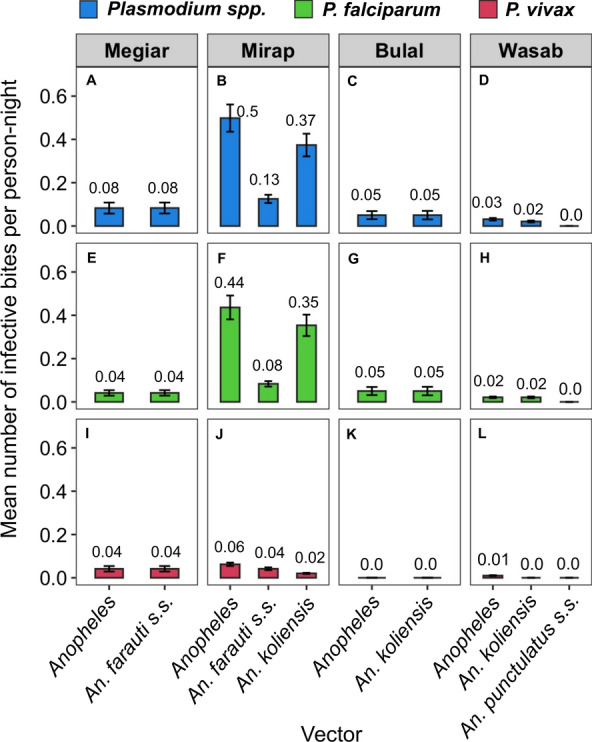
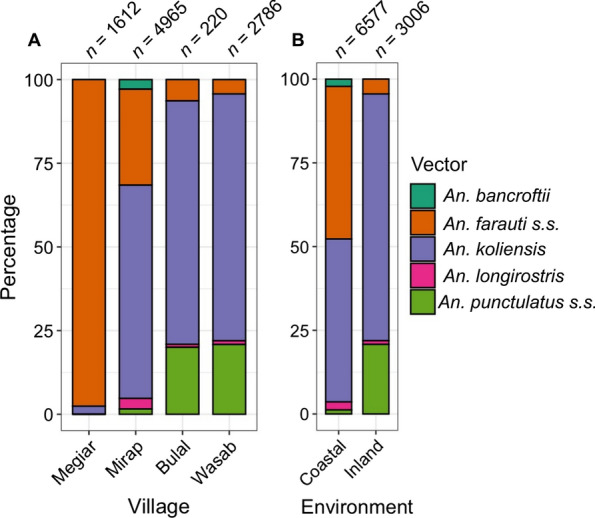
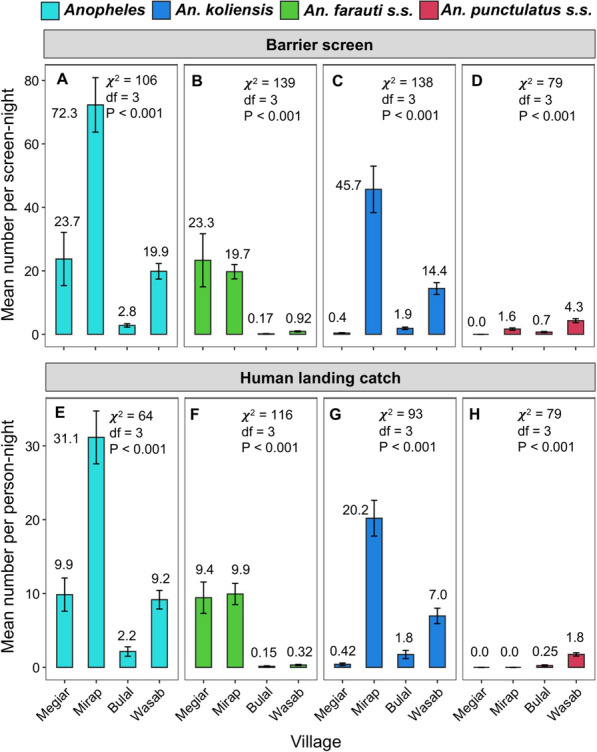
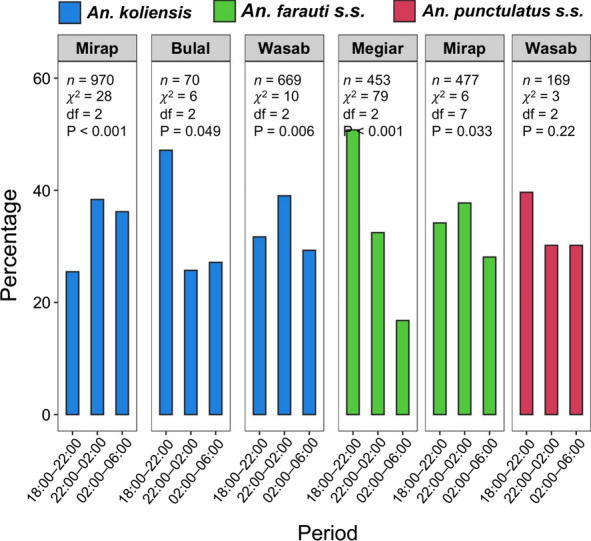
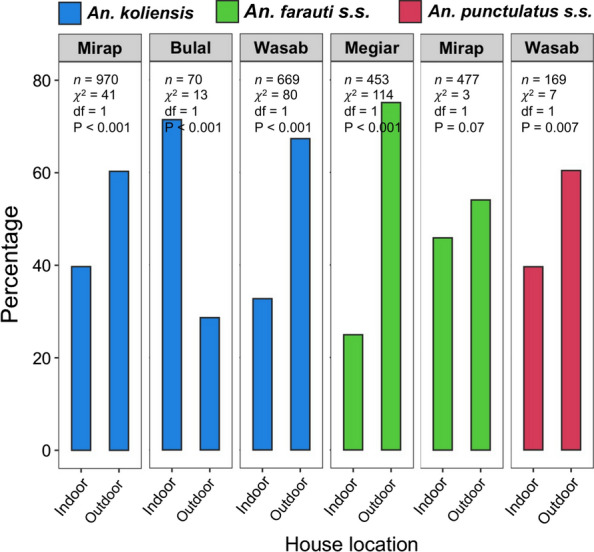
Five Anopheles species were present, but vector composition varied greatly among villages. Anopheles koliensis, a strongly anthropophilic species was the most prevalent in Bulal, Matukar and Wasab villages, constituting 63.7-73.8% of all Anopheles, but in Megiar Anopheles farauti was the most prevalent species (97.6%). Vector abundance varied among villages (ranging from 2.8 to 72.3 Anopheles per screen-night and 2.2-31.1 Anopheles per person-night), and spatially within villages. Malaria transmission intensity varied among the villages, with values ranging from 0.03 to 0.5 infective Anopheles bites per person-night. Most (54.1-75.1%) of the Anopheles bites occurred outdoors, with a substantial proportion (25.5-50.8%) occurring before 22:00.
The estimates of vector abundance and transmission intensity in the current study were comparable to or higher than estimates in the same villages in 2010-2012, indicating impeded programme effectiveness. Outdoor and early biting behaviours of vectors are some of the likely explanatory factors. Heterogeneity in vector composition, abundance and distribution among and within villages challenge malaria control programmes and must be considered when planning them.
2009 年,巴布亚新几内亚启动了一项基于长效驱虫蚊帐(LLINs)和青蒿素联合疗法的疟疾控制计划。该计划实施后,病媒数量和疟疾传播强度大幅下降。本研究旨在调查在持续努力七年之后,这些下降是否仍然存在。
2016 年 9 月至 2017 年 3 月,在马当省的四个村庄使用人体诱蚊灯和屏障网法进行了整夜(18:00 至 06:00)蚊虫采集。采用分子方法确定按蚊种类和间日疟原虫和恶性疟原虫的孢子感染情况。用不同村庄中不同物种的相对比例表示媒介组成,用每屏障网夜和每人夜的蚊虫数量来量化媒介数量,用每人夜的感染性媒介叮咬数来量化传播强度。
共发现 5 种按蚊,但各村庄的媒介组成差异很大。强嗜人按蚊(Anopheles koliensis)在 Bulal、Matukar 和 Wasab 村最为常见,占所有按蚊的 63.7-73.8%,而在 Megiar 村最常见的物种是远疟按蚊(Anopheles farauti)(97.6%)。媒介数量在村庄之间(每屏障网夜 2.8-72.3 只,每人夜 2.2-31.1 只)和村庄内的空间上有所不同。疟疾传播强度在各村庄之间存在差异,每人为 0.03-0.5 个感染性按蚊叮咬。大多数(54.1-75.1%)的按蚊叮咬发生在户外,其中相当一部分(25.5-50.8%)发生在 22:00 之前。
本研究中媒介数量和传播强度的估计值与 2010-2012 年同一村庄的估计值相当或更高,表明该计划的效果受到了阻碍。媒介的户外和早间叮咬行为是一些可能的解释因素。各村庄之间以及村庄内媒介组成、数量和分布的异质性给疟疾控制工作带来了挑战,在规划时必须加以考虑。