National Clinical Research Center for Metabolic Disease, Department of Endocrinology and Metabolism, The Second Xiangya Hospital, Central South University, Changsha, China.
Department of Radiology, The Second Xiangya Hospital, Central South University, Changsha, China.
Front Endocrinol (Lausanne). 2021 Dec 20;12:780974. doi: 10.3389/fendo.2021.780974. eCollection 2021.
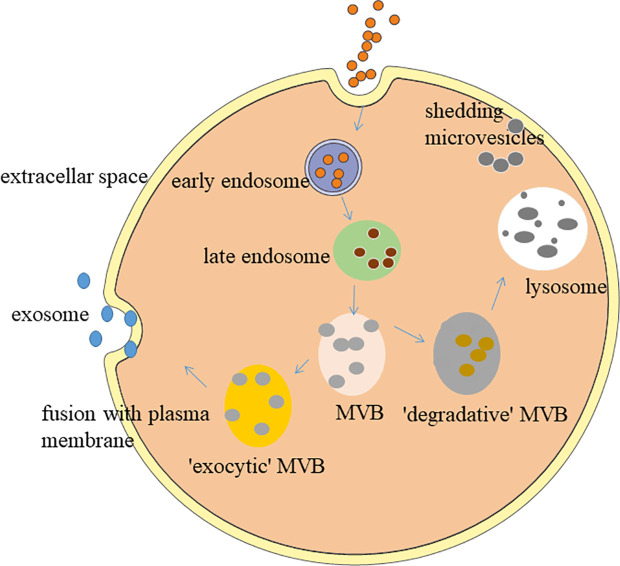
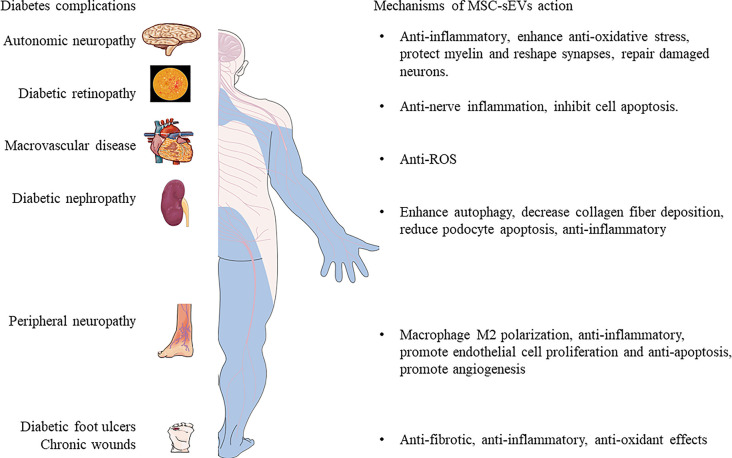
Mesenchymal stromal cells (MSCs) are applied in regenerative medicine of several tissues and organs nowadays by virtue of their self-renewal capabilities, multiple differentiation capacity, potent immunomodulatory properties, and their ability to be favourably cultured and manipulated. With the continuous development of "cell-free therapy" research, MSC-derived small extracellular vesicles (MSC-sEVs) have increasingly become a research hotspot in the treatment of various diseases. Small extracellular vesicles (SEVs) are membrane vesicles with diameters of 30 to 150 nm that mediate signal transduction between adjacent or distal cells or organs by delivering non-coding RNA, protein, and DNA. The contents and effects of sEVs vary depending on the properties of the originating cell. In recent years, MSC-sEVs have been found to play an important role in the occurrence and development of diabetes mellitus as a new way of communication between cells. Diabetes mellitus is a common metabolic disease in clinic. Its complications of the heart, brain, kidney, eyes, and peripheral nerves are a serious threat to human health and has been a hot issue for clinicians. MSC-sEVs could be applied to repair or prevent damage from the complications of diabetes mellitus through anti-inflammatory effects, reduction of endoplasmic reticulum-related protein stress, polarization of M2 macrophages, and increasing autophagy. Therefore, we highly recommend that MSC-sEVs-based therapies to treat diabetes mellitus and its chronic complication be further explored. The analysis of the role and molecular mechanisms of MSC-sEVs in diabetes and its related complications will provide new idea and insights for the prevention and treatment of diabetes.
间充质基质细胞 (MSCs) 具有自我更新能力、多向分化潜能、强大的免疫调节特性以及易于培养和操作的能力,因此目前在多种组织和器官的再生医学中得到应用。随着“无细胞治疗”研究的不断发展,MSC 衍生的小细胞外囊泡 (MSC-sEVs) 在治疗各种疾病方面越来越成为研究热点。小细胞外囊泡 (SEVs) 是直径为 30 至 150nm 的膜囊泡,通过传递非编码 RNA、蛋白质和 DNA,介导相邻或远端细胞或器官之间的信号转导。sEV 的内容物和作用因起始细胞的特性而异。近年来,MSC-sEVs 被发现作为细胞间一种新的通讯方式,在糖尿病的发生和发展中发挥重要作用。糖尿病是临床上常见的代谢性疾病,其并发的心脏、大脑、肾脏、眼睛和周围神经病变严重威胁着人类健康,一直是临床医生关注的热点。MSC-sEVs 可通过抗炎作用、减少内质网相关蛋白应激、M2 巨噬细胞极化和增加自噬来修复或预防糖尿病并发症的损伤。因此,我们强烈建议进一步探索基于 MSC-sEVs 的疗法来治疗糖尿病及其慢性并发症。分析 MSC-sEVs 在糖尿病及其相关并发症中的作用和分子机制,将为糖尿病的预防和治疗提供新的思路和见解。