Asare Paul Tetteh, Greppi Anna, Pennacchia Alessia, Brenig Katharina, Geirnaert Annelies, Schwab Clarissa, Stephan Roger, Lacroix Christophe
Laboratory of Food Biotechnology, Department of Health Sciences and Technology, Institute of Food, Nutrition and Health, ETH Zürich, Zurich, Switzerland.
Institute for Food Hygiene and Safety, University of Zurich, Zurich, Switzerland.
Front Microbiol. 2021 Dec 20;12:780092. doi: 10.3389/fmicb.2021.780092. eCollection 2021.
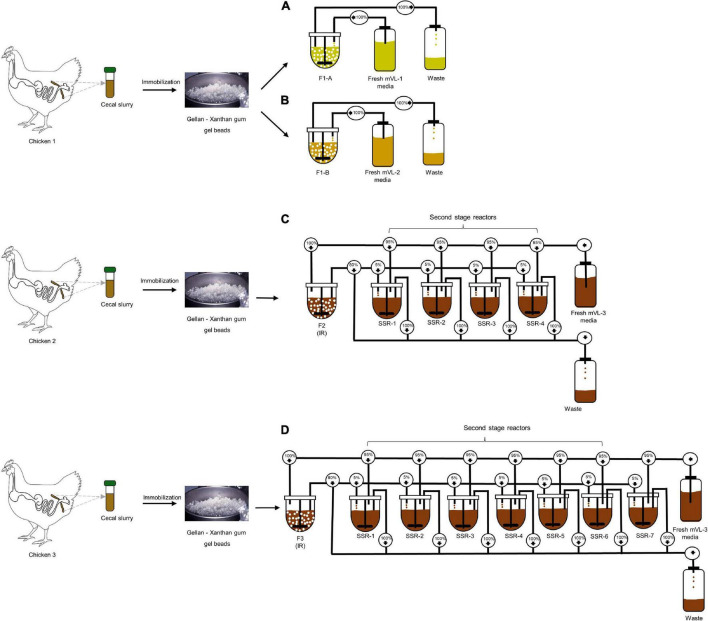
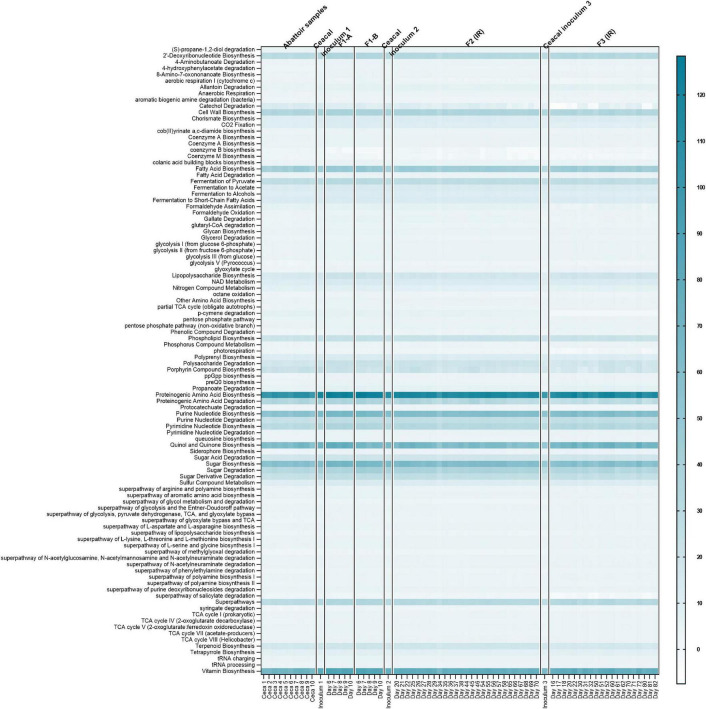
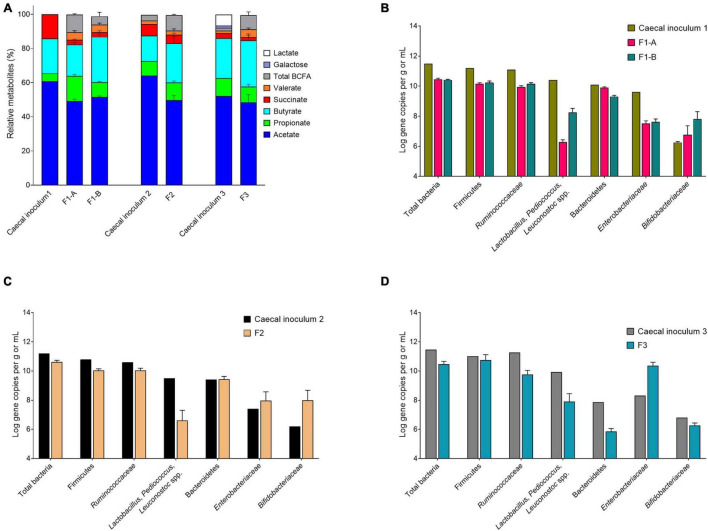
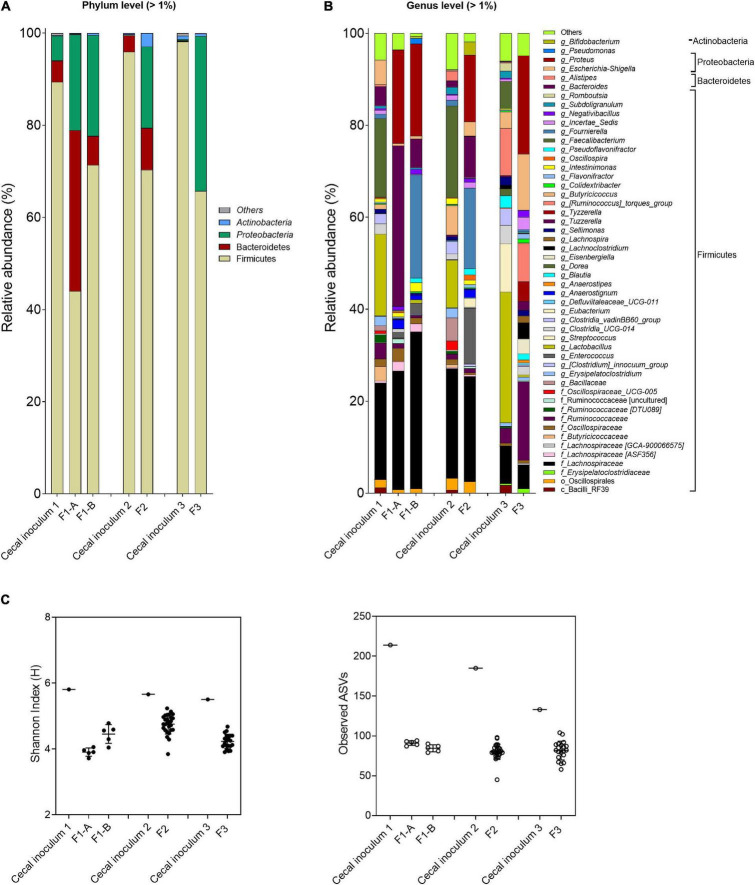
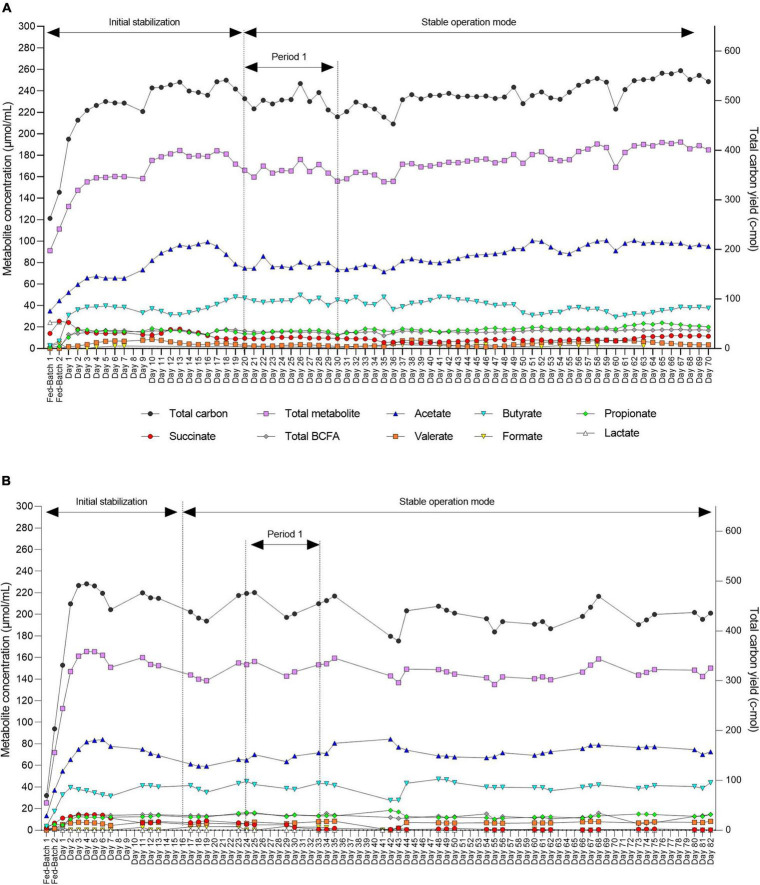
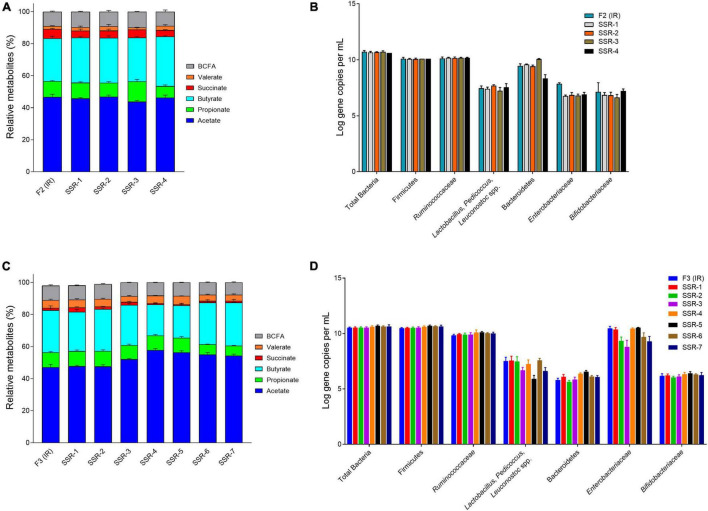
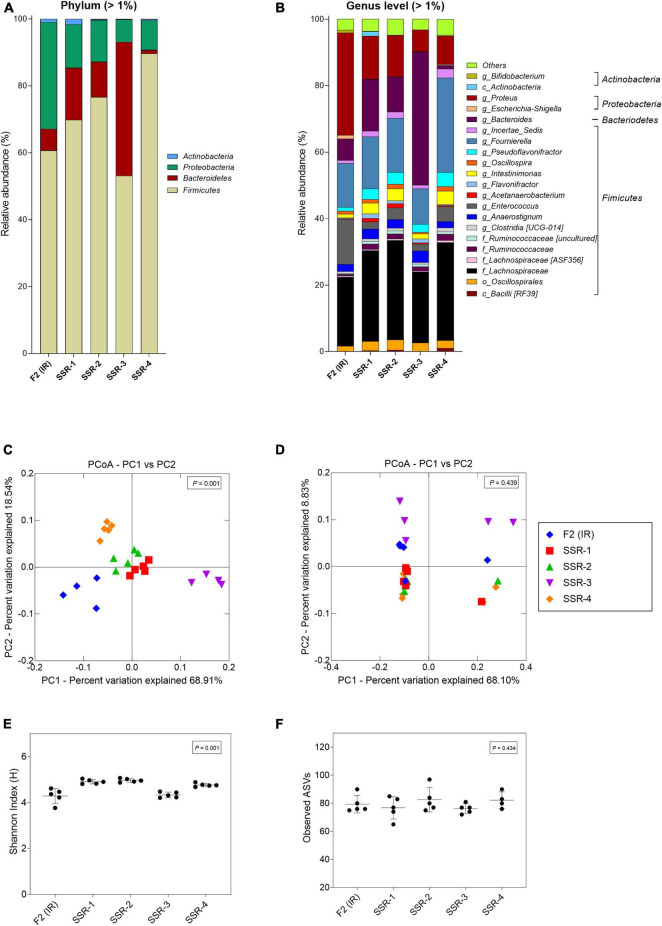
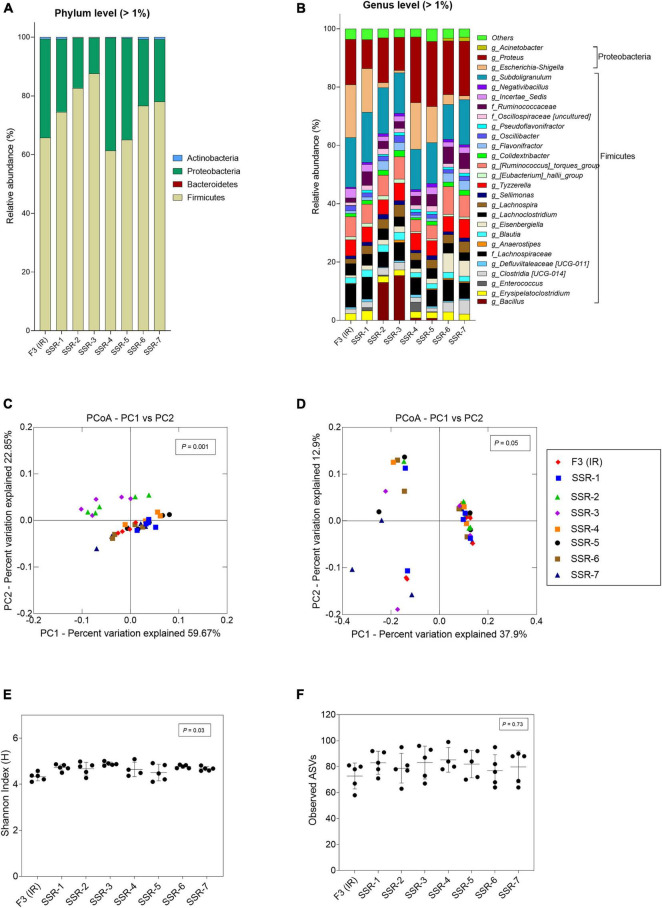
Continuous fermentation models provide a useful tool for a fast, reproducible, and direct assessment of treatment-related changes in microbiota metabolism and composition independent of the host. In this study, we used the PolyFermS model to mimic the conditions of the chicken cecum and evaluated three nutritive media for modeling of the chicken cecal microbiota ecology and metabolism. We observed that our model inoculated with immobilized cecal microbiota and fed with a modified Viande Levure medium (mVL-3) reached a high bacterial cell density of up to approximately 10.5 log cells per mL and stable microbiota composition, akin to the host, during 82 days of continuous operation. Relevant bacterial functional groups containing primary fibrolytic (, , ), glycolytic (), mucolytic (), proteolytic (), and secondary acetate-utilizing butyrate-producing and propionate-producing () taxa were preserved Besides, conserved metabolic and functional Kyoto Encyclopedia of Genes and Genomes pathways were observed between microbiota and cecal inoculum microbiota as predicted by functional metagenomics analysis. Furthermore, we demonstrated that the continuous inoculation provided by the inoculum reactor generated reproducible metabolic profiles in second-stage reactors comparable to the chicken cecum, allowing for the simultaneous investigation and direct comparison of different treatments with a control. In conclusion, we showed that PolyFermS is a suitable model for mimicking chicken cecal microbiota fermentation allowing ethical and screening of environmental factors, such as dietary additives, on chicken cecal fermentation. We report here for the first time a fermentation medium (mVL-3) that closely mimics the substrate conditions in the chicken cecum and supports the growth and metabolic activity of the cecal bacterial akin to the host. Our PolyFermS chicken cecum model is a useful tool to study microbiota functionality and structure .
连续发酵模型为快速、可重复且直接评估与治疗相关的微生物群代谢和组成变化提供了一个有用的工具,该评估独立于宿主。在本研究中,我们使用PolyFermS模型来模拟鸡盲肠的条件,并评估了三种营养培养基,用于模拟鸡盲肠微生物群的生态和代谢。我们观察到,接种固定化盲肠微生物群并喂食改良的肉酵母培养基(mVL-3)的模型在连续运行82天期间达到了高达约每毫升10.5 log细胞的高细菌细胞密度和类似于宿主的稳定微生物群组成。含有主要纤维分解(、、)、糖酵解()、粘液分解()、蛋白水解()以及利用乙酸盐产生丁酸盐和丙酸盐的次级乙酸利用()类群的相关细菌功能组得以保留。此外,如功能宏基因组学分析所预测的,在微生物群和盲肠接种微生物群之间观察到了保守的代谢和京都基因与基因组百科全书功能途径。此外,我们证明接种反应器提供的连续接种在第二阶段反应器中产生了与鸡盲肠相当的可重复代谢谱,从而允许对不同处理与对照进行同时研究和直接比较。总之,我们表明PolyFermS是模拟鸡盲肠微生物群发酵的合适模型,可用于合乎伦理地筛选环境因素,如膳食添加剂,对鸡盲肠发酵的影响。我们在此首次报告了一种发酵培养基(mVL-3),它紧密模拟鸡盲肠中的底物条件,并支持类似于宿主的盲肠细菌的生长和代谢活性。我们的PolyFermS鸡盲肠模型是研究微生物群功能和结构的有用工具。