Indiana University Health Adult Academic Health Center, United States.
Indiana University Health Adult Academic Health Center, United States.
Intensive Crit Care Nurs. 2022 Jun;70:103185. doi: 10.1016/j.iccn.2021.103185. Epub 2021 Dec 3.
Stress among family members of hospitalised intensive care unit patients may be amplified in the context of a global pandemic and strict visitor restrictions. A nurse family liaison role in the COVID-19 units was implemented to serve as a connection between the care team and a designated family member. Our objective was to describe the experience of a nurse family liaison role implemented during the COVID-19 pandemic from the perspective of nurses who functioned in the liaison role and intensive care nurses who worked with the liaisons.
RESEARCH METHOD/DESIGN: This was a qualitative study using thematic analysis involving a one-time semi-structured interview. A convenience sample of nurses were invited to participate. The analytic approach involved (1) becoming familiar with the data; (2) finding meaning in the data; (3) organising meaningful statements into patterns to generate themes.
SETTING/PARTICIPANTS: Nurses who functioned in the liaison role and intensive care nurses who worked with the liaisons in an adult academic health center in the Midwest United States.
To describe the psychosocial experience of nurse family liaison role implementation.
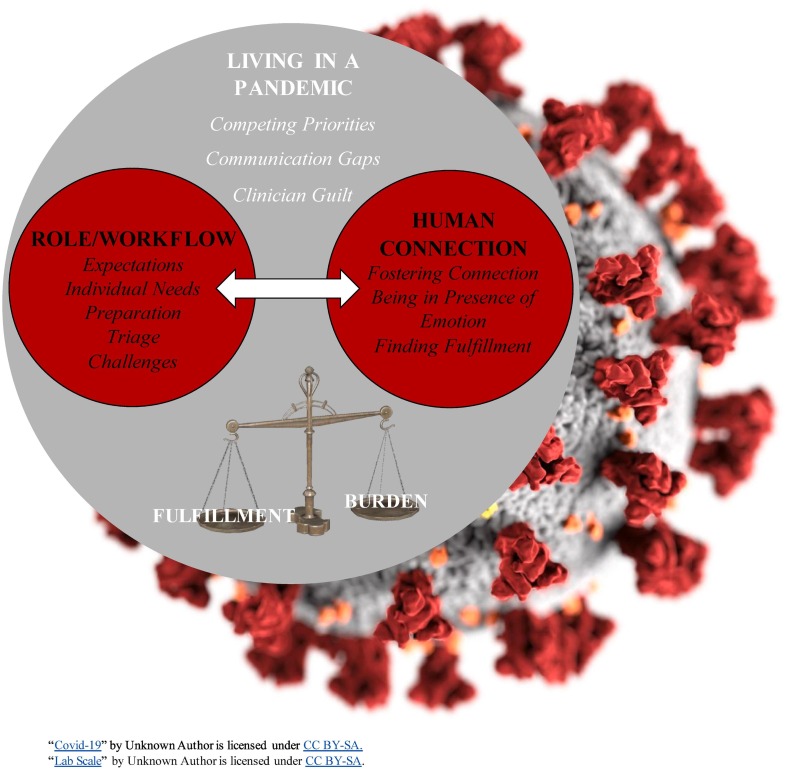
The sample (n = 11) mean age was 36 years (range 26-49) and the majority were female (n = 10; 90%), White/non-Hispanic (n = 11; 100%), Bachelor prepared (n = 10; 90%), and had an average of 10 years of experience as a nurse (range 4-25). The major themes identified by participants were living in a pandemic, establishing the role and workflow and experiencing human connection.
Hospital organisations should consider how they can provide family-centred care, specifically within the context of a global crisis such as a pandemic. Participant descriptions of the role indicate that liaison implementation alleviated nurse moral distress and fostered development of close family connections. Findings can help inform implementation of similar roles in hospital settings.
在全球大流行和严格的探视限制背景下,住院重症监护病房患者家属的压力可能会加剧。在 COVID-19 病房中设立护士家庭联络人角色,旨在充当护理团队与指定家属之间的联系。我们的目的是从担任联络人角色的护士和与联络人合作的重症监护护士的角度描述 COVID-19 大流行期间实施护士家庭联络人角色的体验。
研究方法/设计:这是一项定性研究,采用主题分析方法,包括一次性半结构化访谈。邀请护士作为便利样本参与。分析方法包括:(1)熟悉数据;(2)在数据中找到意义;(3)将有意义的陈述组织成模式以生成主题。
地点/参与者:在美国中西部一家成人学术医疗中心担任联络人角色的护士和与联络人合作的重症监护护士。
描述护士家庭联络人角色实施的社会心理体验。
样本(n=11)的平均年龄为 36 岁(范围 26-49),大多数为女性(n=10;90%),白人/非西班牙裔(n=11;100%),本科(n=10;90%),平均护理经验为 10 年(范围 4-25)。参与者确定的主要主题包括生活在大流行中、建立角色和工作流程以及体验人际联系。
医院组织应考虑如何在全球危机(如大流行)背景下提供以家庭为中心的护理,特别是在这种情况下。参与者对该角色的描述表明,联络人的实施减轻了护士的道德困境,并促进了密切家庭联系的发展。研究结果有助于为医院环境中类似角色的实施提供信息。