Gangaram Serisha, Naidoo Yougasphree, Dewir Yaser Hassan, El-Hendawy Salah
School of Life Sciences, Westville Campus, University of KwaZulu-Natal, Private Bag X54001, Durban 4000, South Africa.
Plant Production Department, College of Food and Agriculture Sciences, King Saud University, P.O. Box 2460, Riyadh 11451, Saudi Arabia.
Plants (Basel). 2021 Dec 28;11(1):82. doi: 10.3390/plants11010082.
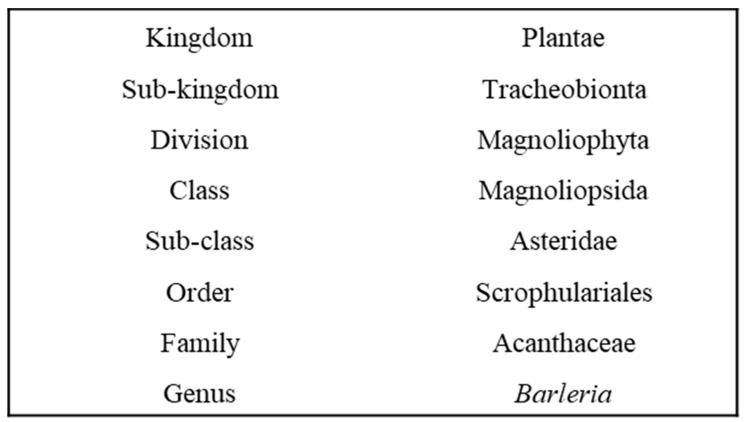
Plant species belonging to the family Acanthaceae are globally known to possess various medicinal properties and have cultural and economic importance in both traditional medicine and horticulture. They are important to both animals and humans and are used as food or for ornamental purposes worldwide. is the third largest genus in the family Acanthaceae. A few of the highly important and reported species of include , , , and The flowers, leaves, stems, roots, and seed extracts of plants belonging to this genus are rich in bioactive compounds and have exhibited significant medicinal potential for the treatment of various ailments and infections. Evidence derived from several studies has demonstrated the antioxidant, antibacterial, antifungal, anti-inflammatory, anticancer, antidiabetic, antiulcer, hepatoprotective, analgesic, antiamoebic, antihelminthic, antiarthritic, antihypertensive, antiviral properties and toxicity of extracts, in addition inhibition of acetylcholinesterase activity and biosynthesis of nanoparticles, of the plant and seed extracts of species belonging to . Studies have reported that bioactive compounds such as flavonoids, quinones, iridoids, phenylethanoid glycosides, the immunostimulant protein "Sankaranin", and antibiotics isolated from species are resposnsible for the above biological activities. Traditionally, the genus has significant medicinal potential; however, there is a scarcity of information on various species that are yet to be evaluated. This review provides a comprehensive report on existing literature, concerning the phytochemistry and biological activities of the genus .
全世界都知道爵床科植物具有多种药用特性,并且在传统医学和园艺中具有文化和经济重要性。它们对动物和人类都很重要,在全球范围内被用作食物或用于观赏目的。[属名]是爵床科的第三大属。该属一些非常重要且有报道的物种包括[物种名1]、[物种名2]、[物种名3]和[物种名4]。该属植物的花、叶、茎、根和种子提取物富含生物活性化合物,并且在治疗各种疾病和感染方面显示出显著的药用潜力。多项研究的证据表明,该属植物和种子提取物具有抗氧化、抗菌、抗真菌、抗炎、抗癌、抗糖尿病、抗溃疡、保肝、止痛、抗阿米巴、抗蠕虫、抗关节炎、抗高血压、抗病毒特性以及提取物的毒性,此外还能抑制乙酰胆碱酯酶活性和纳米颗粒的生物合成。研究报告称,从该属物种中分离出的黄酮类化合物、醌类、环烯醚萜类、苯乙醇苷类、免疫刺激蛋白“Sankaranin”和抗生素等生物活性化合物是上述生物活性的原因。传统上,该属具有显著的药用潜力;然而,关于尚未评估的各种物种的信息却很匮乏。本综述提供了一份关于该属植物化学和生物活性的现有文献的综合报告。