Department of Psychology, University of Oviedo, 33003 Oviedo, Spain.
Int J Environ Res Public Health. 2021 Dec 24;19(1):191. doi: 10.3390/ijerph19010191.
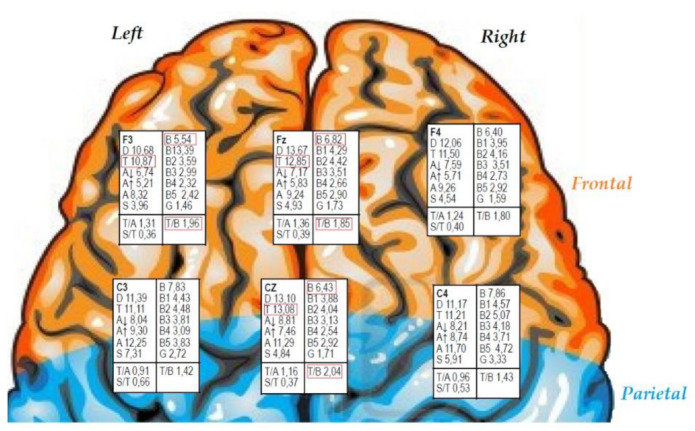
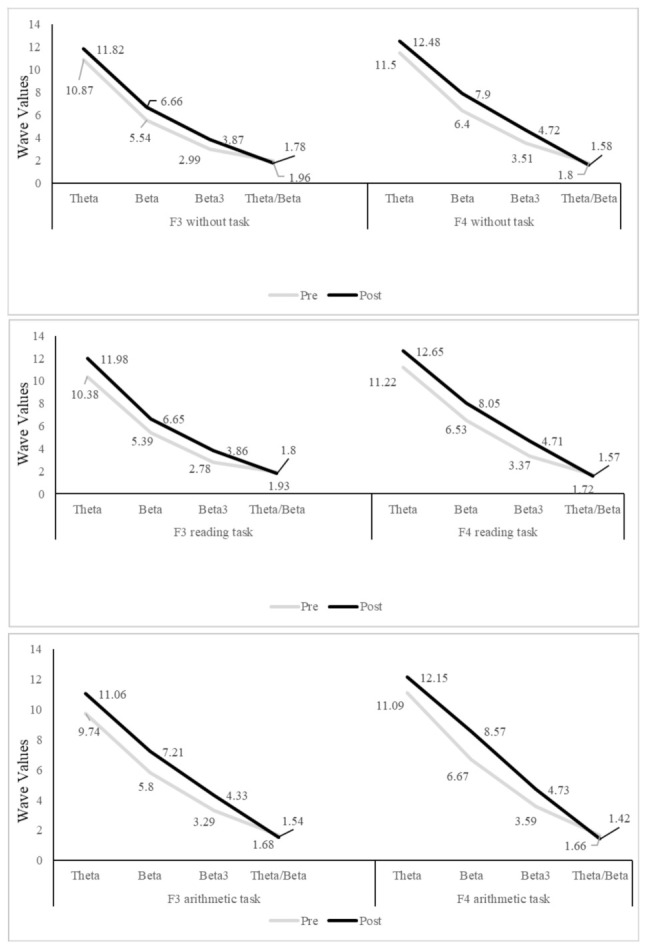
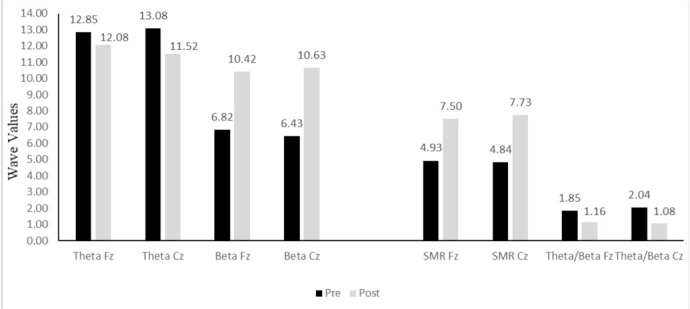
In research about attention-deficit/hyperactivity disorder (ADHD) there is growing interest in evaluating cortical activation and using neurofeedback in interventions. This paper presents a case study using monopolar electroencephalogram recording (brain mapping known as MiniQ) for subsequent use in an intervention with neurofeedback for a 10-year-old girl presenting predominantly inattentive ADHD. A total of 75 training sessions were performed, and brain wave activity was assessed before and after the intervention. The results indicated post-treatment benefits in the beta wave (related to a higher level of concentration) and in the theta/beta ratio, but not in the theta wave (related to higher levels of drowsiness and distraction). These instruments may be beneficial in the evaluation and treatment of ADHD.
在注意缺陷多动障碍(ADHD)的研究中,越来越关注评估皮质激活和在干预中使用神经反馈。本文介绍了一项使用单极脑电图记录(称为 MiniQ 的脑映射)进行后续干预的案例研究,该干预使用神经反馈治疗一名主要表现为注意力不集中的 ADHD 十岁女孩。共进行了 75 次训练,在干预前后评估了脑波活动。结果表明,β波(与更高的注意力水平相关)和θ/β 比值在治疗后有改善,但θ波(与更高的困倦和分心程度相关)没有改善。这些工具可能有助于 ADHD 的评估和治疗。