Center of Excellence for Stem Cells and Regenerative Medicine (CESC), Zewail City of Science and Technology, October Gardens, 6th of October City, 12582, Giza, Egypt.
Department of Surgery, Faculty of Veterinary Medicine, Alexandria University, Alexandria, 22785, Egypt.
Stem Cell Res Ther. 2022 Jan 10;13(1):8. doi: 10.1186/s13287-021-02684-0.
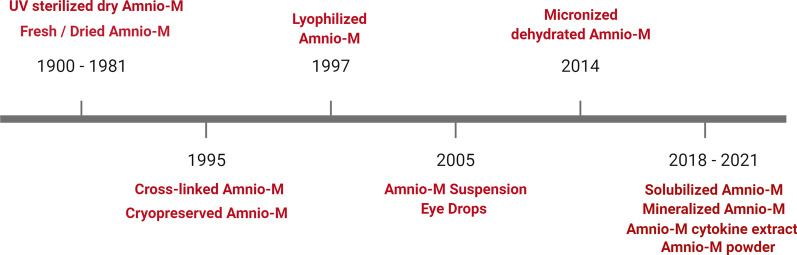
The amniotic membrane (Amnio-M) has various applications in regenerative medicine. It acts as a highly biocompatible natural scaffold and as a source of several types of stem cells and potent growth factors. It also serves as an effective nano-reservoir for drug delivery, thanks to its high entrapment properties. Over the past century, the use of the Amnio-M in the clinic has evolved from a simple sheet for topical applications for skin and corneal repair into more advanced forms, such as micronized dehydrated membrane, amniotic cytokine extract, and solubilized powder injections to regenerate muscles, cartilage, and tendons. This review highlights the development of the Amnio-M over the years and the implication of new and emerging nanotechnology to support expanding its use for tissue engineering and clinical applications.
羊膜(Amnio-M)在再生医学中有多种应用。它作为一种高度生物相容性的天然支架,以及多种类型的干细胞和有效生长因子的来源。它还可以作为药物输送的有效纳米储库,这要归功于其高包封特性。在过去的一个世纪中,羊膜在临床上的应用已经从用于皮肤和角膜修复的简单的表面贴剂发展为更先进的形式,如微粉化脱水膜、羊膜细胞因子提取物和可溶解粉末注射剂,用于肌肉、软骨和肌腱的再生。这篇综述强调了羊膜多年来的发展,以及新兴纳米技术的应用对支持其在组织工程和临床应用中扩展使用的意义。