Duarte Nathan, Yanes-Lane Mercedes, Arora Rahul K, Bobrovitz Niklas, Liu Michael, Bego Mariana G, Yan Tingting, Cao Christian, Gurry Celine, Hankins Catherine A, Cheng Matthew Pellan, Gingras Anne-Claude, Mazer Bruce D, Papenburg Jesse, Langlois Marc-André
Department of Systems Design Engineering, University of Waterloo, Waterloo, Ontario, Canada.
COVID-19 Immunity Task Force, Secretariat, McGill University, Montreal, Quebec, Canada.
Open Forum Infect Dis. 2021 Dec 23;9(2):ofab632. doi: 10.1093/ofid/ofab632. eCollection 2022 Feb.
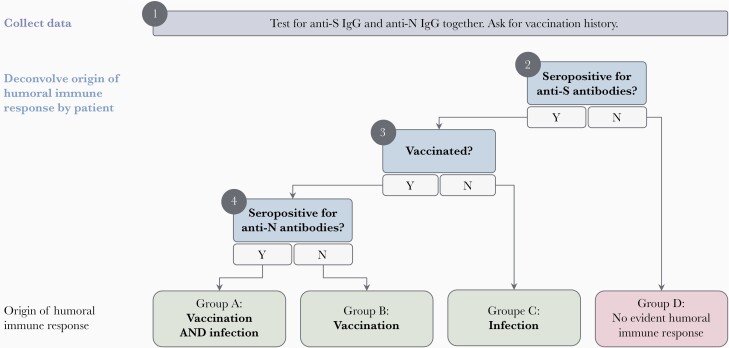
Population-level immune surveillance, which includes monitoring exposure and assessing vaccine-induced immunity, is a crucial component of public health decision-making during a pandemic. Serosurveys estimating the prevalence of severe acute respiratory syndrome coronavirus 2 (SARS-CoV-2) antibodies in the population played a key role in characterizing SARS-CoV-2 epidemiology during the early phases of the pandemic. Existing serosurveys provide infrastructure to continue immune surveillance but must be adapted to remain relevant in the SARS-CoV-2 vaccine era. Here, we delineate how SARS-CoV-2 serosurveys should be designed to distinguish infection- and vaccine-induced humoral immune responses to efficiently monitor the evolution of the pandemic. We discuss how serosurvey results can inform vaccine distribution to improve allocation efficiency in countries with scarce vaccine supplies and help assess the need for booster doses in countries with substantial vaccine coverage.
人群层面的免疫监测,包括监测暴露情况和评估疫苗诱导的免疫力,是大流行期间公共卫生决策的关键组成部分。估计人群中严重急性呼吸综合征冠状病毒2(SARS-CoV-2)抗体流行率的血清学调查在大流行早期阶段描述SARS-CoV-2流行病学方面发挥了关键作用。现有的血清学调查提供了持续进行免疫监测的基础设施,但必须进行调整以在SARS-CoV-2疫苗时代保持相关性。在此,我们阐述了应如何设计SARS-CoV-2血清学调查,以区分感染和疫苗诱导的体液免疫反应,从而有效地监测大流行的演变。我们讨论了血清学调查结果如何为疫苗分配提供信息,以提高疫苗供应稀缺国家的分配效率,并帮助评估疫苗接种覆盖率高的国家对加强剂量的需求。