Department of Clinical Medicine, Faculty of Medicine, Health and Human Sciences, Macquarie University, Macquarie Park, NSW, 2109, Australia.
Neuroscience Research Australia, Prince of Wales Clinical School, University of New South Wales, Sydney, NSW, 2031, Australia.
Fluids Barriers CNS. 2022 Feb 8;19(1):14. doi: 10.1186/s12987-022-00310-6.
Cerebrospinal fluid (CSF) circulation in the brain has garnered considerable attention in recent times. In contrast, there have been fewer studies focused on the spine, despite the expected importance of CSF circulation in disorders specific to the spine, including syringomyelia. The driving forces that regulate spinal CSF flow are not well defined and are likely to be different to the brain given the anatomical differences and proximity to the heart and lungs. The aims of this study were to determine the effects of heart rate, blood pressure and respiration on the distribution of CSF tracers in the spinal subarachnoid space, as well as into the spinal cord interstitium.
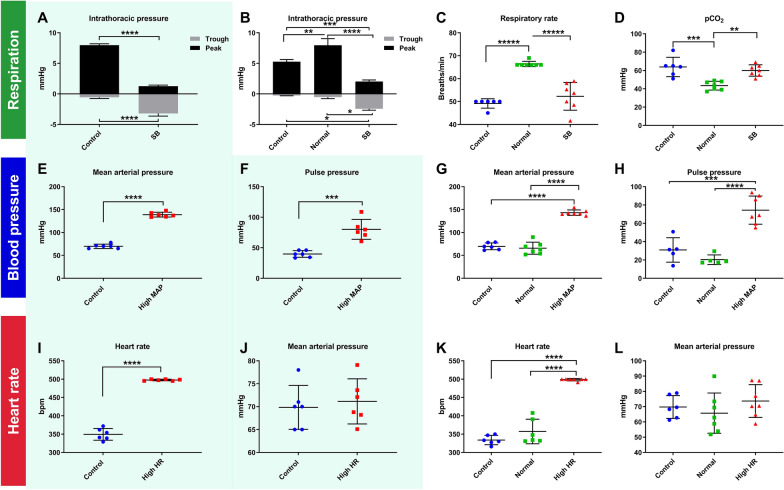
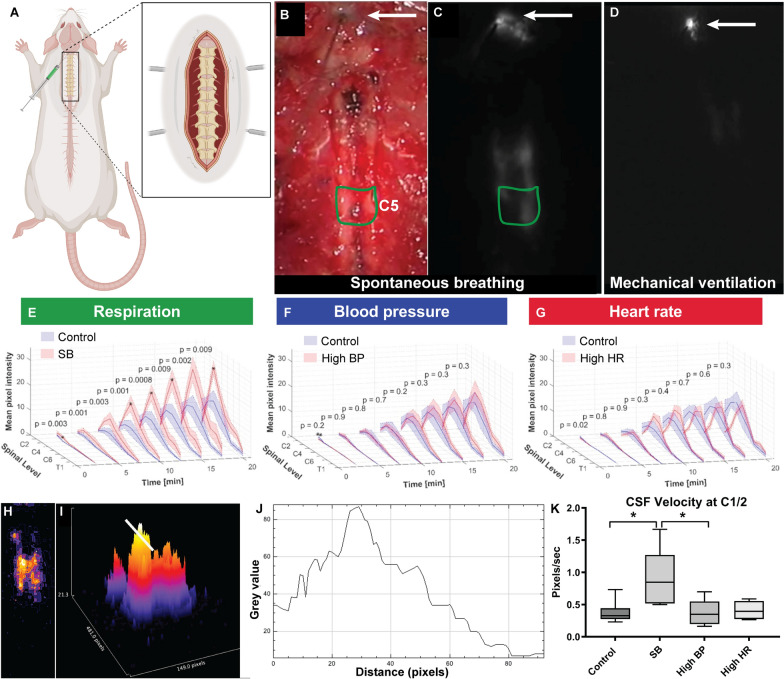
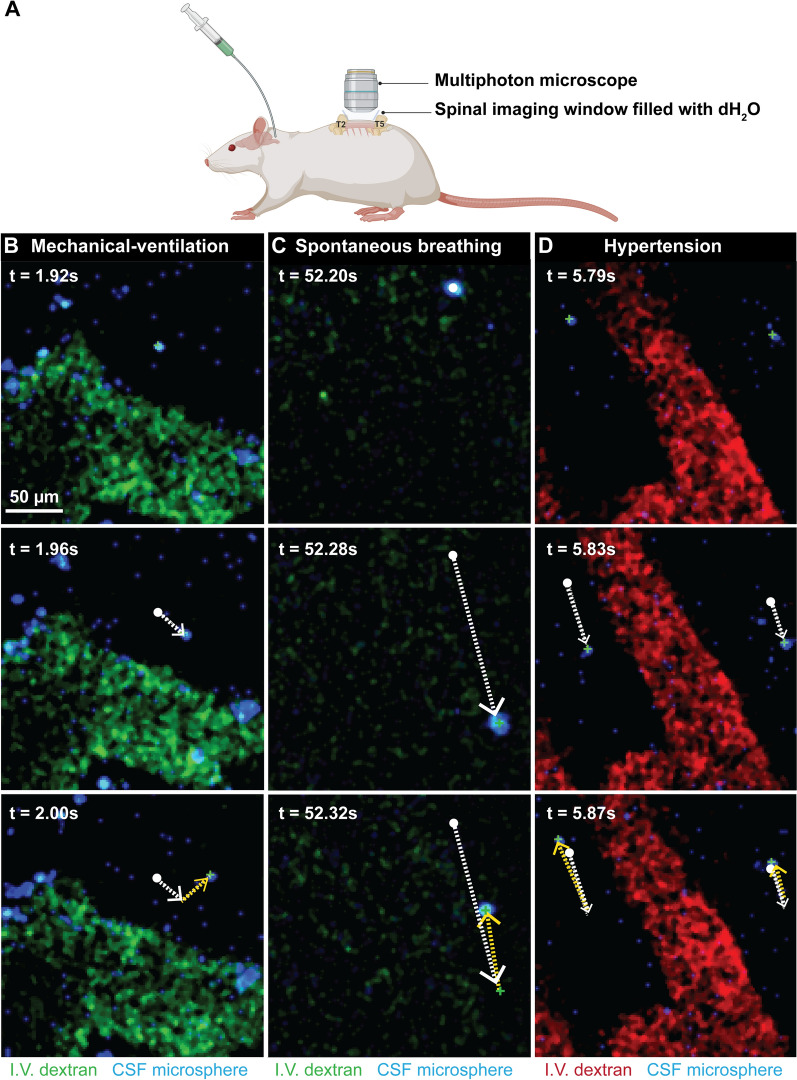
In Sprague Dawley rats, physiological parameters were manipulated such that the effects of spontaneous breathing (generating alternating positive and negative intrathoracic pressures), mechanical ventilation (positive intrathoracic pressure only), tachy/bradycardia, as well as hyper/hypotension were separately studied. To investigate spinal CSF hydrodynamics, in vivo near-infrared imaging of intracisternally infused indocyanine green was performed. CSF tracer transport was further characterised with in vivo two-photon intravital imaging. Tracer influx at a microscopic level was quantitatively characterised by ex vivo epifluorescence imaging of fluorescent ovalbumin.
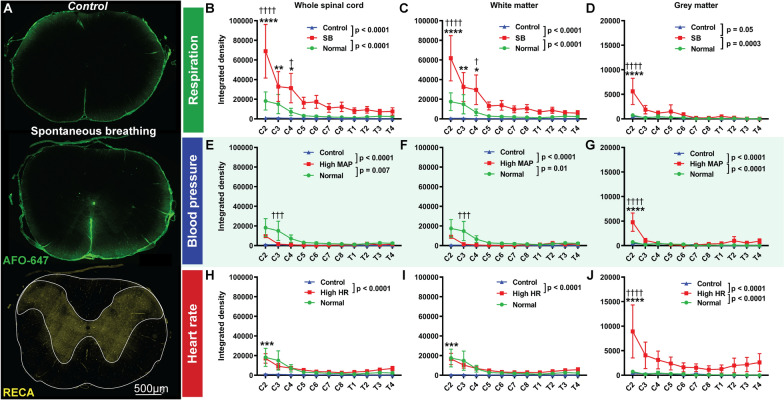
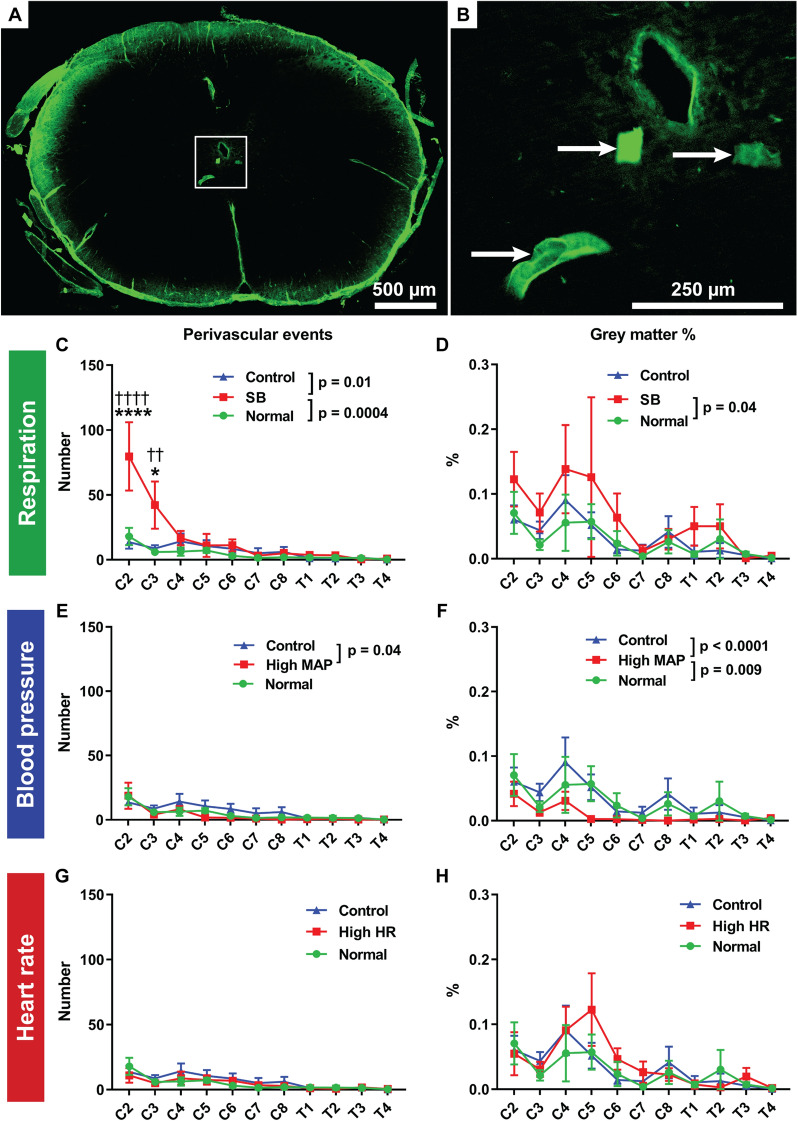
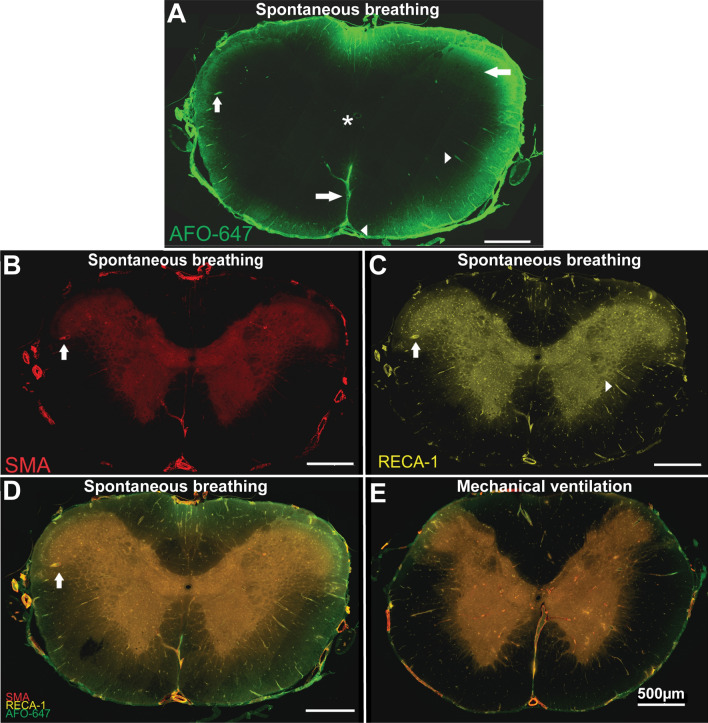
Compared to mechanically ventilated controls, spontaneous breathing animals had significantly greater movement of tracer in the subarachnoid space. There was also greater influx into the spinal cord interstitium. Hypertension and tachycardia had no significant effect on spinal subarachnoid spinal CSF tracer flux and exerted less effect than respiration on tracer influx into the spinal cord.
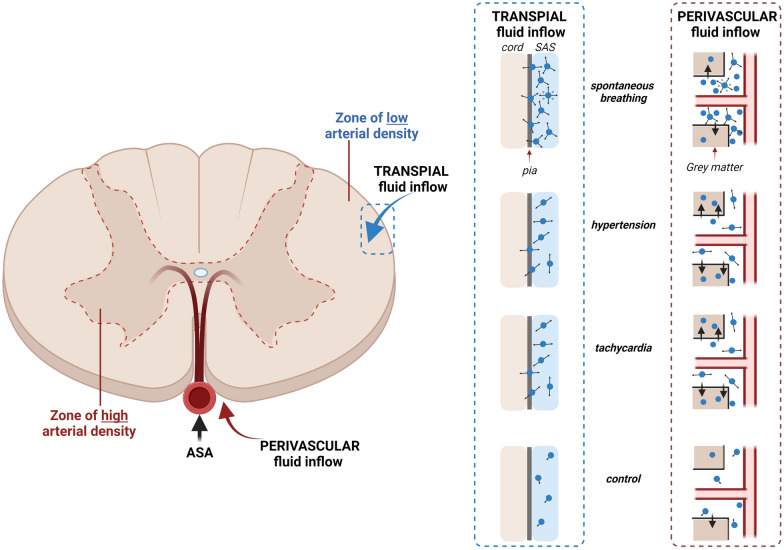
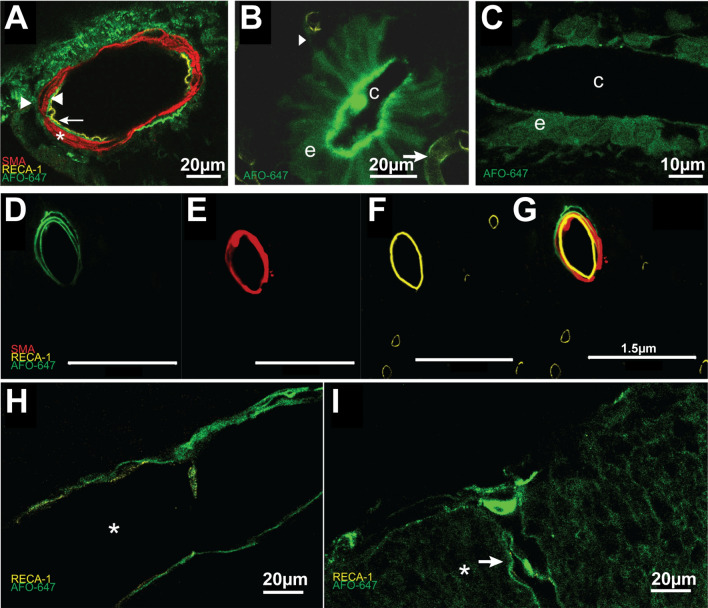
Intrathoracic pressure changes that occur over the respiratory cycle, particularly decreased intrathoracic pressures generated during inspiration, have a profound effect on tracer movement after injection into spinal CSF and increase cord parenchymal tracer influx. Arterial pulsations likely drive fluid transport from perivascular spaces into the surrounding interstitium, but their overall impact is less than that of the respiratory cycle on net tracer influx.
脑内脑脊液(CSF)循环近来受到广泛关注。相比之下,针对脊柱的 CSF 循环研究较少,尽管 CSF 循环在诸如脊髓空洞症等脊柱特有疾病中具有重要意义。调节脊柱 CSF 流动的驱动力尚未明确,且鉴于与心脏和肺部的解剖差异和接近程度,这些驱动力可能与大脑不同。本研究旨在确定心率、血压和呼吸对脊髓蛛网膜下腔 CSF 示踪剂分布以及进入脊髓间质的影响。
在 Sprague Dawley 大鼠中,操纵生理参数,分别研究自发性呼吸(产生交替的胸内正负压)、机械通气(仅胸内正压)、心动过速/心动过缓以及高血压/低血压的影响。为了研究脊髓 CSF 动力学,采用近红外体内成像技术对脑室内注入的吲哚菁绿进行检测。通过体内双光子活体成像进一步研究 CSF 示踪剂转运。通过对荧光卵白蛋白进行离体荧光显微镜成像,定量描述微观水平的示踪剂内流。
与机械通气对照相比,自发性呼吸动物蛛网膜下腔示踪剂运动明显更大。进入脊髓间质的示踪剂内流也更多。高血压和心动过速对脊髓蛛网膜下腔 CSF 示踪剂通量无显著影响,对进入脊髓的示踪剂内流的影响小于呼吸。
呼吸周期中发生的胸内压力变化,特别是吸气时的胸内压力降低,对注入脊髓 CSF 后的示踪剂运动有深远影响,并增加脊髓实质示踪剂内流。动脉搏动可能将流体从血管周围空间驱动到周围间质中,但它们的总体影响小于呼吸周期对净示踪剂内流的影响。