Department of Biomedical Engineering, School of Engineering, King Mongkut's Institute of Technology Ladkrabang, Bangkok, 10520, Thailand.
College of Biomedical Engineering, Rangsit University, Pathum Thani, 12000, Thailand.
Sci Rep. 2022 Feb 8;12(1):2052. doi: 10.1038/s41598-022-06065-2.
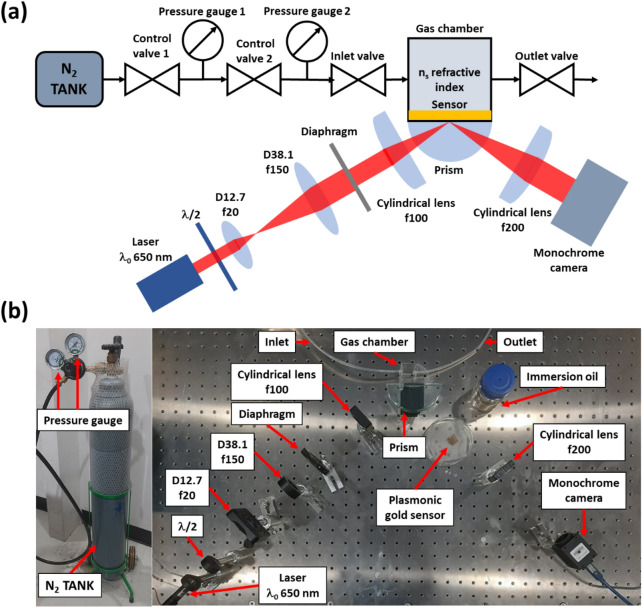
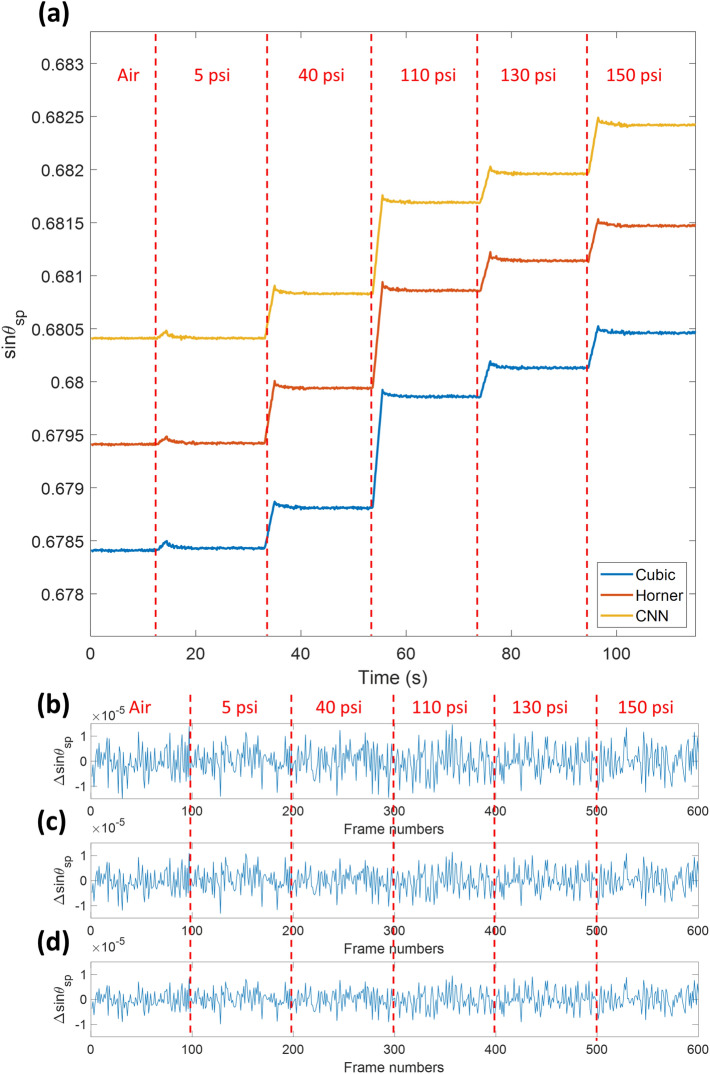
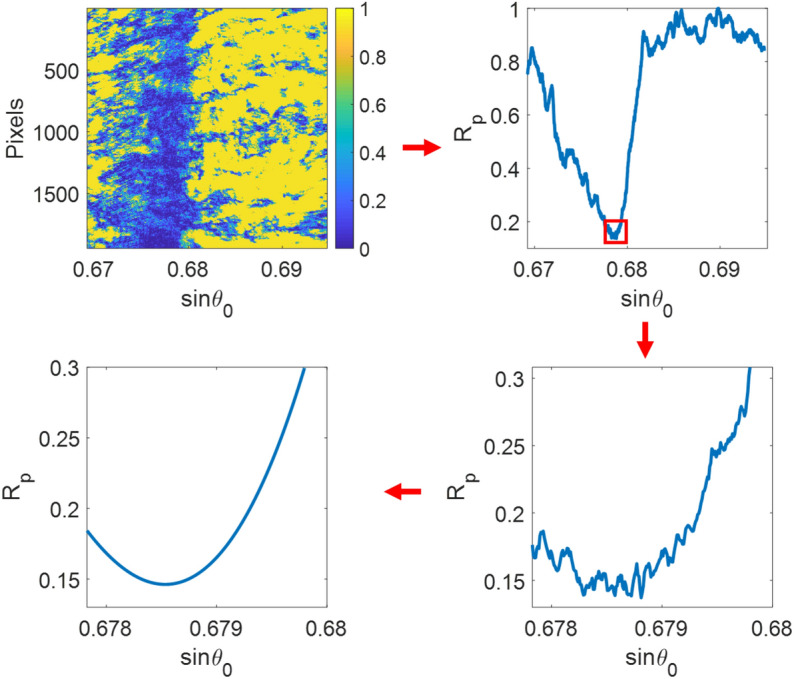
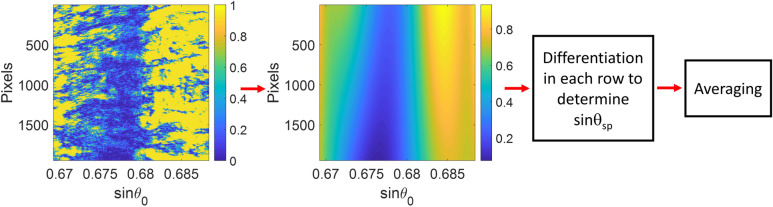
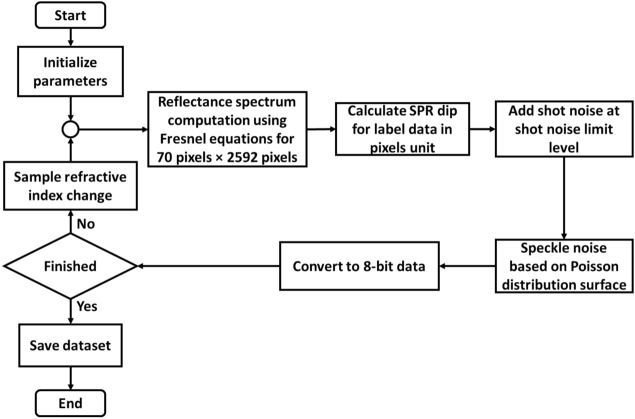
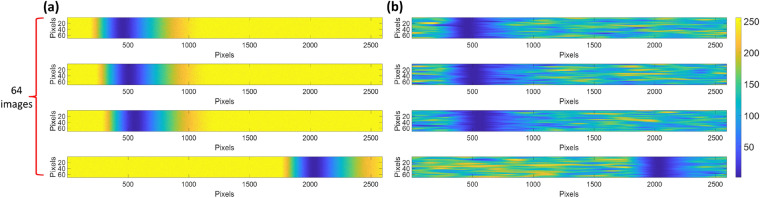
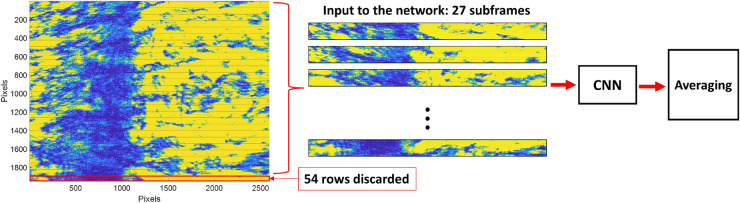
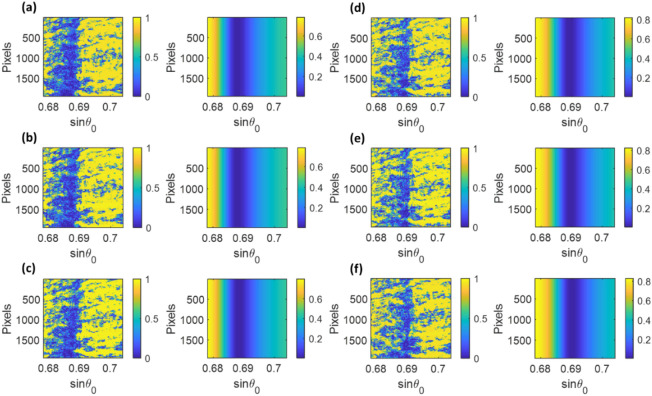
Angular scanning-based surface plasmon resonance measurement has been utilized in label-free sensing applications. However, the measurement accuracy and precision of the surface plasmon resonance measurements rely on an accurate measurement of the plasmonic angle. Several methods have been proposed and reported in the literature to measure the plasmonic angle, including polynomial curve fitting, image processing, and image averaging. For intensity detection, the precision limit of the SPR is around 10 RIU to 10 RIU. Here, we propose a deep learning-based method to locate the plasmonic angle to enhance plasmonic angle detection without needing sophisticated post-processing, optical instrumentation, and polynomial curve fitting methods. The proposed deep learning has been developed based on a simple convolutional neural network architecture and trained using simulated reflectance spectra with shot noise and speckle noise added to generalize the training dataset. The proposed network has been validated in an experimental setup measuring air and nitrogen gas refractive indices at different concentrations. The measurement precision recovered from the experimental reflectance images is 4.23 × 10 RIU for the proposed artificial intelligence-based method compared to 7.03 × 10 RIU for the cubic polynomial curve fitting and 5.59 × 10 RIU for 2-dimensional contour fitting using Horner's method.
基于角度扫描的表面等离子体共振测量已被应用于无标记传感应用中。然而,表面等离子体共振测量的测量精度和精度依赖于等离子体角的精确测量。文献中已经提出并报道了几种测量等离子体角的方法,包括多项式曲线拟合、图像处理和图像平均。对于强度检测,SPR 的精度极限约为 10 RIU 到 10 RIU。在这里,我们提出了一种基于深度学习的方法来定位等离子体角,以增强等离子体角检测,而无需复杂的后处理、光学仪器和多项式曲线拟合方法。所提出的深度学习基于简单的卷积神经网络架构,并使用添加了散粒噪声和斑点噪声的模拟反射光谱进行训练,以推广训练数据集。所提出的网络已经在实验设置中得到验证,用于测量不同浓度的空气和氮气的折射率。与立方多项式曲线拟合的 7.03×10 RIU 和使用霍纳方法的二维轮廓拟合的 5.59×10 RIU 相比,从实验反射图像中恢复的测量精度对于基于人工智能的方法为 4.23×10 RIU。