Juang Yi-Je, Hsu Shu-Kai
Department of Chemical Engineering, National Cheng Kung University, No. 1 University Road, Tainan 70101, Taiwan.
Center for Micro/Nano Science and Technology, National Cheng Kung University, No. 1 University Road, Tainan 70101, Taiwan.
Polymers (Basel). 2022 Feb 8;14(3):639. doi: 10.3390/polym14030639.
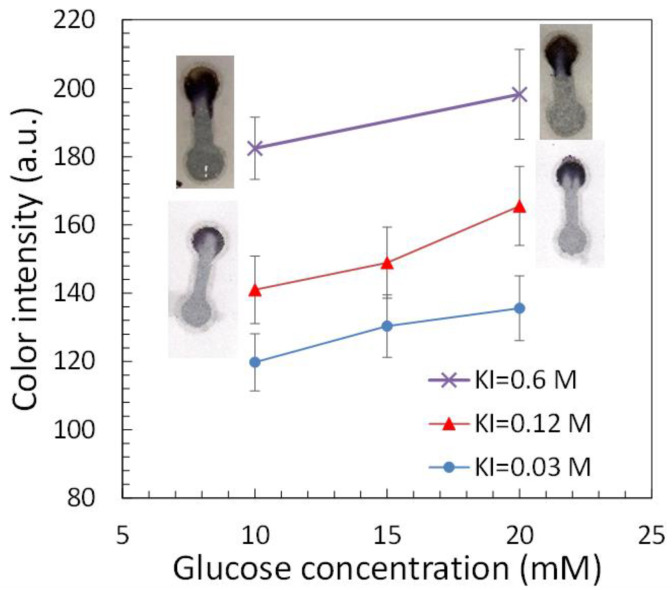
Since the monumental work conducted by Whitesides et al. in 2007, research and development of paper-based microfluidics has been widely carried out, with its applications ranging from chemical and biological detection and analysis, to environmental monitoring and food-safety inspection. Paper-based microfluidics possesses several competitive advantages over other substrate materials, such as being simple, inexpensive, power-free for fluid transport, lightweight, biodegradable, biocompatible, good for colorimetric tests, flammable for easy disposal of used paper-based diagnostic devices by incineration, and being chemically modifiable. Myriad methods have been demonstrated to fabricate paper-based microfluidics, such as solid wax printing, cutting, photolithography, microembossing, etc. In this study, fabrication of paper-based microfluidics was demonstrated by spray on the printed paper. Different from the normally used filter papers, printing paper, which is much more accessible and cheaper, was utilized as the substrate material. The toner was intended to serve as the mask and the patterned hydrophobic barrier was formed after spray and heating. The processing parameters such as toner coverage on the printing paper, properties of the hydrophobic spray, surface properties of the paper, and curing temperature and time were systematically investigated. It was found that, after repetitive printing four times, the toner was able to prevent the hydrophobic spray (the mixture of PDMS and ethyl acetate) from wicking through the printing paper. The overall processing time for fabrication of paper-based microfluidic chips was less than 10 min and the technique is potentially scalable. Glucose detection was conducted using the microfluidic paper-based analytical devices (µPADs) as fabricated and a linear relationship was obtained between 1 and 10 mM.
自2007年怀特塞兹等人开展具有里程碑意义的工作以来,基于纸的微流控技术的研发工作广泛开展,其应用范围涵盖化学和生物检测与分析、环境监测及食品安全检测等领域。与其他基底材料相比,基于纸的微流控技术具有多项竞争优势,比如简单、廉价、流体传输无需动力、重量轻、可生物降解、生物相容性好、适用于比色测试、可燃以便通过焚烧轻松处理用过的纸质诊断设备,并且可进行化学改性。已证实有多种方法可用于制造基于纸的微流控器件,如固体蜡印刷、切割、光刻、微压印等。在本研究中,通过在打印纸上喷涂来展示基于纸的微流控器件的制造过程。与常用的滤纸不同,本研究使用了更易获取且价格更低的打印纸作为基底材料。墨粉用作掩膜,喷涂并加热后形成图案化的疏水屏障。系统研究了诸如打印纸上墨粉覆盖率、疏水喷涂特性、纸张表面特性以及固化温度和时间等加工参数。结果发现,重复打印四次后,墨粉能够阻止疏水喷涂液(聚二甲基硅氧烷和乙酸乙酯的混合物)透过打印纸渗吸。基于纸的微流控芯片的整体制造时间不到10分钟,且该技术具有潜在的可扩展性。使用所制造的基于微流控纸的分析装置(µPADs)进行了葡萄糖检测,在1至10 mM之间获得了线性关系。