Department of Environmental Health, National Institute of Health Doutor Ricardo Jorge, 1649-016 Lisboa, Portugal.
Centre for Environmental and Marine Studies (CESAM), Department of Animal Biology, Faculty of Sciences, University of Lisboa, 1749-016 Lisboa, Portugal.
Int J Environ Res Public Health. 2022 Jan 27;19(3):1444. doi: 10.3390/ijerph19031444.
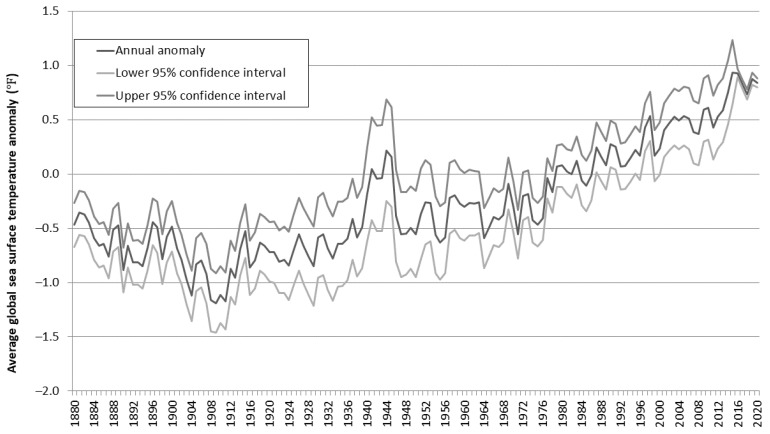
Beach sand and water have both shown relevance for human health and their microbiology have been the subjects of study for decades. Recently, the World Health Organization recommended that recreational beach sands be added to the matrices monitored for enterococci and Fungi. Global climate change is affecting beach microbial contamination, via changes to conditions like water temperature, sea level, precipitation, and waves. In addition, the world is changing, and humans travel and relocate, often carrying endemic allochthonous microbiota. Coastal areas are amongst the most frequent relocation choices, especially in regions where desertification is taking place. A warmer future will likely require looking beyond the use of traditional water quality indicators to protect human health, in order to guarantee that waterways are safe to use for bathing and recreation. Finally, since sand is a complex matrix, an alternative set of microbial standards is necessary to guarantee that the health of beach users is protected from both sand and water contaminants. We need to plan for the future safer use of beaches by adapting regulations to a climate-changing world.
沙滩沙和水都与人类健康息息相关,其微生物学也已成为数十年的研究课题。最近,世界卫生组织建议将娱乐性沙滩沙纳入监测肠球菌和真菌的基质中。全球气候变化正在通过改变水温、海平面、降水和波浪等条件来影响沙滩微生物污染。此外,世界正在发生变化,人类在迁移和重新安置,经常携带地方性的外来微生物群。沿海地区是最常选择的重新安置地点之一,特别是在沙漠化地区。未来可能会更温暖,为了保护人类健康,需要超越传统水质指标的使用,以确保水道可安全用于沐浴和娱乐。最后,由于沙子是一种复杂的基质,因此需要建立一套替代的微生物标准来保护沙滩使用者的健康,免受沙和水污染物的侵害。我们需要通过调整法规来适应气候变化的世界,为未来更安全地使用海滩做好规划。