UCSF Weill Institute for Neurosciences, University of California, San Francisco, San Francisco, CA, United States.
J Med Internet Res. 2022 Feb 15;24(2):e34560. doi: 10.2196/34560.
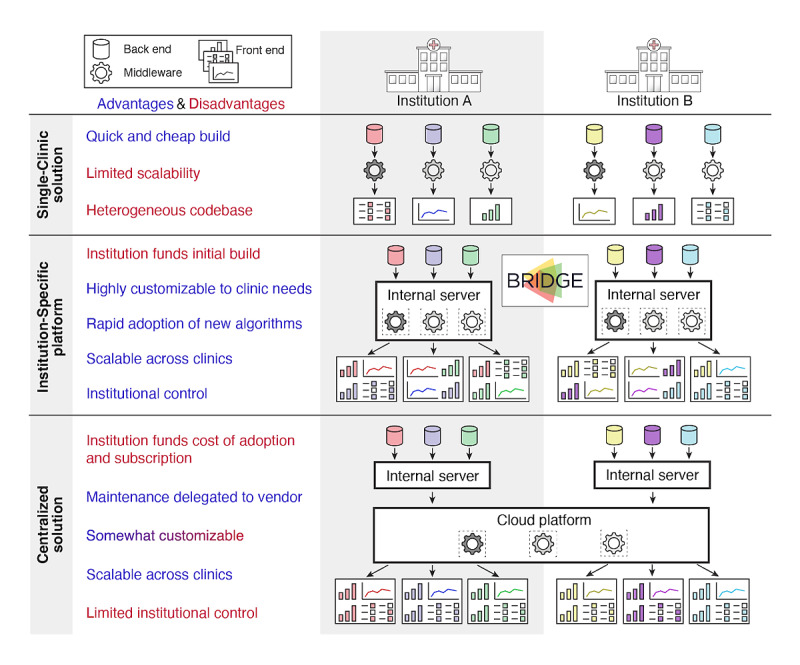
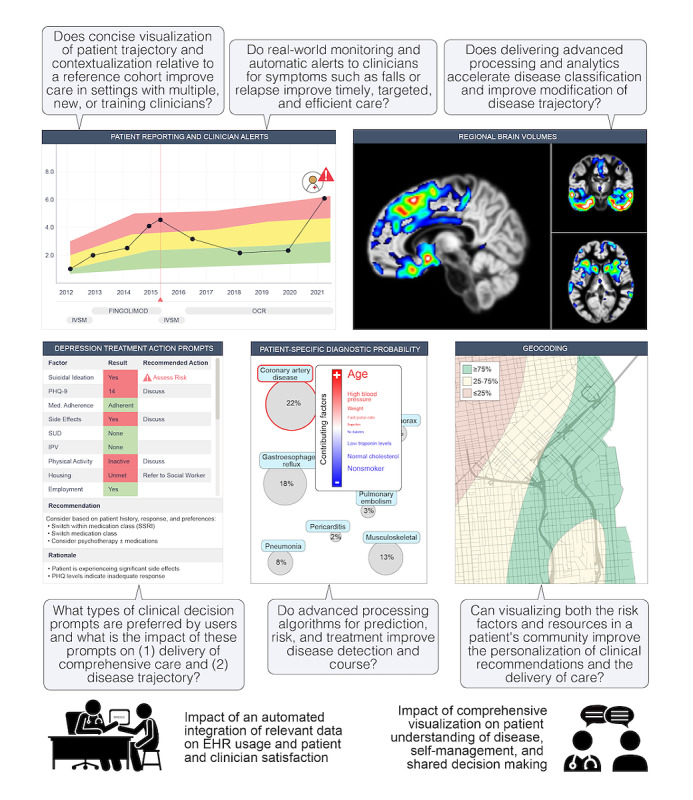
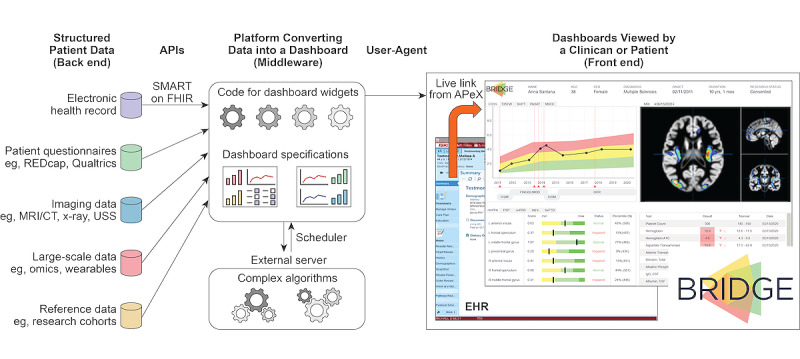
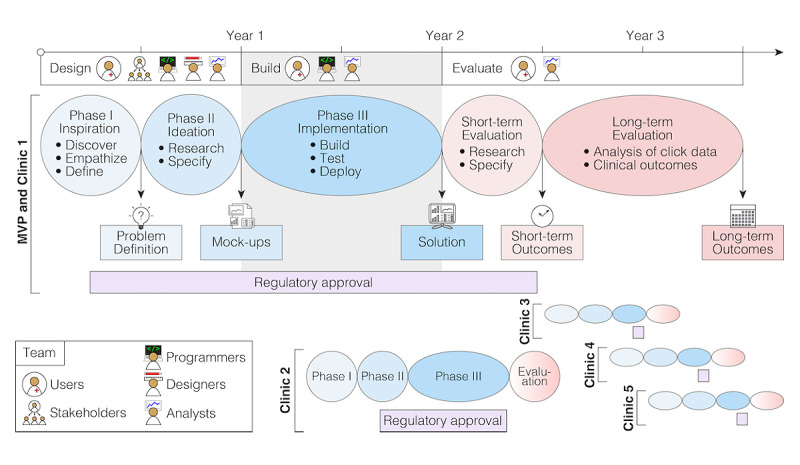
Despite an ever-expanding number of analytics with the potential to impact clinical care, the field currently lacks point-of-care technological tools that allow clinicians to efficiently select disease-relevant data about their patients, algorithmically derive clinical indices (eg, risk scores), and view these data in straightforward graphical formats to inform real-time clinical decisions. Thus far, solutions to this problem have relied on either bottom-up approaches that are limited to a single clinic or generic top-down approaches that do not address clinical users' specific setting-relevant or disease-relevant needs. As a road map for developing similar platforms, we describe our experience with building a custom but institution-wide platform that enables economies of time, cost, and expertise. The BRIDGE platform was designed to be modular and scalable and was customized to data types relevant to given clinical contexts within a major university medical center. The development process occurred by using a series of human-centered design phases with extensive, consistent stakeholder input. This institution-wide approach yielded a unified, carefully regulated, cross-specialty clinical research platform that can be launched during a patient's electronic health record encounter. The platform pulls clinical data from the electronic health record (Epic; Epic Systems) as well as other clinical and research sources in real time; analyzes the combined data to derive clinical indices; and displays them in simple, clinician-designed visual formats specific to each disorder and clinic. By integrating an application into the clinical workflow and allowing clinicians to access data sources that would otherwise be cumbersome to assemble, view, and manipulate, institution-wide platforms represent an alternative approach to achieving the vision of true personalized medicine.
尽管有越来越多的分析方法有可能影响临床护理,但目前该领域缺乏即时护理技术工具,无法让临床医生有效地选择与其患者相关的疾病数据,通过算法得出临床指标(例如,风险评分),并以简单的图形格式查看这些数据,从而为实时临床决策提供信息。到目前为止,解决这个问题的方法要么依赖于仅限于单个诊所的自下而上的方法,要么依赖于不解决临床用户特定设置相关或疾病相关需求的通用自上而下的方法。作为开发类似平台的路线图,我们描述了我们构建定制但全机构平台的经验,该平台可以节省时间、成本和专业知识。BRIDGE 平台旨在具有模块化和可扩展性,并针对主要大学医疗中心内特定临床环境相关的数据类型进行了定制。该开发过程是通过使用一系列以人为中心的设计阶段和广泛而一致的利益相关者投入来实现的。这种全机构的方法产生了一个统一的、精心监管的、跨专业的临床研究平台,可以在患者的电子健康记录就诊期间推出。该平台从电子健康记录(Epic;Epic Systems)以及其他临床和研究来源实时提取临床数据;分析组合数据得出临床指标;并以每个疾病和诊所特有的简单、临床医生设计的视觉格式显示。通过将应用程序集成到临床工作流程中,并允许临床医生访问否则难以组装、查看和操作的数据来源,全机构平台代表了实现真正个性化医疗愿景的另一种方法。