Oliva Lozano Jose M, Rago Vincenzo, Fortes Víctor, Muyor José M
Health Research Centre. University of Almería. Almería, Spain.
Faculty of Health Sciences and Sports, Universidade Europeia, Lisbon, Portugal.
Biol Sport. 2022 Jan;39(1):125-134. doi: 10.5114/biolsport.2021.102927. Epub 2021 Mar 7.
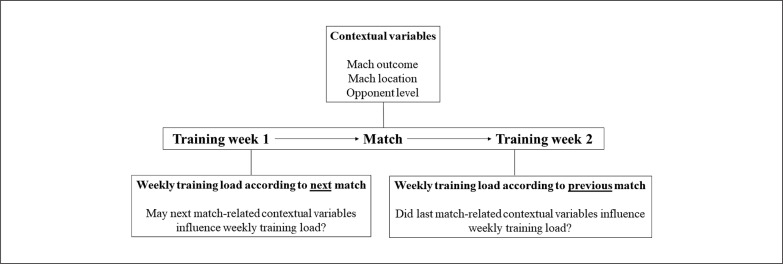
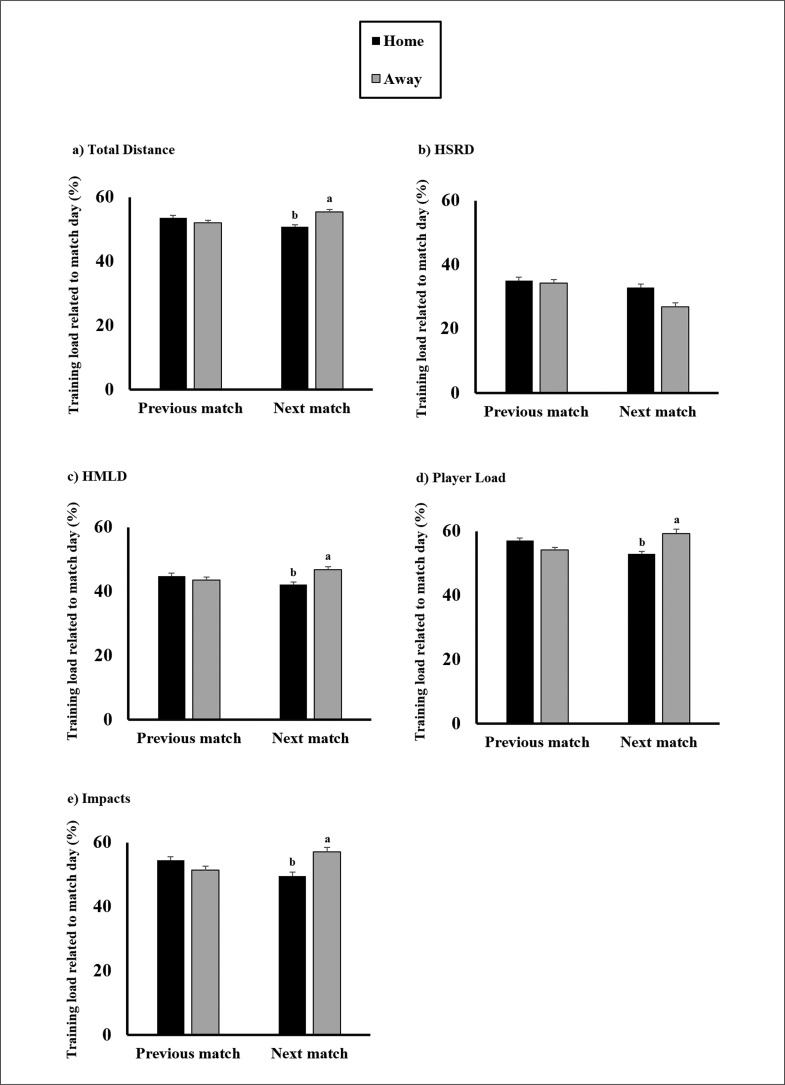
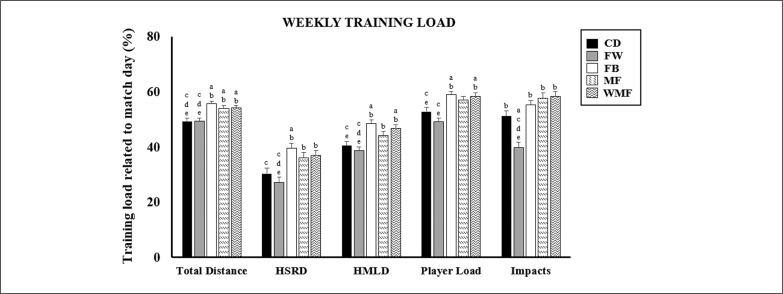
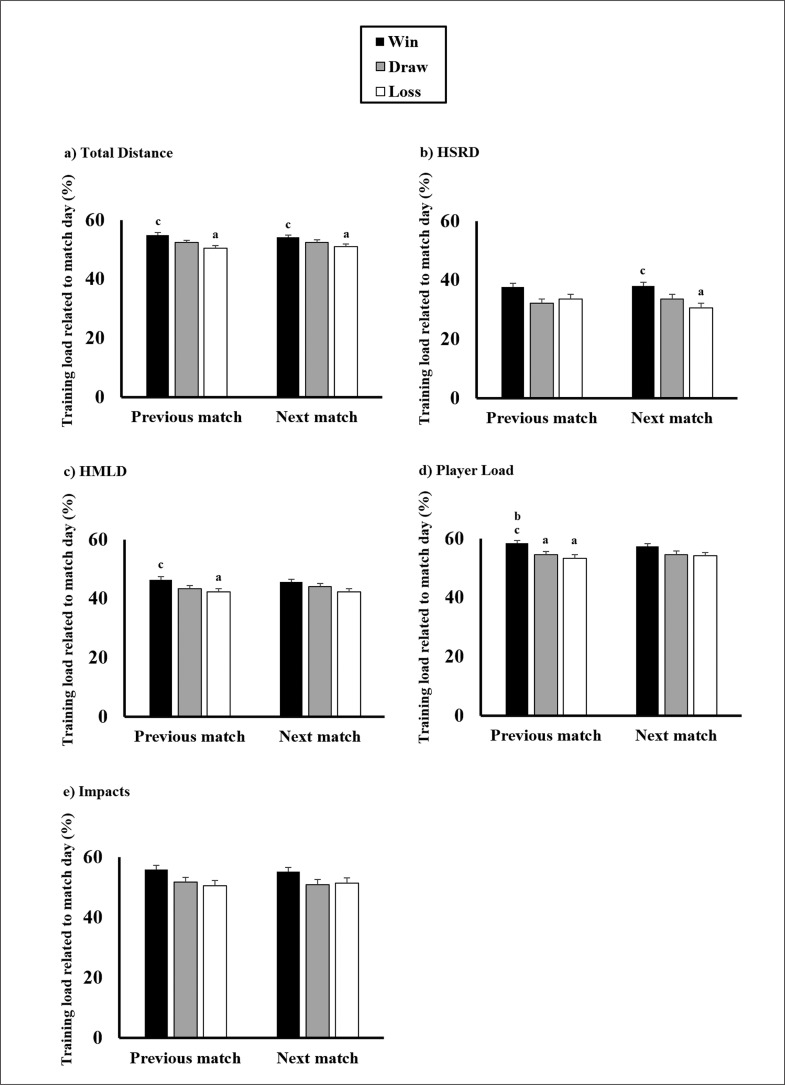
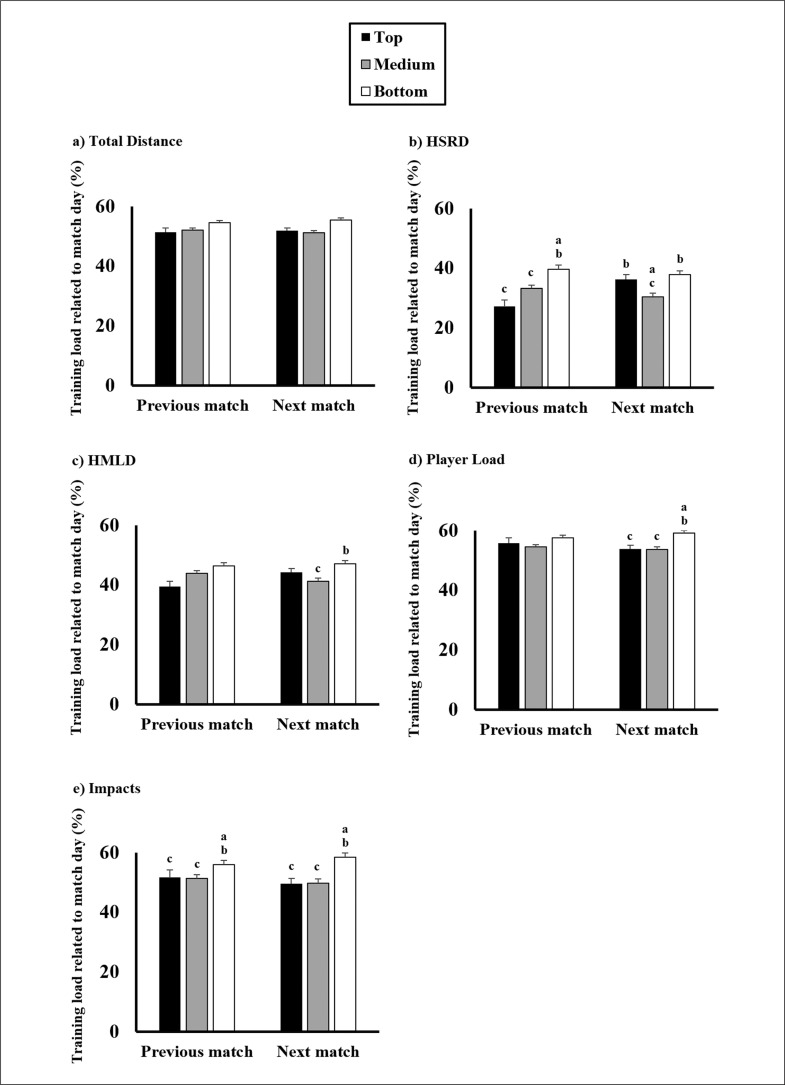
The purpose of this study was to analyse the impact of match-related contextual variables (match location, match outcome and level of the opponent) on the weekly training load in a professional soccer team throughout a full competitive season. Total distance, high-speed running distance (HSRD, > 18 km·h), highmetabolic load distance (HMLD, > 25.5 W·kg), player load and total number of impacts (above 3 G) were collected from training and match sessions in professional soccer players (n = 25) competing in LaLiga123. Comparisons of external load parameters by each match-related contextual variable were examined using a mixed-effect model. Differences between playing positions were found for total distance (p < 0.05; r = 0.11-0.15), HSRD (p < 0.05; r = 0.13-0.19), HMLD (p < 0.05; r = 0.12-0.19), player load (p < 0.05; r = 0.11-0.19) and impacts (p < 0.05; r = 0.15-0.26). However, no significant interaction was observed between match-related contextual variables and playing position for any variable (p > 0.05). In addition, a significant impact of match outcome (p < 0.05; r = 0.11-0.15), opponent level (p < 0.05; r = 0.11-0.17) and match location (p < 0.05; r = 0.14-0.20) on the weekly training load (before and after the match) was observed. In conclusion, match-related contextual variables seem to slightly affect weekly external training load. Thus, coaching and medical departments could consider the influence of these contextual variables when prescribing the training load relative to the match demands.
本研究的目的是分析比赛相关情境变量(比赛地点、比赛结果和对手水平)对一支职业足球队在整个完整赛季中的每周训练负荷的影响。从参加西班牙足球丙级联赛的职业足球运动员(n = 25)的训练和比赛场次中收集总距离、高速奔跑距离(HSRD,> 18公里·小时)、高代谢负荷距离(HMLD,> 25.5瓦·千克)、球员负荷和撞击总数(超过3G)。使用混合效应模型检查每个比赛相关情境变量对外部负荷参数的比较。发现不同比赛位置在总距离(p < 0.05;r = 0.11 - 0.15)、HSRD(p < 0.05;r = 0.13 - 0.19)、HMLD(p < 0.05;r = 0.12 - 0.19)、球员负荷(p < 0.05;r = 0.11 - 0.19)和撞击次数(p < 0.05;r = 0.15 - 0.26)方面存在差异。然而,对于任何变量,均未观察到比赛相关情境变量与比赛位置之间存在显著交互作用(p > 0.05)。此外,观察到比赛结果(p < 0.05;r = 0.11 - 0.15)、对手水平(p < 0.05;r = 0.11 - 0.17)和比赛地点(p < 0.05;r = 0.14 - 0.20)对每周训练负荷(比赛前后)有显著影响。总之,比赛相关情境变量似乎对每周的外部训练负荷有轻微影响。因此,教练和医疗部门在根据比赛需求规定训练负荷时可考虑这些情境变量的影响。