Center for Advanced Manufacturing, University of Southern California, Los Angeles, CA, 90007, USA.
Daniel J. Epstein Department of Industrial and Systems Engineering, University of Southern California, Los Angeles, CA, 90089, USA.
Nat Commun. 2022 Feb 17;13(1):918. doi: 10.1038/s41467-022-28579-z.
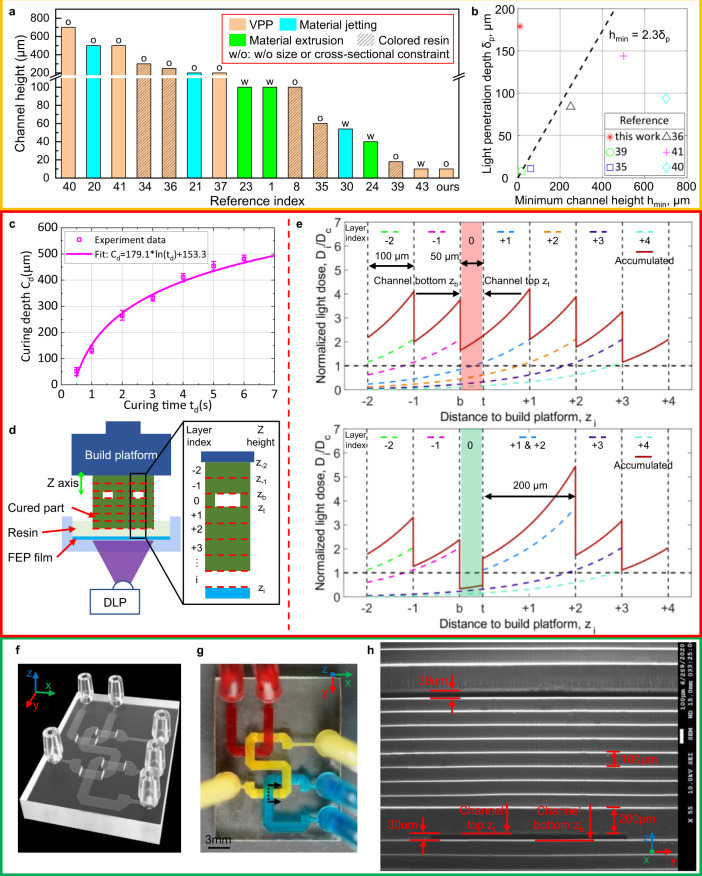
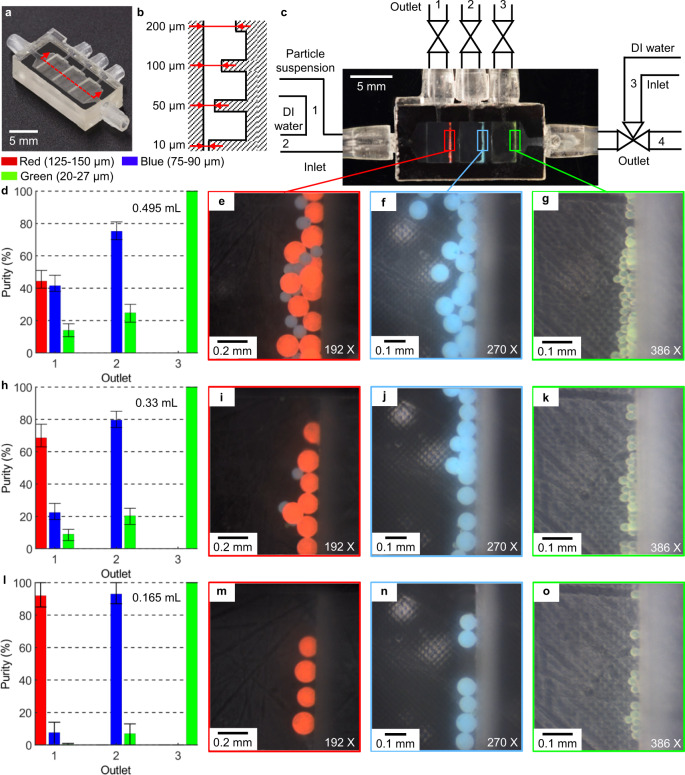
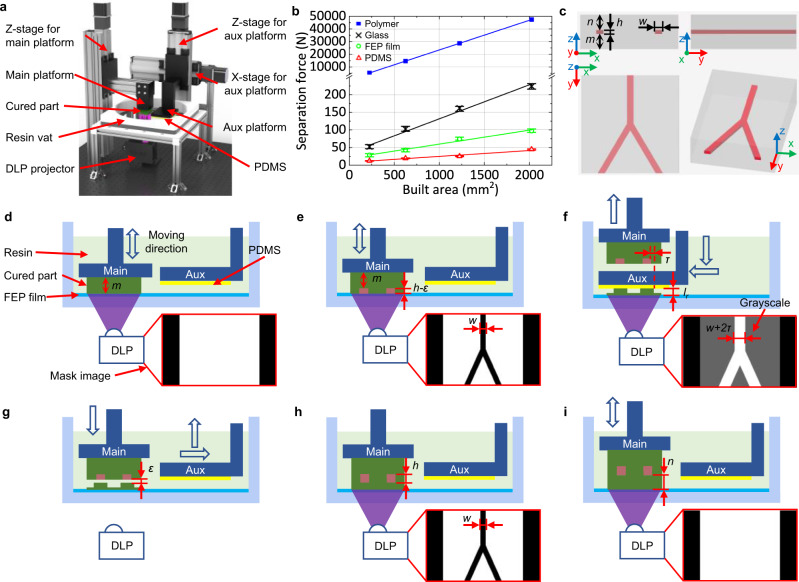
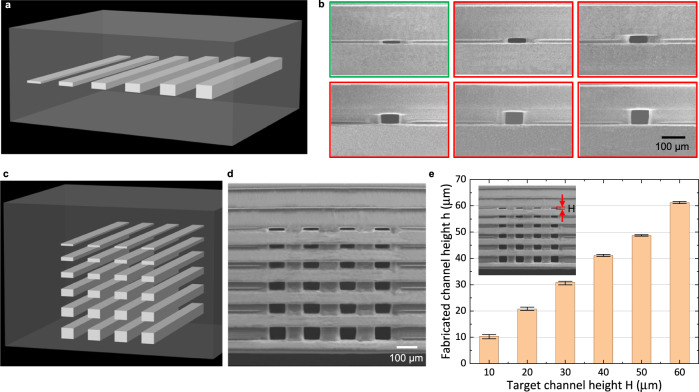
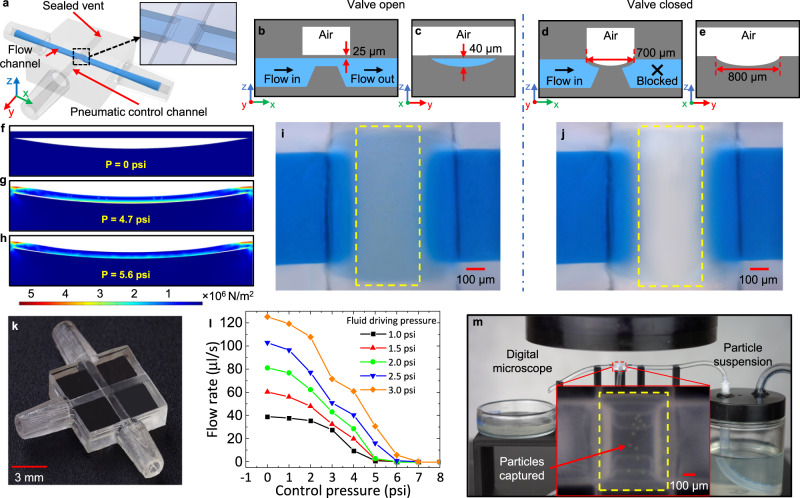
While vat photopolymerization has many advantages over soft lithography in fabricating microfluidic devices, including efficiency and shape complexity, it has difficulty achieving well-controlled micrometer-sized (smaller than 100 μm) channels in the layer building direction. The considerable light penetration depth of transparent resin leads to over-curing that inevitably cures the residual resin inside flow channels, causing clogs. In this paper, a 3D printing process - in-situ transfer vat photopolymerization is reported to solve this critical over-curing issue in fabricating microfluidic devices. We demonstrate microchannels with high Z-resolution (within 10 μm level) and high accuracy (within 2 μm level) using a general method with no requirements on liquid resins such as reduced transparency nor leads to a reduced fabrication speed. Compared with all other vat photopolymerization-based techniques specialized for microfluidic channel fabrication, our universal approach is compatible with commonly used 405 nm light sources and commercial photocurable resins. The process has been verified by multifunctional devices, including 3D serpentine microfluidic channels, microfluidic valves, and particle sorting devices. This work solves a critical barrier in 3D printing microfluidic channels using the high-speed vat photopolymerization process and broadens the material options. It also significantly advances vat photopolymerization's use in applications requiring small gaps with high accuracy in the Z-direction.
尽管 vat 光聚合在制造微流控器件方面比软光刻具有许多优势,包括效率和形状复杂性,但在层构建方向上难以实现精细控制的微尺寸(小于 100μm)通道。透明树脂的相当大的光穿透深度导致过度固化,这不可避免地会使流动通道内的残留树脂固化,从而导致堵塞。在本文中,报道了一种 3D 打印工艺——原位转移 vat 光聚合,以解决在制造微流控器件中这一关键的过度固化问题。我们使用一种通用方法展示了具有高 Z 分辨率(在 10μm 级)和高精度(在 2μm 级)的微通道,该方法对液体树脂没有特殊要求,例如降低透明度或降低制造速度。与专门用于微流道制造的所有其他 vat 光聚合技术相比,我们的通用方法与常用的 405nm 光源和商用光固化树脂兼容。该工艺已通过多功能器件得到验证,包括 3D 蛇形微流道、微流道阀和粒子分选装置。这项工作解决了使用高速 vat 光聚合工艺制造微流道的关键障碍,并拓宽了材料选择范围。它还显著推进了 vat 光聚合在需要高精度 Z 方向小间隙的应用中的使用。