School of Education, University of North Carolina at Chapel Hill, United States of America.
School of Education, University of North Carolina at Chapel Hill, United States of America.
J Sch Psychol. 2022 Apr;91:27-49. doi: 10.1016/j.jsp.2021.11.006. Epub 2021 Dec 28.
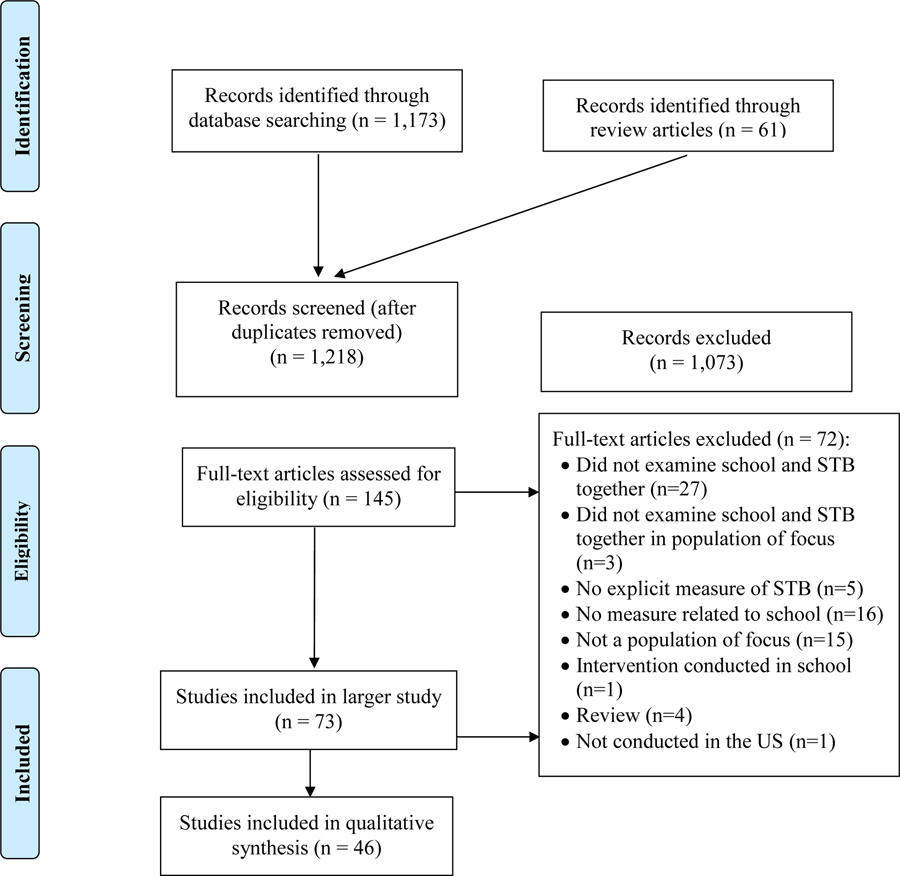
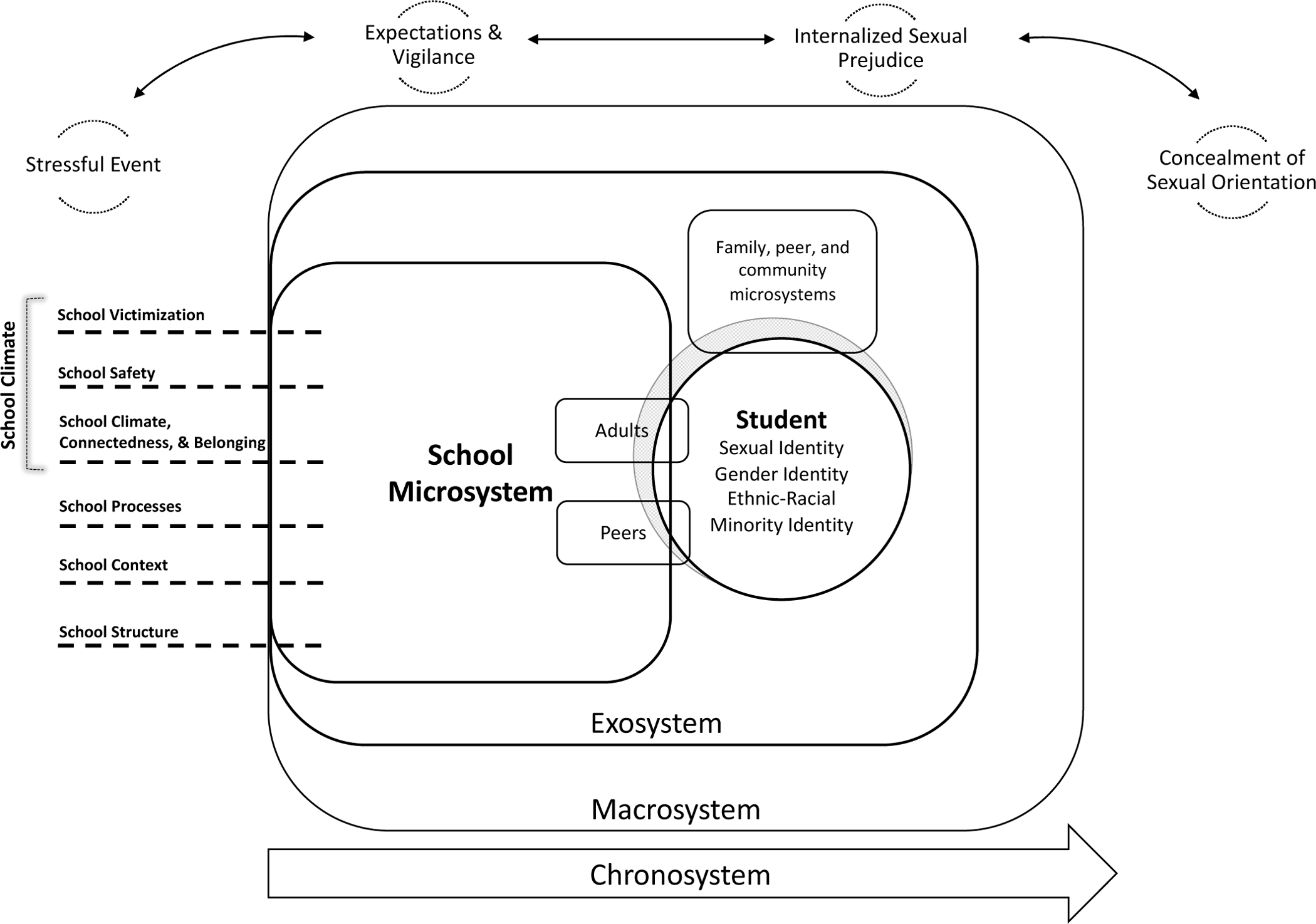
The extant literature on suicide-related thoughts and behaviors (STB) has highlighted increased patterns of risk among specific minoritized populations, including lesbian, gay, bisexual, transgender, questioning, intersex, two spirit, and queer (LGBTQ+) youth. Compared to their heterosexual and cisgender peers, LGBTQ+ youth are at increased risk for having STB. Identity-specific stressors such as homonegativity and anti-queerness are among the unique factors posited to contribute to this risk and inhibit factors that protect against suicide. The school setting has been a focal point for suicide prevention and intervention and may also play a key role in linking students to care; however, schools also hold the potential to provide supports and experiences that may buffer against risk factors for STB in LGBTQ+ students. This systematic literature review presents findings from 44 studies examining school-related correlates of STB in LGBTQ+ students, informing an ecological approach to suicide prevention for school settings. Findings underscore the importance of school context for preventing STB in LGBTQ+ youth. Approaches that prioritize safety and acceptance of LGBTQ+ youth should span multiple layers of a student's ecology, including district and state level policies and school programs and interventions, such as Gender and Sexuality Alliances and universal bullying prevention programs. Beyond their role as a primary access point for behavioral health services, schools offer a unique opportunity to support suicide prevention by combating minority stressors through promoting positive social relationships and a safe community for LGBTQ+ students.
关于与自杀相关的想法和行为(STB)的现有文献强调了特定少数群体中风险模式的增加,包括女同性恋、男同性恋、双性恋、跨性别、质疑、双性人、双灵和酷儿(LGBTQ+)青年。与异性恋和顺性别同龄人相比,LGBTQ+青年自杀的风险更高。特定于身份的压力源,如同性恋厌恶和反酷儿情绪,是导致这种风险的独特因素之一,并抑制了保护自杀的因素。学校环境一直是预防和干预自杀的重点,也可能在将学生与护理联系起来方面发挥关键作用;然而,学校也有可能提供支持和经验,这些支持和经验可能缓冲 LGBTQ+学生自杀的风险因素。本系统文献综述介绍了 44 项研究的结果,这些研究调查了 LGBTQ+学生与学校相关的 STB 相关性,为学校环境中的自杀预防提供了生态方法。研究结果强调了学校环境对预防 LGBTQ+青年自杀的重要性。以安全和接受 LGBTQ+青年为重点的方法应跨越学生生态系统的多个层次,包括地区和州一级的政策以及学校方案和干预措施,如性别和性取向联盟以及普遍的欺凌预防方案。除了作为行为健康服务的主要接入点的作用外,学校还通过促进 LGBTQ+学生的积极社会关系和安全社区,为预防自杀提供了独特的机会。