School of Horticulture and Plant Protection, Yangzhou University, Yangzhou, 225000, China.
Institute of Vegetables and Flowers, Chinese Academy of Agricultural Sciences, Key Laboratory of Biology and Genetic Improvement of Horticultural Crops of the Ministry of Agriculture, Sino-Dutch Joint Laboratory of Horticultural Genomics, Beijing, 100081, China.
Plant J. 2022 May;110(3):627-645. doi: 10.1111/tpj.15717. Epub 2022 Mar 27.
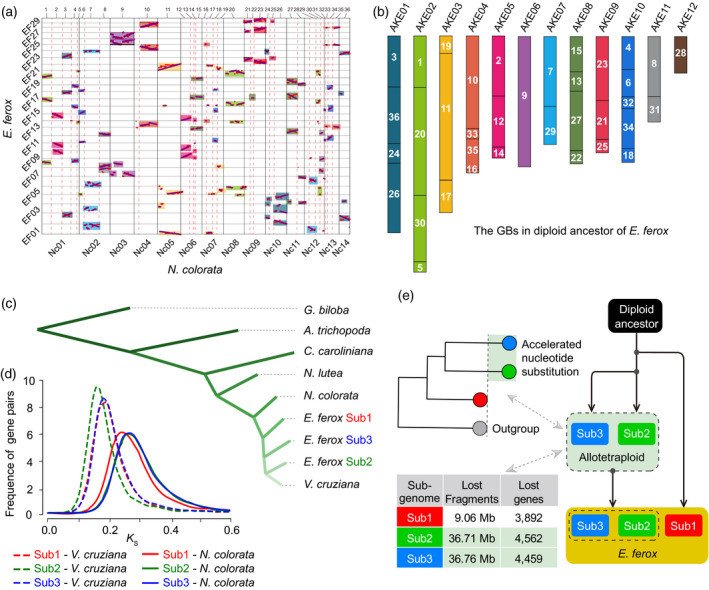
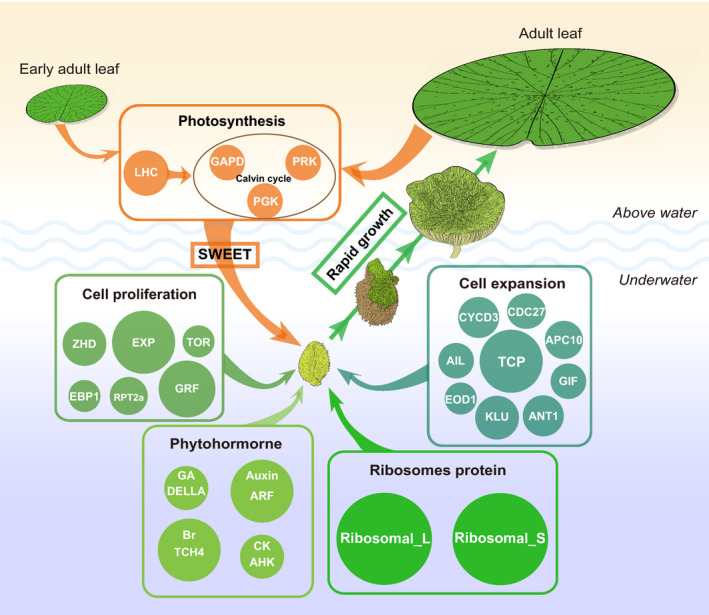
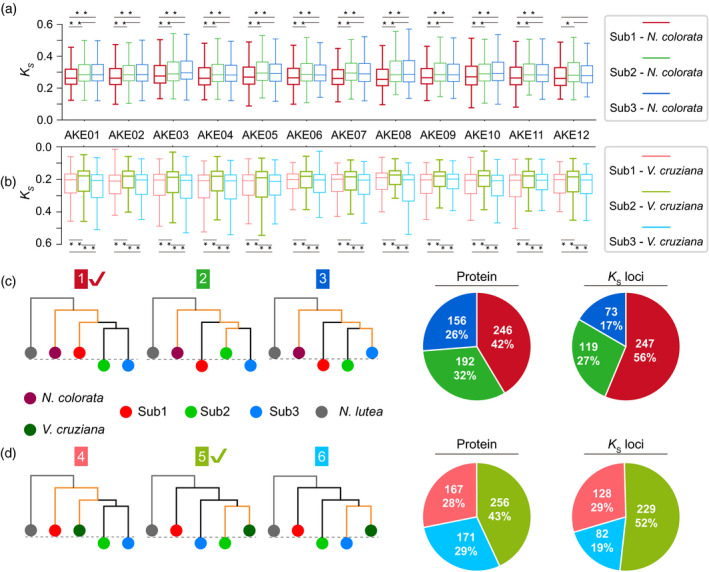
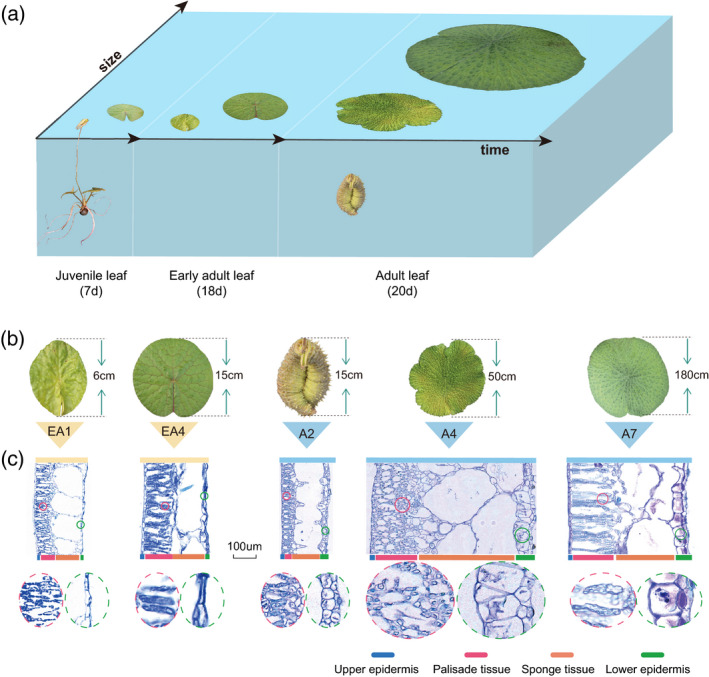
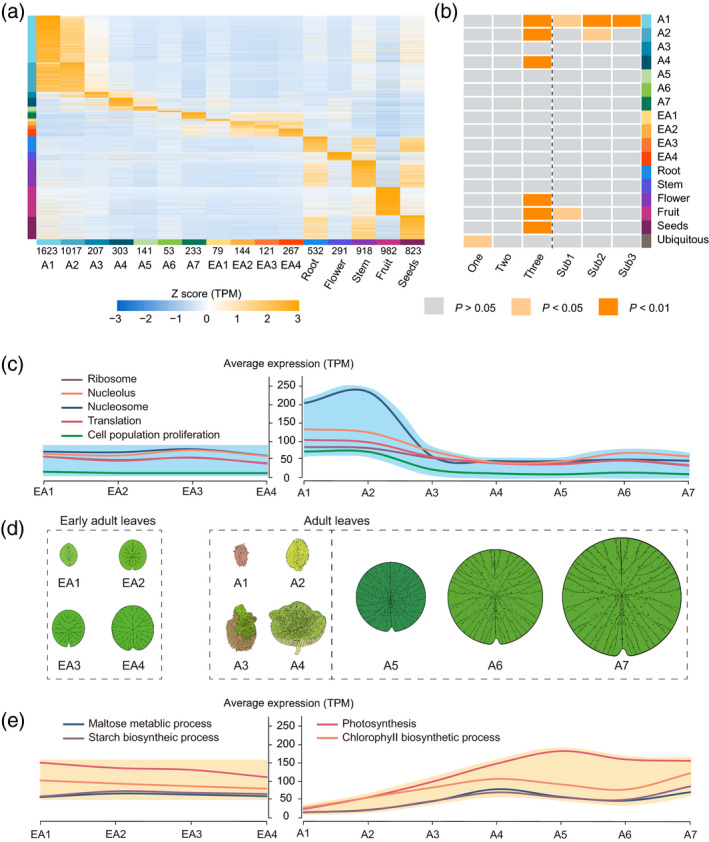
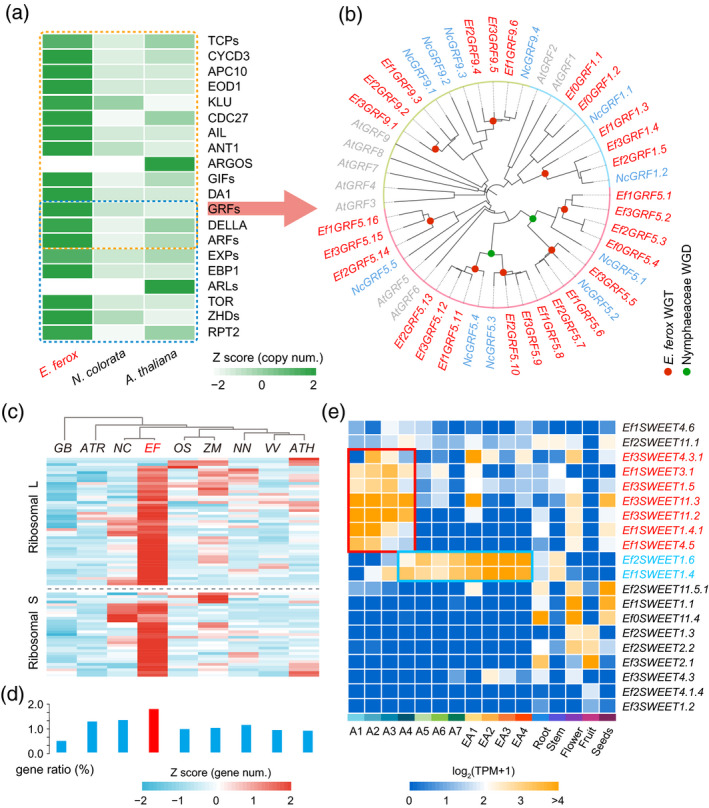
Occupation of living space is one of the main driving forces of adaptive evolution, especially for aquatic plants whose leaves float on the water surface and thus have limited living space. Euryale ferox, from the angiosperm basal family Nymphaeaceae, develops large, rapidly expanding leaves to compete for space on the water surface. Microscopic observation found that the cell proliferation of leaves is almost completed underwater, while the cell expansion occurs rapidly after they grow above water. To explore the mechanism underlying the specific development of leaves, we performed sequences assembly and analyzed the genome and transcriptome dynamics of E. ferox. Through reconstruction of the three sub-genomes generated from the paleo-hexaploidization event in E. ferox, we revealed that one sub-genome was phylogenetically closer to Victoria cruziana, which also exhibits gigantic floating leaves. Further analysis revealed that while all three sub-genomes promoted the evolution of the specific leaf development in E. ferox, the genes from the sub-genome closer to V. cruziana contributed more to this adaptive evolution. Moreover, we found that genes involved in cell proliferation and expansion, photosynthesis, and energy transportation were over-retained and showed strong expression association with the leaf development stages, such as the expression divergence of SWEET orthologs as energy uploaders and unloaders in the sink and source leaf organs of E. ferox. These findings provide novel insights into the genome evolution through polyploidization, as well as the adaptive evolution regarding the leaf development accomplished through biased gene retention and expression sub-functionalization of multi-copy genes in E. ferox.
占据生活空间是适应进化的主要驱动力之一,特别是对于水生植物,它们的叶子漂浮在水面上,因此生活空间有限。芡实属被子植物基莲科,其叶子大而迅速扩张,以争夺水面上的空间。微观观察发现,叶子的细胞增殖几乎是在水下完成的,而当叶子长到水面以上时,细胞迅速扩张。为了探索叶子特定发育的机制,我们进行了序列组装,并分析了芡属的基因组和转录组动态。通过重建芡属古六倍体化事件产生的三个亚基因组,我们发现一个亚基因组在系统发育上与同样具有巨大漂浮叶的 Victoria cruziana 更为接近。进一步分析表明,虽然所有三个亚基因组都促进了芡属特定叶子发育的进化,但与 V. cruziana 关系更近的亚基因组基因对此适应进化的贡献更大。此外,我们发现,参与细胞增殖和扩张、光合作用和能量运输的基因被过度保留,并与叶子发育阶段表现出强烈的表达关联,例如,作为能量上传和卸载器的 SWEET 同源物在芡属的源叶和汇叶器官中的表达差异。这些发现为多倍体化过程中的基因组进化以及通过基因重复保留和表达亚功能化实现的叶子发育适应性进化提供了新的见解。