School of Materials Science and Engineering, The Key Laboratory of Material Processing and Mold of Ministry of Education, Henan Key Laboratory of Advanced Nylon Materials and Application, Zhengzhou University, Zhengzhou, 450001, China.
College of Food Science and Engineering, National Engineering Research Center for Wheat & Corn Further Processing, Henan University of Technology, Zhengzhou, 450001, China.
Adv Sci (Weinh). 2022 May;9(13):e2104843. doi: 10.1002/advs.202104843. Epub 2022 Feb 27.
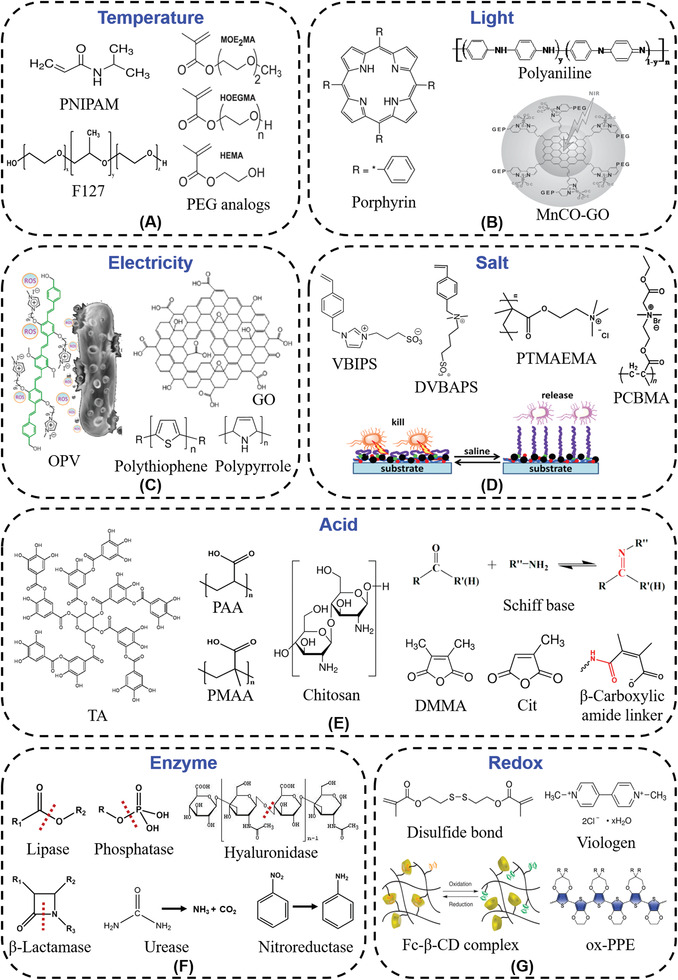
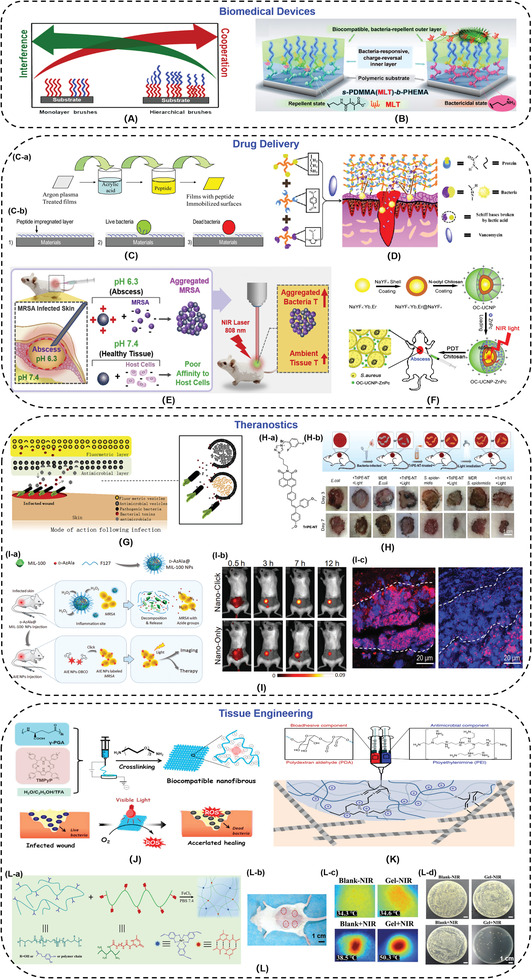
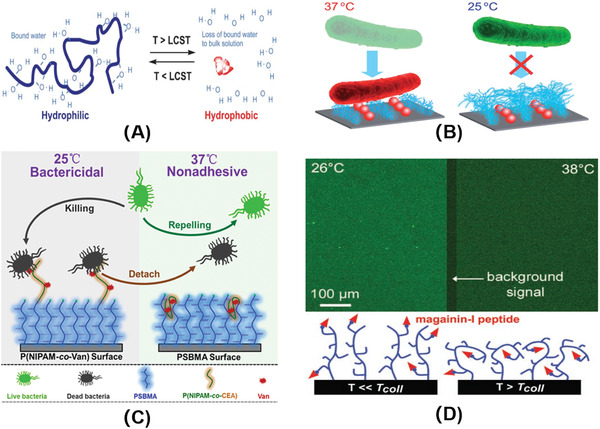
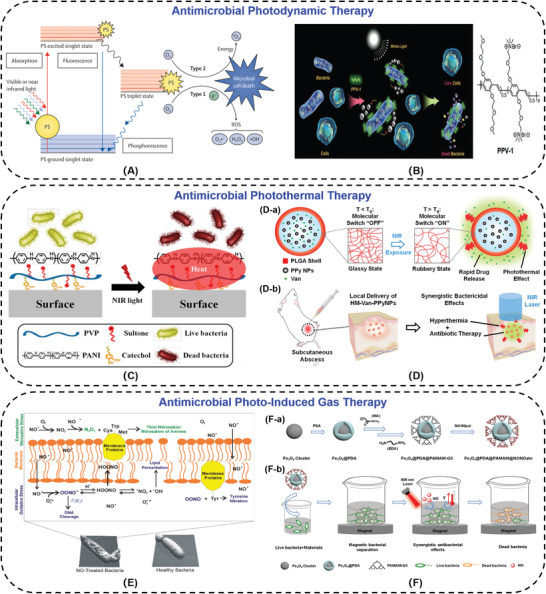
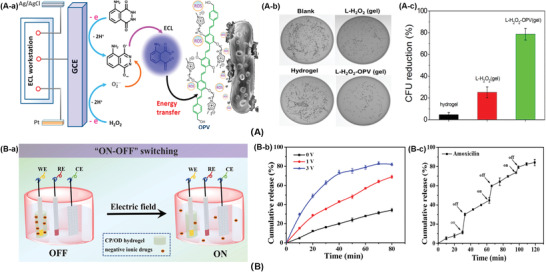
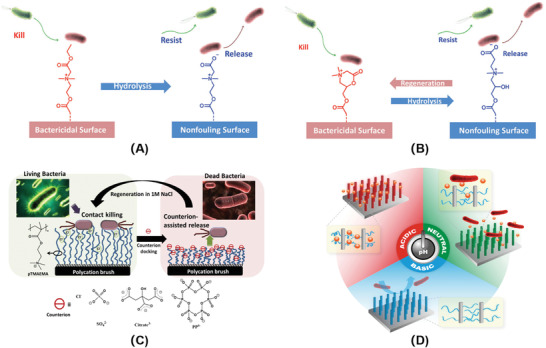
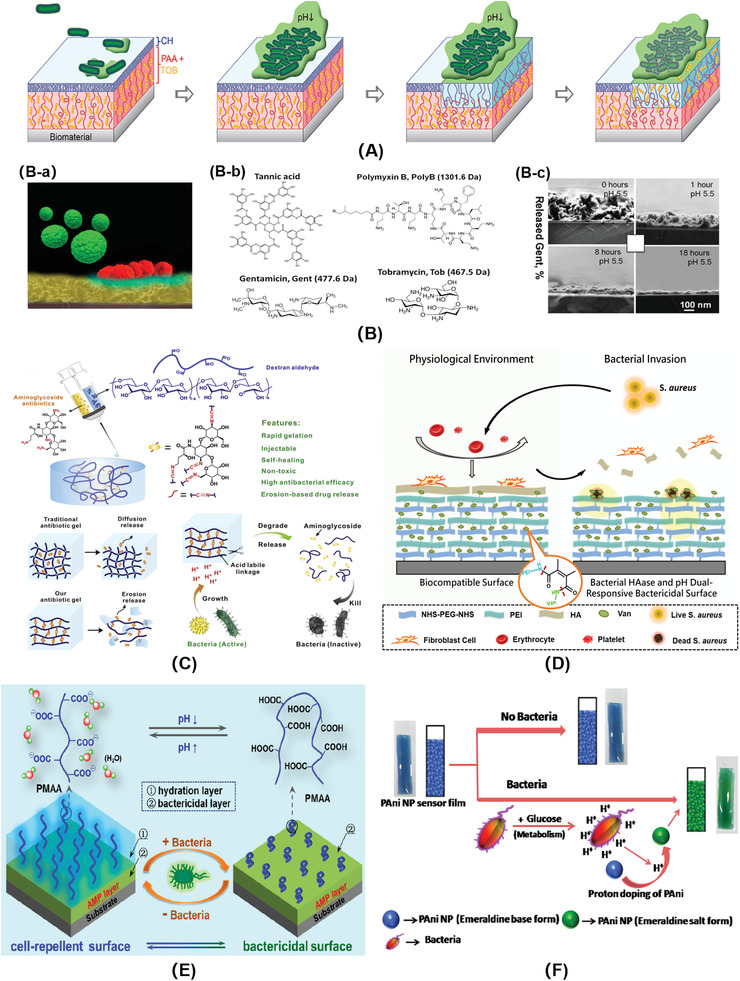
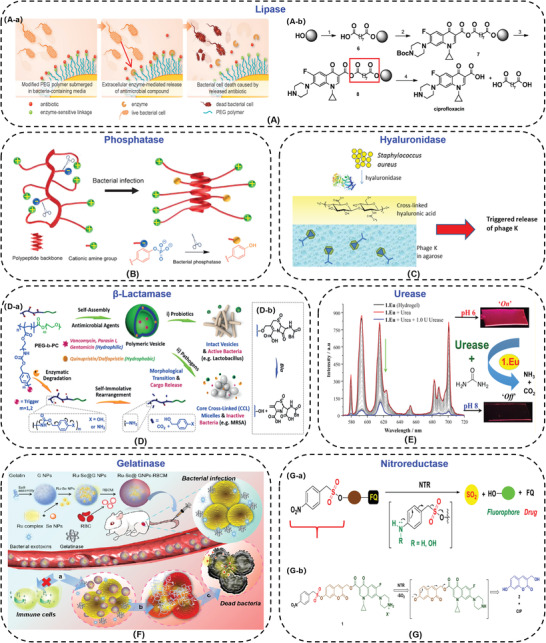
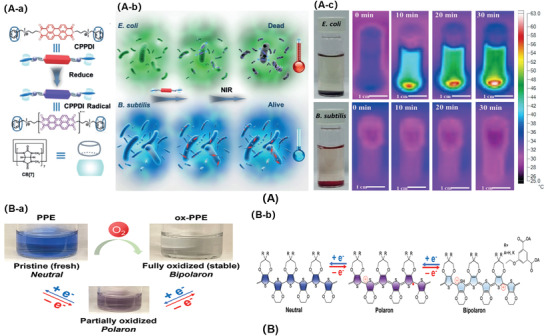
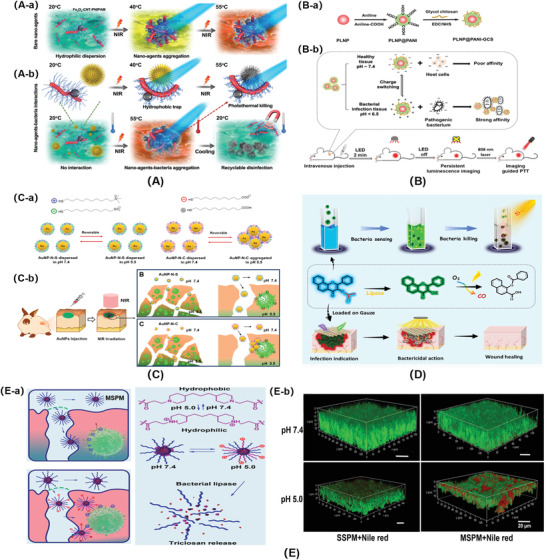
Infections are regarded as the most severe complication associated with human health, which are urgent to be solved. Stimuli-responsive materials are appealing therapeutic platforms for antibacterial treatments, which provide great potential for accurate theranostics. In this review, the advantages, the response mechanisms, and the key design principles of stimuli-responsive antibacterial materials are highlighted. The biomedical applications, the current challenges, and future directions of stimuli-responsive antibacterial materials are also discussed. First, the categories of stimuli-responsive antibacterial materials are comprehensively itemized based on different sources of stimuli, including external physical environmental stimuli (e.g., temperature, light, electricity, salt, etc.) and bacterial metabolites stimuli (e.g., acid, enzyme, redox, etc.). Second, structural characteristics, design principles, and biomedical applications of the responsive materials are discussed, and the underlying interrelationships are revealed. The molecular structures and design principles are closely related to the sources of stimuli. Finally, the challenging issues of stimuli-responsive materials are proposed. This review will provide scientific guidance to promote the clinical applications of stimuli-responsive antibacterial materials.
感染被认为是与人类健康相关的最严重的并发症,亟待解决。响应型材料是一种有吸引力的抗菌治疗的治疗平台,为精准治疗提供了巨大的潜力。在这篇综述中,强调了响应型抗菌材料的优点、响应机制和关键设计原则。还讨论了响应型抗菌材料的生物医学应用、当前挑战和未来方向。首先,根据不同的刺激源,全面列出了响应型抗菌材料的类别,包括外部物理环境刺激(例如温度、光、电、盐等)和细菌代谢物刺激(例如酸、酶、氧化还原等)。其次,讨论了响应材料的结构特征、设计原则和生物医学应用,并揭示了它们之间的内在关系。分子结构和设计原则与刺激源密切相关。最后,提出了响应型材料面临的挑战问题。本综述将为促进响应型抗菌材料的临床应用提供科学指导。