Department of Gastroenterology, Hospital of Chengdu University of Traditional Chinese Medicine, Chengdu, China.
Department of Clinical Laboratory, Hospital of Chengdu University of Traditional Chinese Medicine, Chengdu, China.
J Immunol Res. 2022 Feb 21;2022:9557859. doi: 10.1155/2022/9557859. eCollection 2022.
Hepatocellular carcinoma (HCC) is the second leading cause of cancer-related death, and its biology remains poorly understood, especially in regards to the immunosuppression induced by immune checkpoints, such as Siglec-15. Most cancer treatments composed of immune checkpoint inhibitors and oncogene-targeted drugs display a better therapeutic effect in the clinic, including tumor progression inhibition and immunosuppression breaks. However, two or more drugs will result in a greater possibility of adverse effects. Thus, a double-function target is necessary for developing antitumor drugs, such as RNAi therapy.
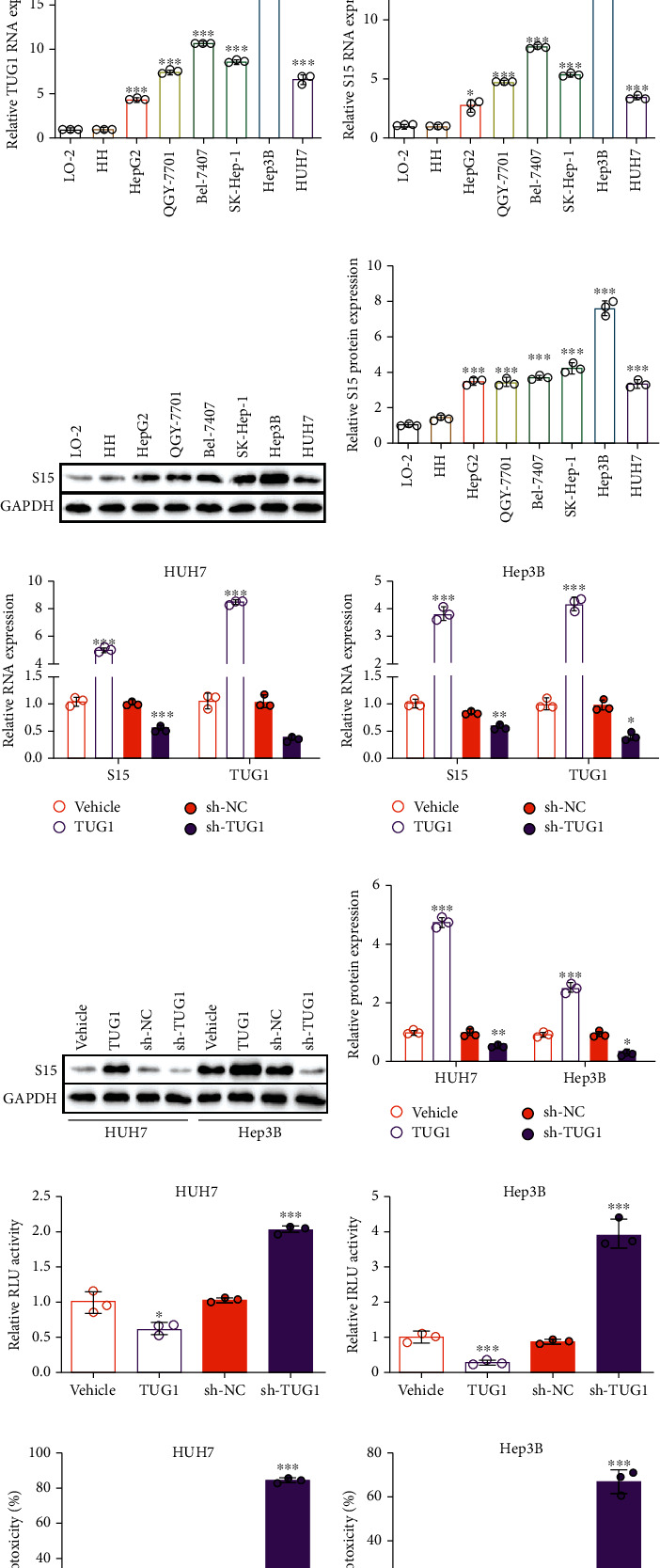
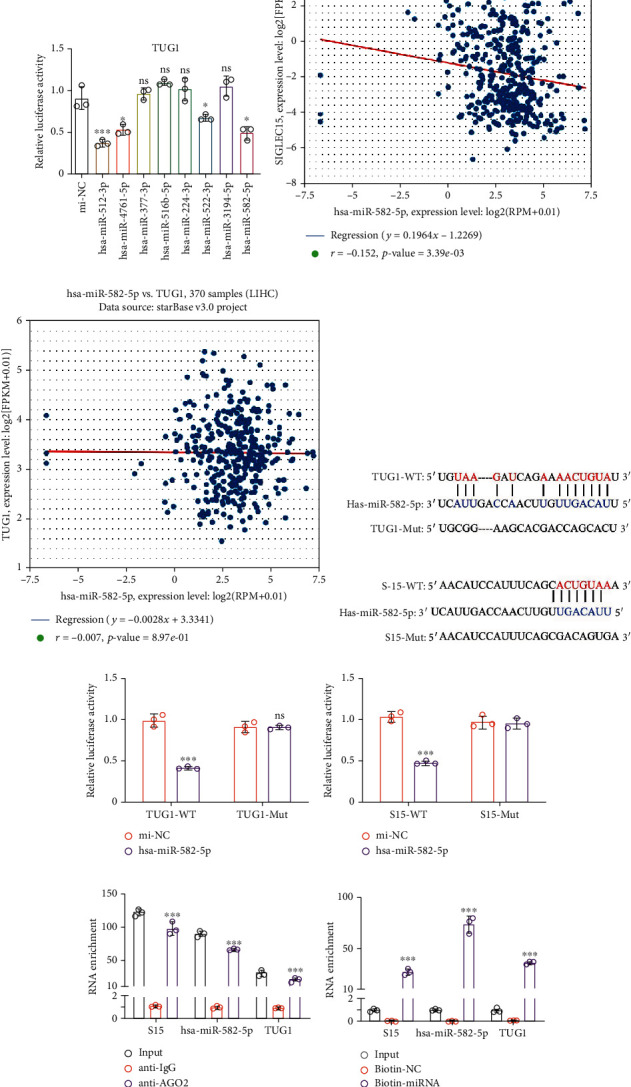
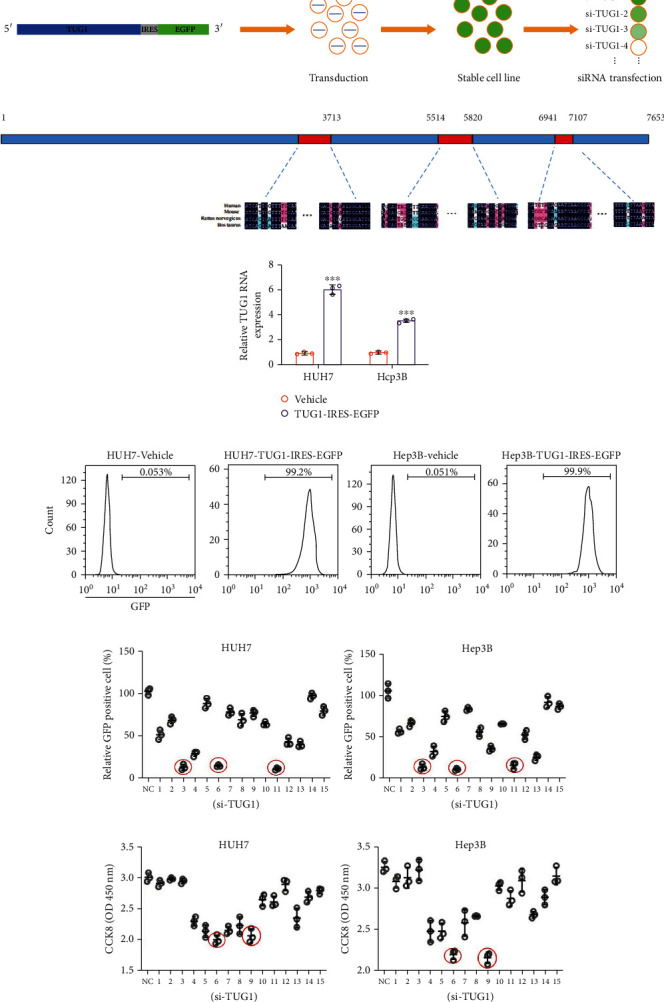
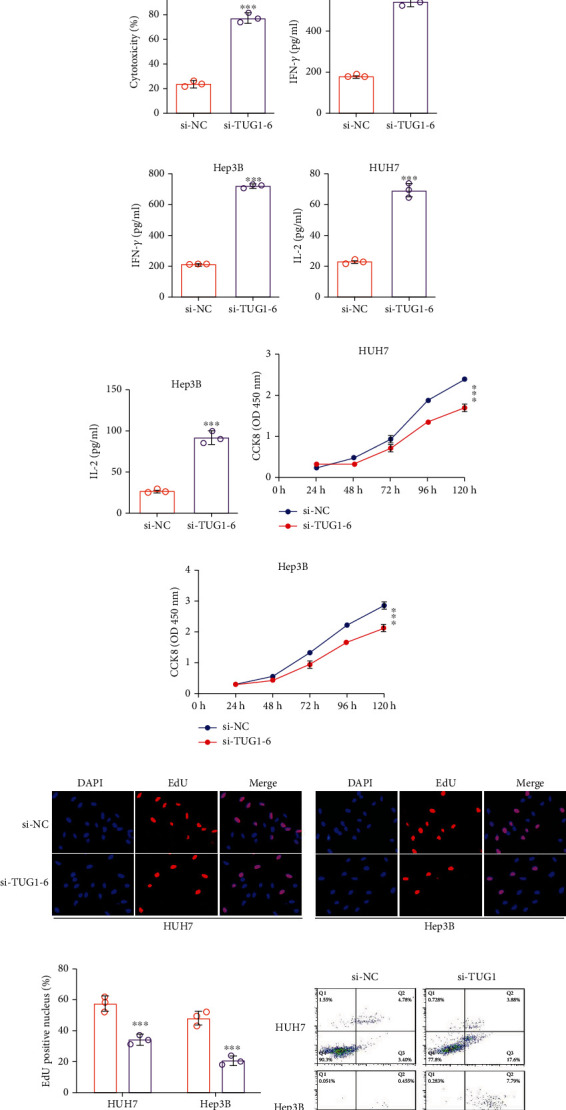
The expression of TUG1, Siglec-15, and miRNAs was evaluated by qPCR, and protein expression was analyzed by western blotting. The immune responses were evaluated by a Jurkat-reporter gene assay, a T cell-induced cytotoxicity assay, and IFN-/IL-2 release. The interactions among TUG1, Siglec-15, and miRNAs were verified by dual-luciferase reporter, RNA immunoprecipitation, and RNA pull-down assays. CCK-8 and Transwell assays were used to determine tumor cell proliferation, migration, and invasion.
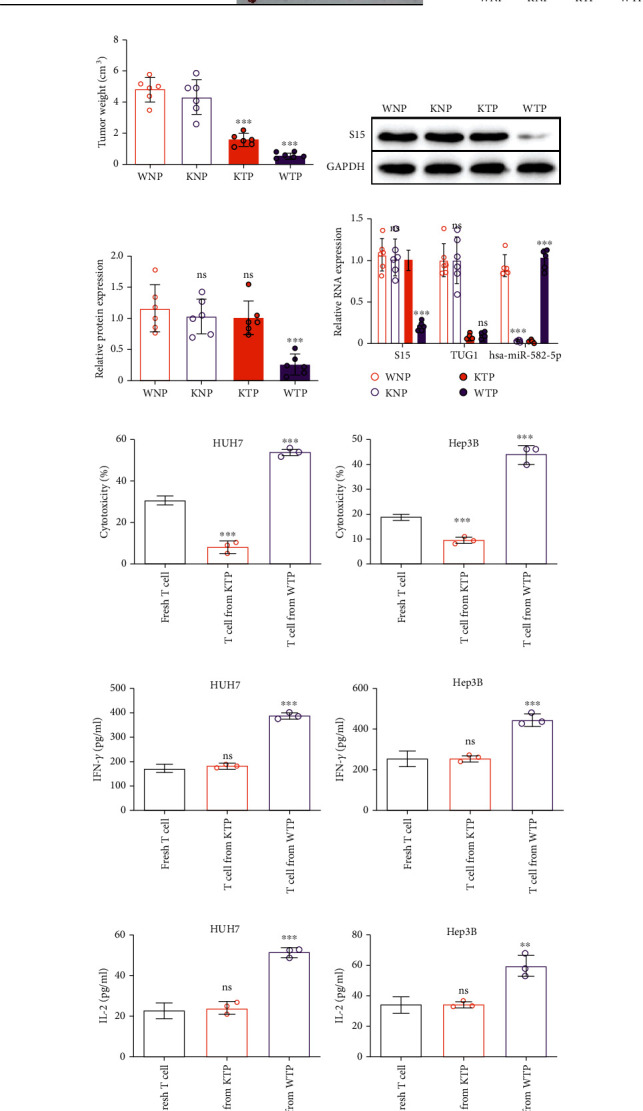
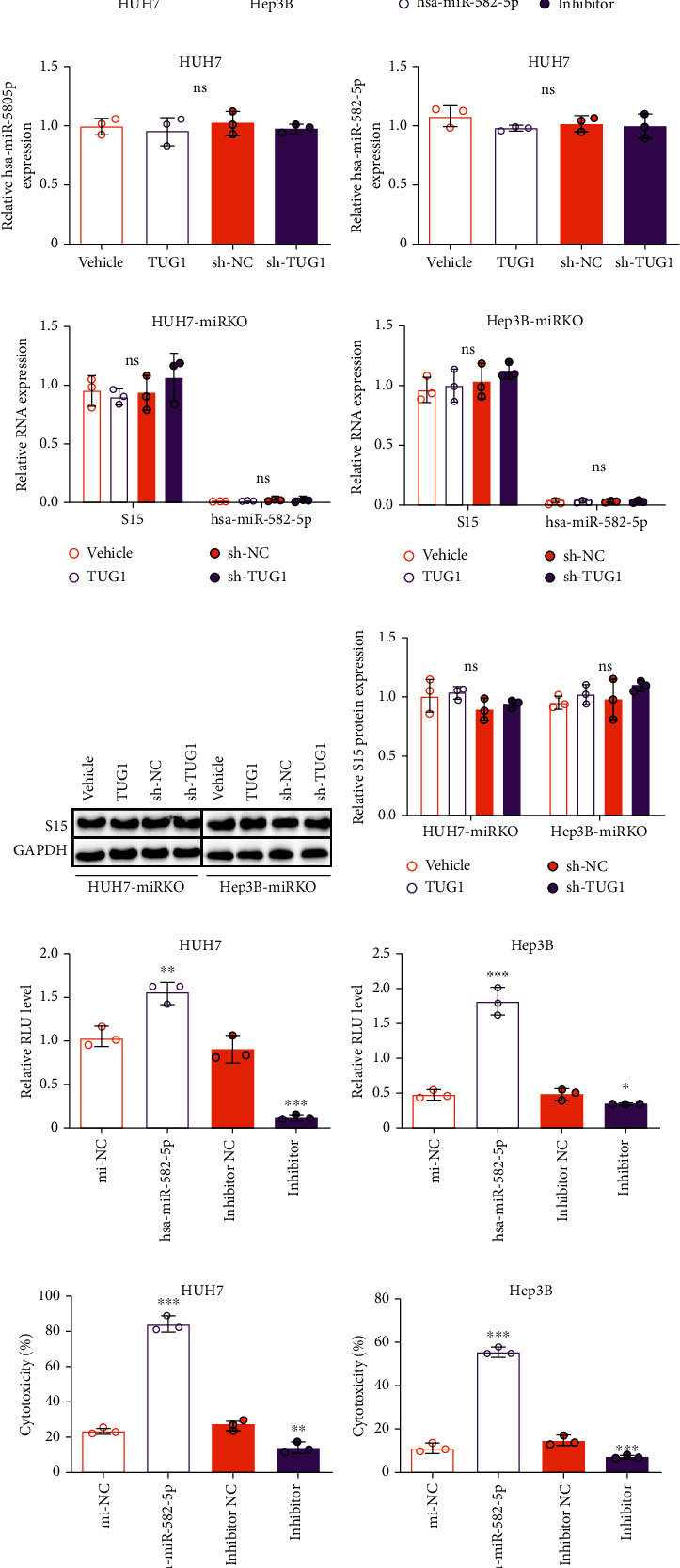
In HCC patients and cells, increased TUG1 levels were observed, positively regulating Siglec-15 expression. TUG1-induced Siglec-15 upregulation resulted in the suppression of the immune response of HCC cells. hsa-miR-582-5p directly targeted TUG1 and Siglec-15 mRNA, and ihsa-miR-582-5p knockout prevented the regulation of Siglec-15 induced by THU1. Changes in hsa-miR-582-5p expression negatively regulated Siglec-15 levels and immunosuppression but had no influence on TUG1 levels. siRNA knockdown of TUG1 effectively led to tumor progression inhibition and immune response improvement in HCC cells both in vitro and in vivo.
TUG1 increases the Siglec-15 level in HCC cells as a sponge to hsa-miR-582-5p, resulting in enhanced immunosuppression. TUG1 knockdown induced by siRNA not only reduces immunosuppression but also suppresses tumor progression both in vitro and in vivo. These novel findings may provide a potential and appropriate target for RNAi therapy to develop drugs with dual antitumor activity.
肝细胞癌(HCC)是癌症相关死亡的第二大主要原因,其生物学特性仍知之甚少,特别是在免疫检查点(如 Siglec-15)诱导的免疫抑制方面。大多数由免疫检查点抑制剂和癌基因靶向药物组成的癌症治疗在临床上显示出更好的治疗效果,包括肿瘤进展抑制和免疫抑制的突破。然而,两种或更多种药物会导致不良反应的可能性更大。因此,开发抗肿瘤药物需要双功能靶点,如 RNAi 疗法。
通过 qPCR 评估 TUG1、Siglec-15 和 miRNAs 的表达,通过 Western blot 分析蛋白质表达。通过 Jurkat 报告基因测定、T 细胞诱导的细胞毒性测定和 IFN-/IL-2 释放评估免疫反应。通过双荧光素酶报告、RNA 免疫沉淀和 RNA 下拉测定验证 TUG1、Siglec-15 和 miRNAs 之间的相互作用。CCK-8 和 Transwell 测定用于测定肿瘤细胞增殖、迁移和侵袭。
在 HCC 患者和细胞中,观察到 TUG1 水平升高,正向调节 Siglec-15 表达。TUG1 诱导的 Siglec-15 上调导致 HCC 细胞的免疫反应受到抑制。hsa-miR-582-5p 直接靶向 TUG1 和 Siglec-15 mRNA,并且 ihsa-miR-582-5p 敲除阻止了 THU1 诱导的 Siglec-15 调节。hsa-miR-582-5p 表达的变化负调节 Siglec-15 水平和免疫抑制,但对 TUG1 水平没有影响。TUG1 的 siRNA 敲低有效地导致 HCC 细胞在体外和体内的肿瘤进展抑制和免疫反应改善。
TUG1 作为 hsa-miR-582-5p 的海绵增加 HCC 细胞中的 Siglec-15 水平,导致增强的免疫抑制。siRNA 敲低 TUG1 不仅减少免疫抑制,而且在体外和体内均抑制肿瘤进展。这些新发现可能为 RNAi 疗法提供一个潜在的合适靶点,以开发具有双重抗肿瘤活性的药物。