Information Management and Big Data Center, Peking University Third Hospital, Beijing, China.
Education Section, Peking University Third Hospital, Beijing, China.
BMC Med Inform Decis Mak. 2022 Mar 4;22(1):60. doi: 10.1186/s12911-022-01797-7.
Modernizing medical education by using artificial intelligence and other new technologies to improve the clinical thinking ability of medical students is an important research topic in recent years. Prominent medical universities are actively conducting research and exploration in this area. In particular, given the shortage of human resources, the need to maintain social distancing to prevent the spread of the epidemics, and the increase in the cost of medical education, it is critical to harness online learning to promote medical education. A virtual case learning system that uses natural language processing technology to process and present a hospital's real medical records and evaluate student responses can effectively improve medical students' clinical thinking abilities.
The purpose of this study is to develop a virtual case system, AIteach, based on actual complete hospital medical records and natural language processing technology, and achieve clinical thinking ability improvement through a contactless, self-service, trial-and-error system application.
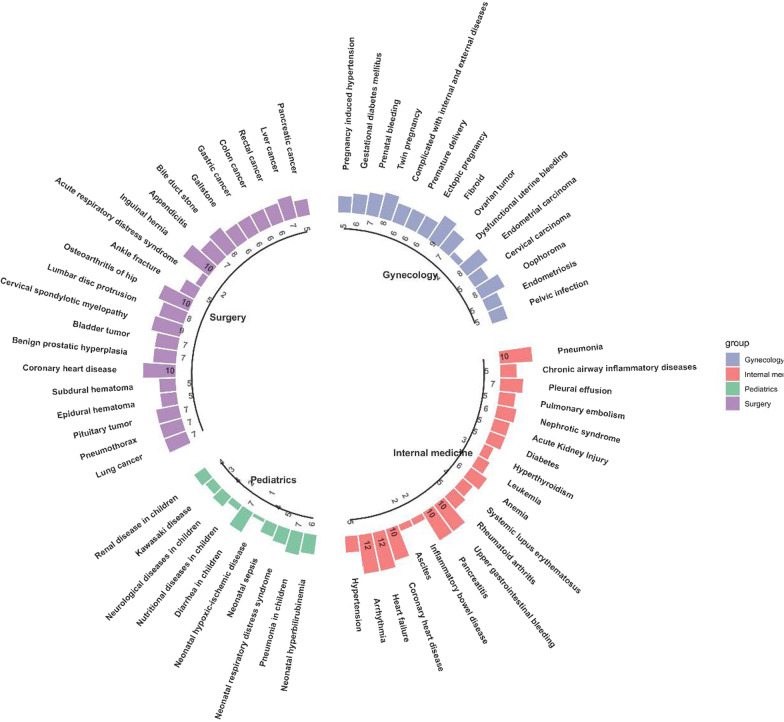
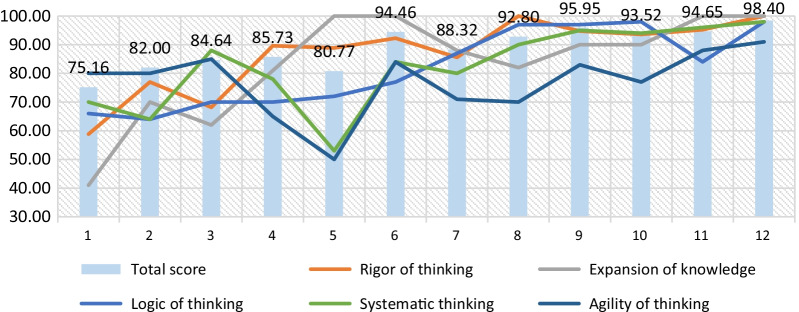
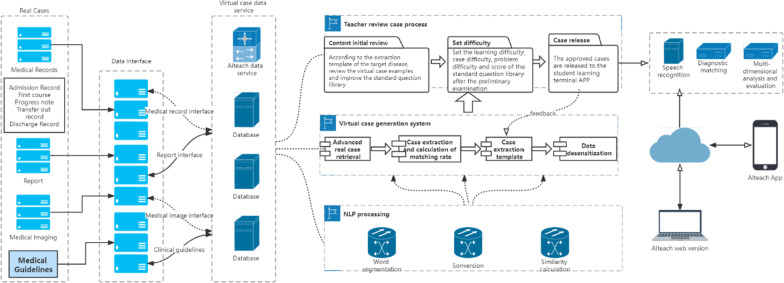
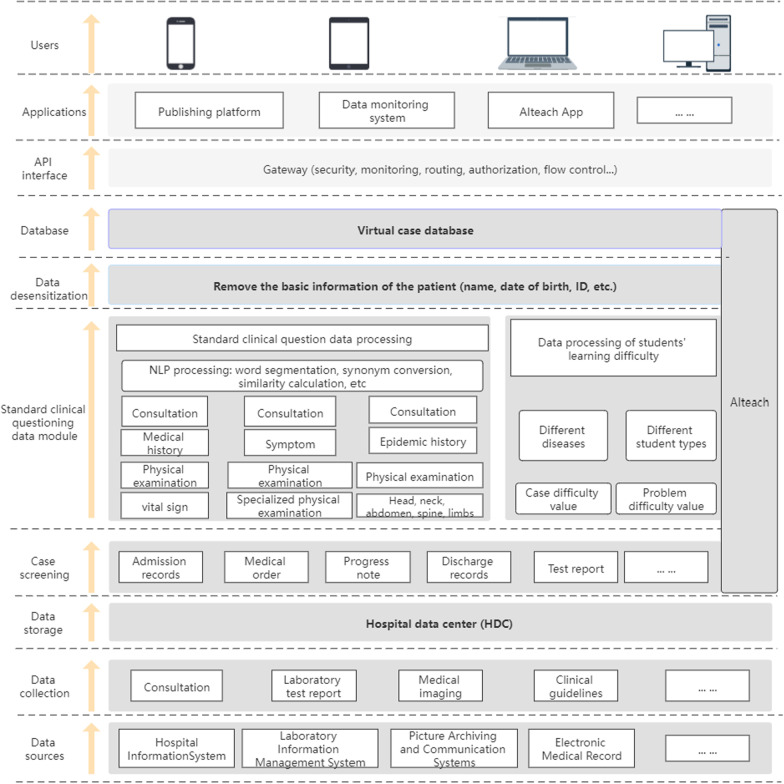
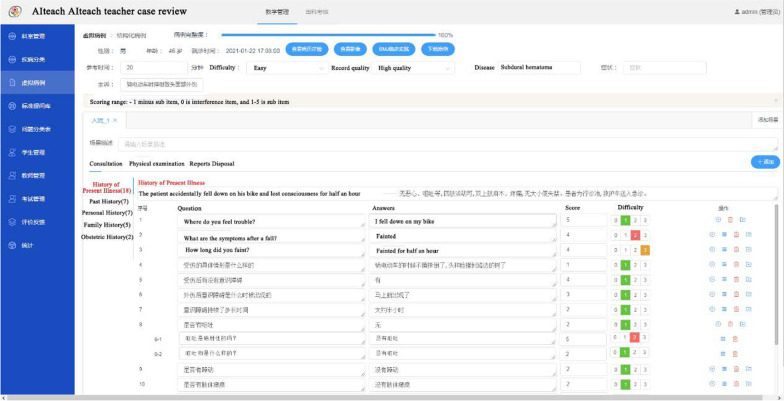
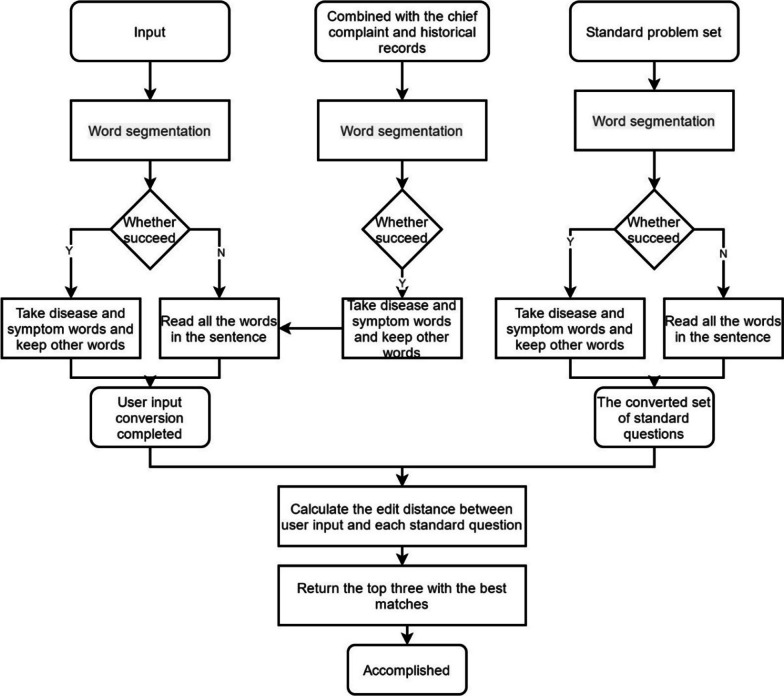
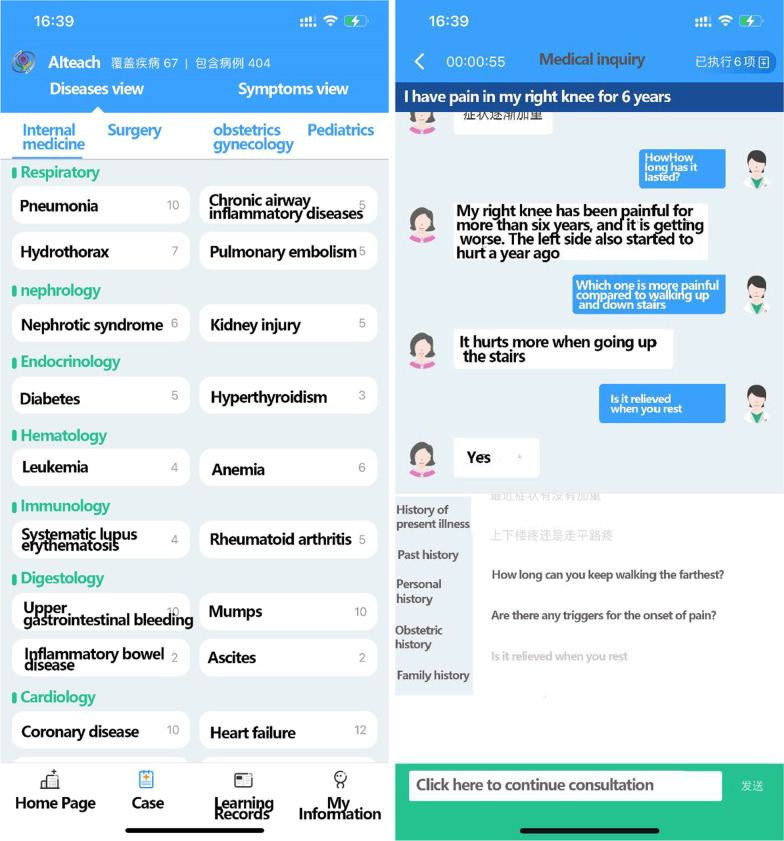
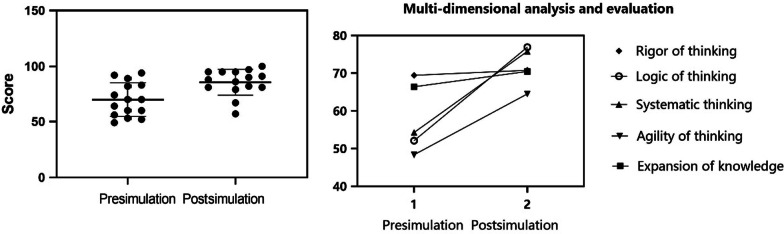
Case extraction is performed on a hospital's case data center and the best-matching cases are produced through natural language processing, word segmentation, synonym conversion, and sorting. A standard clinical questioning data module, virtual case data module, and student learning difficulty module are established to achieve simulation. Students can view the objective examination and inspection data of actual cases, including details of the consultation and physical examination, and automatically provide their learning response via a multi-dimensional evaluation system. In order to assess the changes in students' clinical thinking after using AIteach, 15 medical graduate students were subjected to two simulation tests before and after learning through the virtual case system. The tests, which included the full-process case examination of cases having the same difficulty level, examined core clinical thinking test points such as consultation, physical examination, and disposal, and generated multi-dimensional evaluation indicators (rigor, logic, system, agility, and knowledge expansion). Thus, a complete and credible evaluation system is developed.
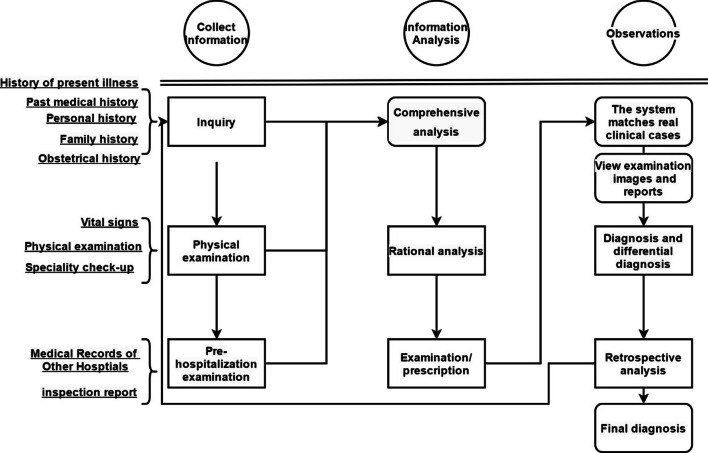
The AIteach system used an internal and external double-cycle learning model. Students collect case information through online inquiries, physical examinations, and other means, analyze the information for feedback verification, and generate their detailed multi-dimensional clinical thinking after learning. The feedback report can be evaluated and its knowledge gaps analyzed. Such learning based on real cases is in line with traditional methods of disease diagnosis and treatment, and addresses the practical difficulties in reflecting actual disease progression while keeping pace with recent research. Test results regarding short-term learning showed that the average score (P < 0.01) increased from 69.87 to 85.6, the five indicators of clinical thinking evaluation improved, and there was obvious logical improvement, reaching 47%.
By combining real cases and natural language processing technology, AIteach can provide medical students (including undergraduates and postgraduates) with an online learning tool for clinical thinking training. Virtual case learning helps students to cultivate clinical thinking abilities even in the absence of clinical tutor, such as during pandemics or natural disasters.
利用人工智能和其他新技术来提高医学生的临床思维能力,从而使医学教育现代化,这是近年来的一个重要研究课题。著名的医科大学正在积极在这一领域进行研究和探索。特别是,鉴于人力资源短缺、需要保持社交距离以防止疫情传播以及医学教育成本增加,利用在线学习来促进医学教育至关重要。一种使用自然语言处理技术处理和呈现医院真实病历并评估学生反应的虚拟病例学习系统,可以有效地提高医学生的临床思维能力。
本研究旨在开发一种基于实际完整医院病历和自然语言处理技术的虚拟病例系统 AIteach,并通过无接触、自助、试错系统应用实现临床思维能力的提高。
从医院的病例数据中心进行病例提取,并通过自然语言处理进行最佳匹配病例生成、分词、同义词转换和排序。建立标准临床问诊数据模块、虚拟病例数据模块和学生学习困难模块,实现模拟。学生可以查看实际病例的客观检查和检验数据,包括咨询和体检的详细信息,并通过多维评估系统自动提供学习反馈。为了评估学生使用 AIteach 后的临床思维变化,15 名医学研究生通过虚拟病例系统进行了两次模拟测试,一次在学习前,一次在学习后。这些测试包括对具有相同难度级别的病例的全过程检查,检查了咨询、体检和处置等核心临床思维测试点,并生成了多维评估指标(严谨性、逻辑性、系统性、灵活性和知识拓展)。从而开发了一个完整可靠的评估系统。
AIteach 系统采用了内部和外部双循环学习模式。学生通过在线查询、体检等方式收集病例信息,对信息进行分析反馈验证,学习后生成详细的多维临床思维。反馈报告可以进行评估,并分析其知识差距。这种基于真实病例的学习符合传统的疾病诊断和治疗方法,解决了在反映实际疾病进展的同时跟上最新研究进展的实际困难。短期学习的测试结果表明,平均分(P < 0.01)从 69.87 提高到 85.6,五个临床思维评估指标均有所提高,逻辑性明显提高,达到 47%。
通过结合真实案例和自然语言处理技术,AIteach 可为医学生(包括本科生和研究生)提供在线临床思维训练学习工具。虚拟病例学习可以帮助学生即使在没有临床导师的情况下,例如在大流行或自然灾害期间,也能培养临床思维能力。