Popescu Dan M, Abramson Haley G, Yu Rebecca, Lai Changxin, Shade Julie K, Wu Katherine C, Maggioni Mauro, Trayanova Natalia A
Alliance for Cardiovascular Diagnostic and Treatment Innovation (ADVANCE), Johns Hopkins University, Baltimore, Maryland.
Department of Biomedical Engineering, Johns Hopkins University School of Medicine, Baltimore, Maryland.
Cardiovasc Digit Health J. 2021 Nov 26;3(1):2-13. doi: 10.1016/j.cvdhj.2021.11.007. eCollection 2022 Feb.
Visualizing fibrosis on cardiac magnetic resonance (CMR) imaging with contrast enhancement (late gadolinium enhancement; LGE) is paramount in characterizing disease progression and identifying arrhythmia substrates. Segmentation and fibrosis quantification from LGE-CMR is intensive, manual, and prone to interobserver variability. There is an unmet need for automated LGE-CMR image segmentation that ensures anatomical accuracy and seamless extraction of clinical features.
This study aimed to develop a novel deep learning solution for analysis of contrast-enhanced CMR images that produces anatomically accurate myocardium and scar/fibrosis segmentations and uses these to calculate features of clinical interest.
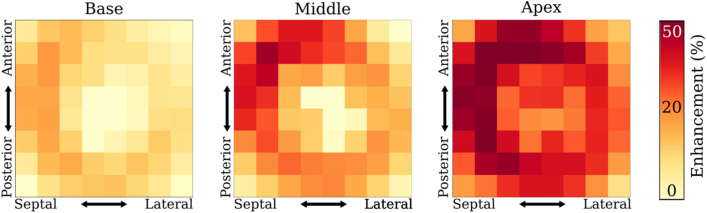
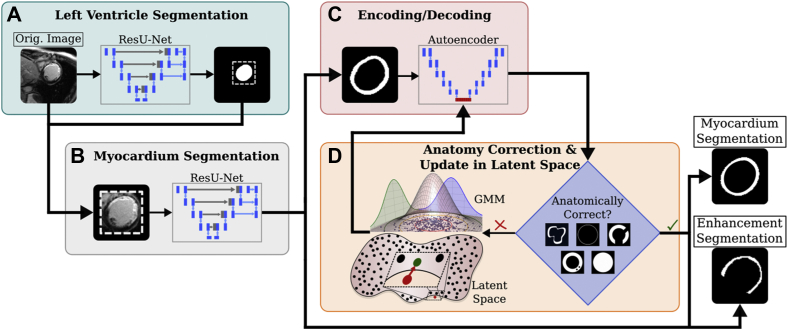
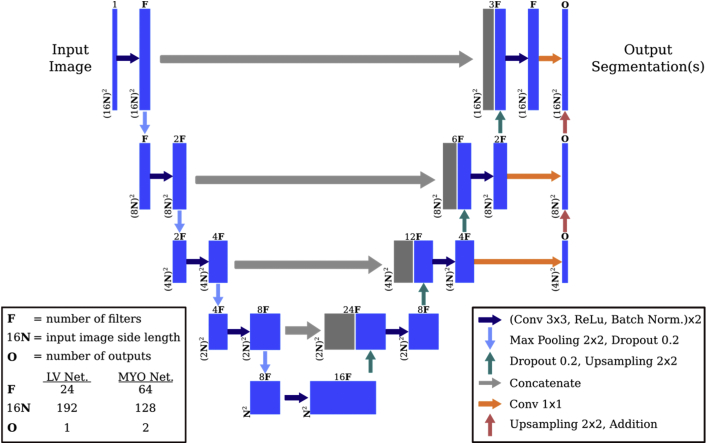
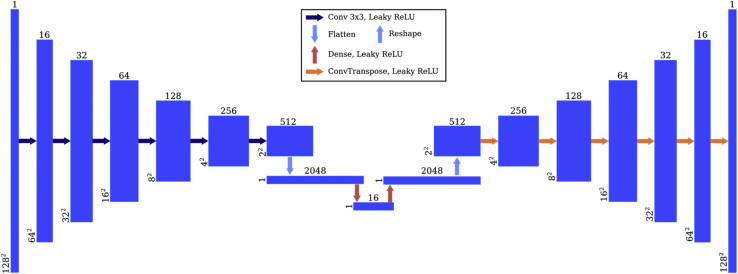
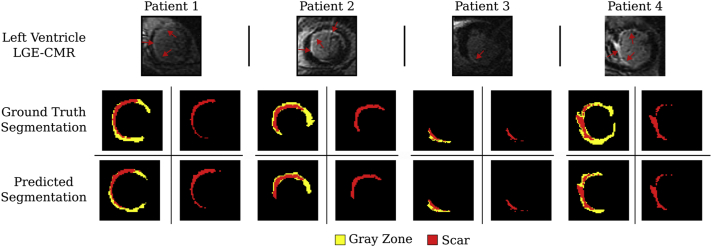
Data sources were 155 2-dimensional LGE-CMR patient scans (1124 slices) and 246 synthetic "LGE-like" scans (1360 slices) obtained from cine CMR using a novel style-transfer algorithm. We trained and tested a 3-stage neural network that identified the left ventricle (LV) region of interest (ROI), segmented ROI into viable myocardium and regions of enhancement, and postprocessed the segmentation results to enforce conforming to anatomical constraints. The segmentations were used to directly compute clinical features, such as LV volume and scar burden.
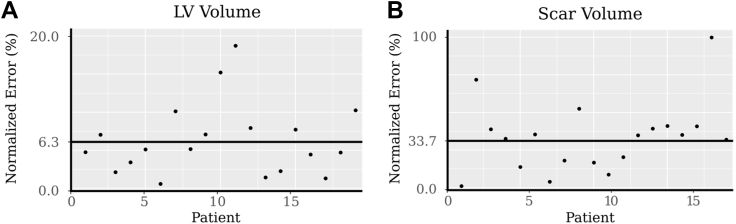
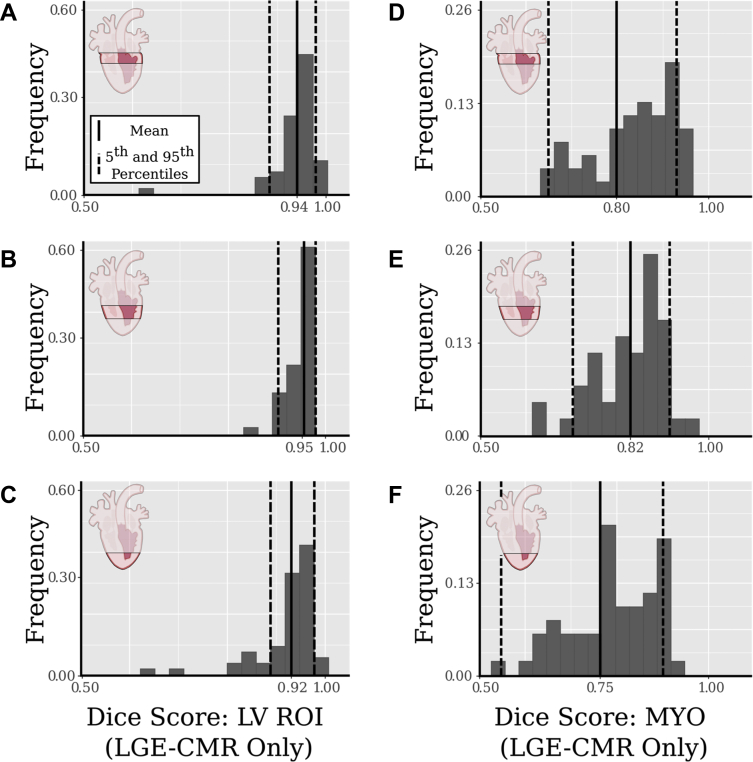
Predicted LV and scar segmentations achieved 96% and 75% balanced accuracy, respectively, and 093 and 057 Dice coefficient when compared to trained expert segmentations. The mean scar burden difference between manual and predicted segmentations was 2%.
We developed and validated a deep neural network for automatic, anatomically accurate expert-level LGE- CMR myocardium and scar/fibrosis segmentation, allowing direct calculation of clinical measures. Given the training set heterogeneity, our approach could be extended to multiple imaging modalities and patient pathologies.
通过对比增强(延迟钆增强;LGE)在心脏磁共振(CMR)成像上可视化纤维化对于表征疾病进展和识别心律失常基质至关重要。从LGE-CMR进行分割和纤维化定量是密集的、手动的,并且容易出现观察者间的变异性。对于确保解剖准确性和无缝提取临床特征的自动化LGE-CMR图像分割存在未满足的需求。
本研究旨在开发一种用于分析对比增强CMR图像的新型深度学习解决方案,该方案能生成解剖学上准确的心肌和瘢痕/纤维化分割,并利用这些分割来计算临床感兴趣的特征。
数据来源为155例二维LGE-CMR患者扫描(1124层)和246例使用新型风格迁移算法从电影CMR获得的合成“类LGE”扫描(1360层)。我们训练并测试了一个三阶段神经网络,该网络识别左心室(LV)感兴趣区域(ROI),将ROI分割为存活心肌和增强区域,并对分割结果进行后处理以使其符合解剖学约束。这些分割用于直接计算临床特征,如LV容积和瘢痕负担。
与训练有素的专家分割相比,预测的LV和瘢痕分割的平衡准确率分别达到96%和75%,Dice系数分别为0.93和0.57。手动分割和预测分割之间的平均瘢痕负担差异为2%。
我们开发并验证了一种深度神经网络,用于自动、解剖学上准确的专家级LGE-CMR心肌和瘢痕/纤维化分割,允许直接计算临床指标。鉴于训练集的异质性,我们的方法可扩展到多种成像模式和患者病理情况。