Department of Human Nutrition, University of Otago, Dunedin 9054, New Zealand.
Int J Environ Res Public Health. 2022 Mar 1;19(5):2880. doi: 10.3390/ijerph19052880.
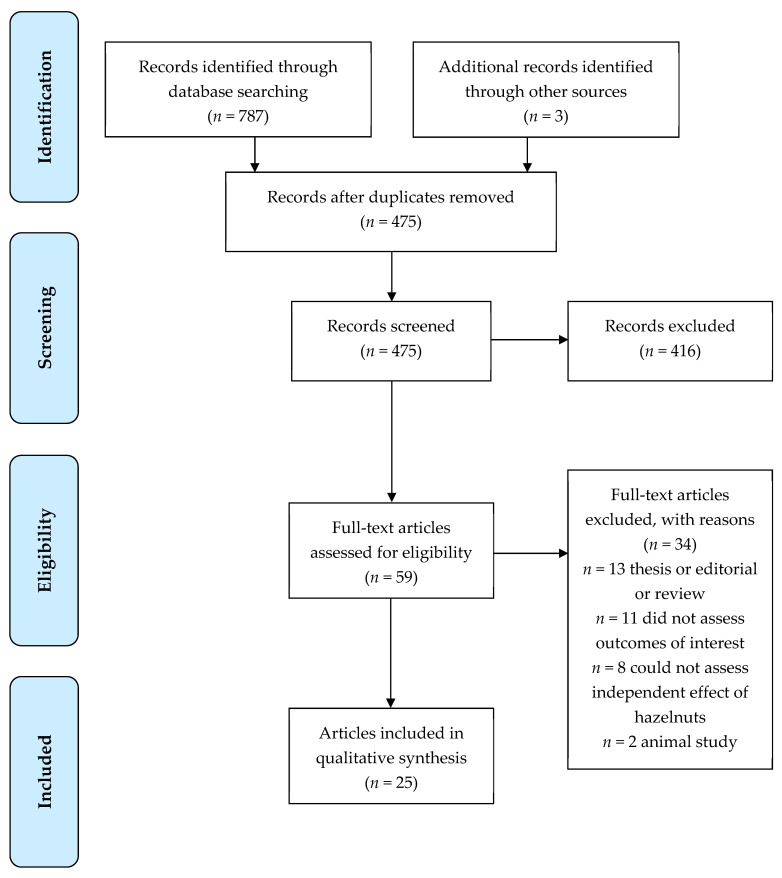
Despite being rich sources of monounsaturated fat and a number of vitamins, minerals, and phytonutrients, hazelnuts have received less attention than some other nut types. A qualitative systematic review was carried out to determine the effects of hazelnut consumption on acceptance and markers of cardiometabolic health, including blood lipids and lipoproteins, apolipoproteins A1 and B100, body weight and composition, blood pressure, glycemia, antioxidant status, oxidative stress, inflammation, and endothelial function. In total, 22 intervention studies (25 publications) met our inclusion criteria. The findings indicate some improvements in cardiometabolic risk factors; however, limitations in study design mean interpretation is problematic. The inclusion of hazelnuts in the diet did not adversely affect body weight and composition. Acceptance of hazelnuts remained stable over time confirming nut consumption guidelines are feasible and sustainable. Future studies using more robust study designs in a variety of populations are required to draw more definitive conclusions on the health benefits of hazelnut consumption.
尽管榛子富含单不饱和脂肪和多种维生素、矿物质和植物营养素,但它们的关注度却不如其他一些坚果。本研究进行了定性系统评价,以确定榛子消费对接受度和心血管代谢健康标志物的影响,包括血脂和脂蛋白、载脂蛋白 A1 和 B100、体重和成分、血压、血糖、抗氧化状态、氧化应激、炎症和内皮功能。共有 22 项干预研究(25 篇文献)符合纳入标准。研究结果表明,一些心血管代谢危险因素有所改善;然而,研究设计的局限性意味着解释存在问题。在饮食中加入榛子不会对体重和成分产生不利影响。榛子的接受度在一段时间内保持稳定,证实了坚果消费指南是可行和可持续的。需要在各种人群中使用更稳健的研究设计进行未来研究,以更明确地得出榛子消费对健康有益的结论。