Department of Pharmacology and Toxicology, College of Pharmacy, Qassim University, Qassim 51452, Saudi Arabia.
Division of laser Sciences and Technology, Department of Applied Sciences, University of Technology, Iraq.
Biomed Res Int. 2022 Mar 8;2022:9863616. doi: 10.1155/2022/9863616. eCollection 2022.
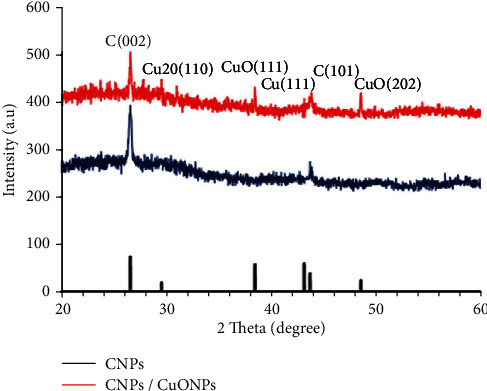
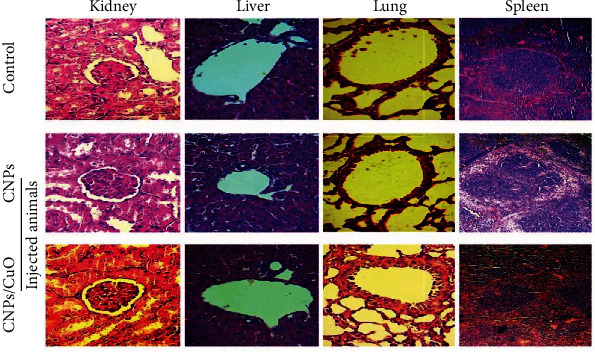
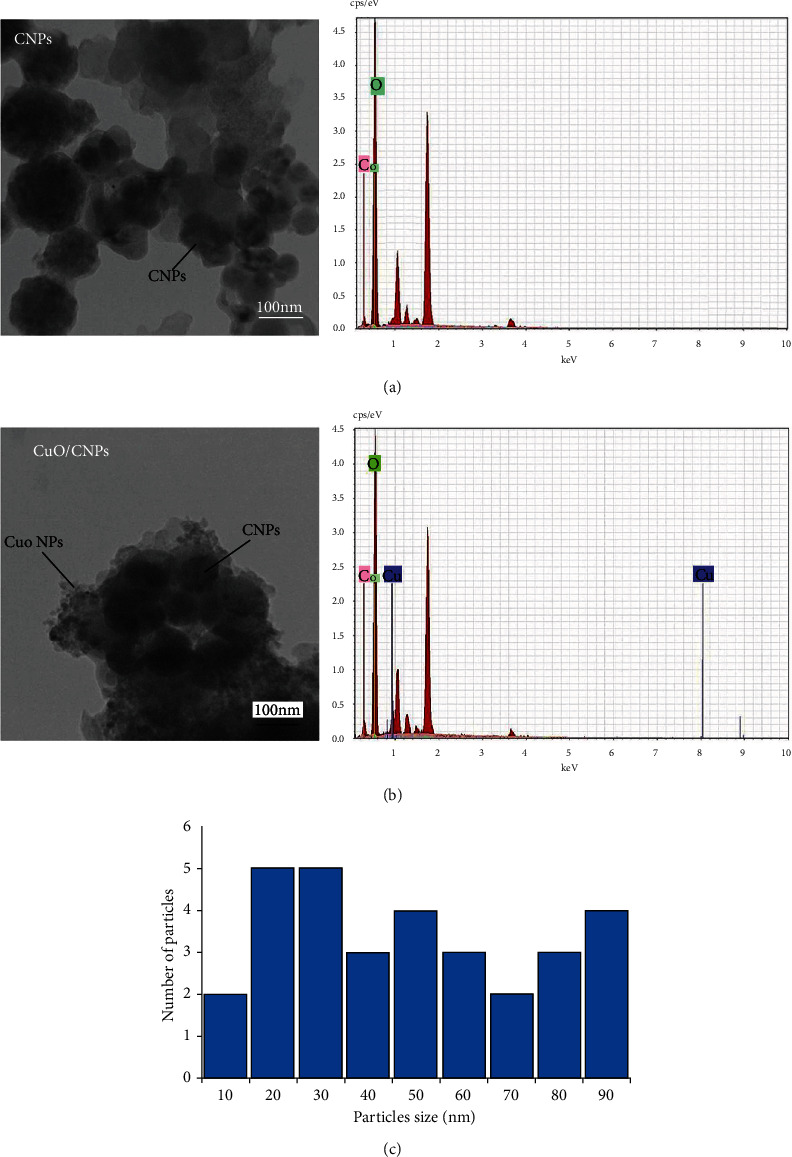
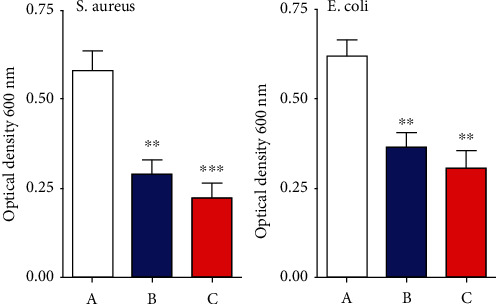
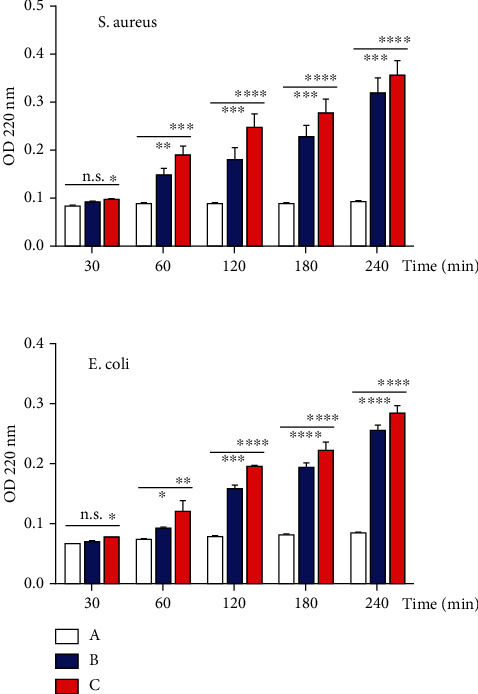
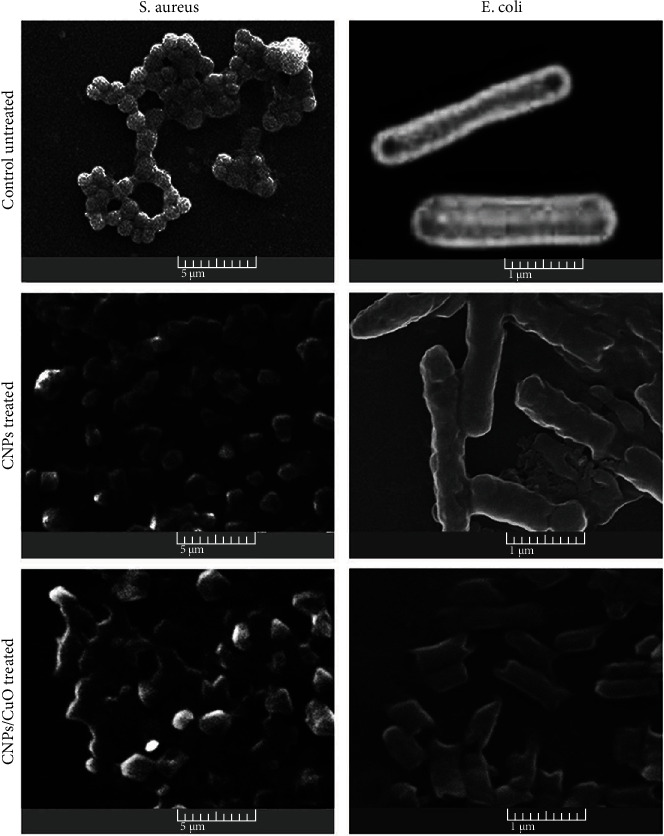
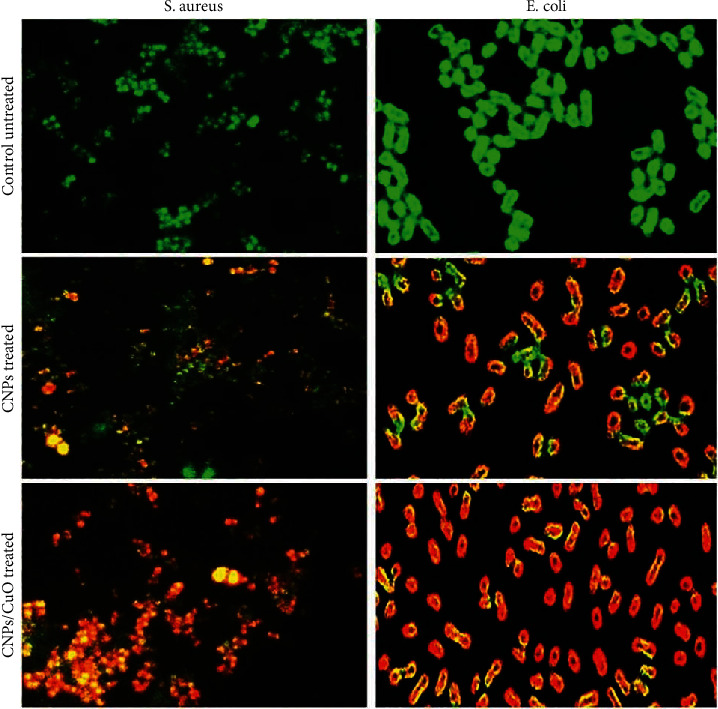
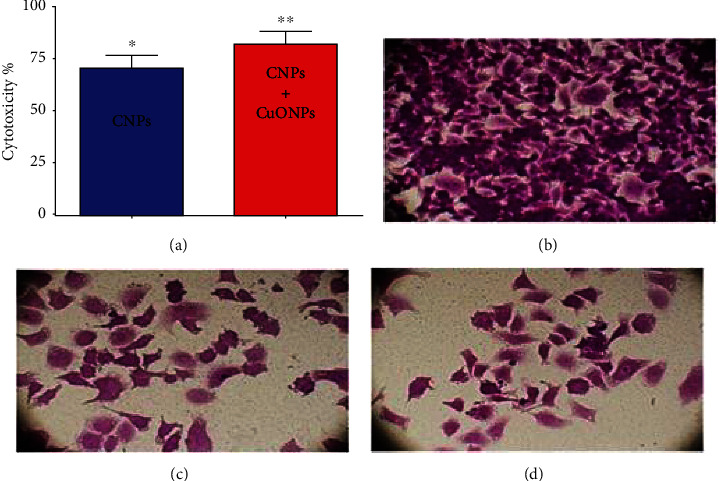
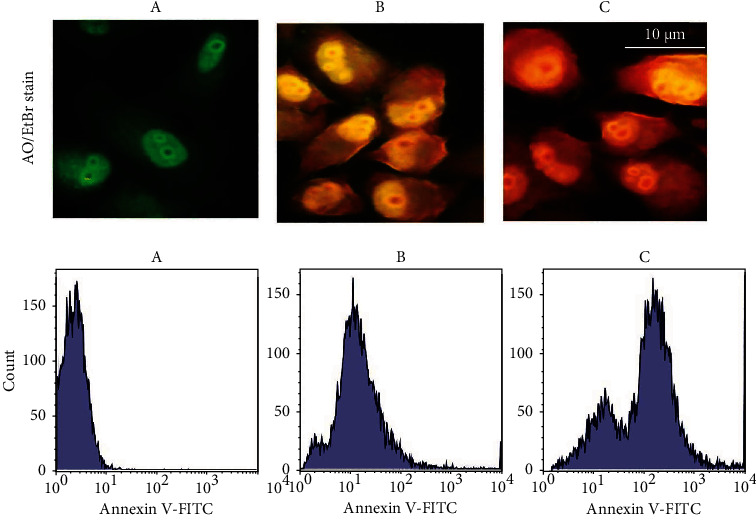
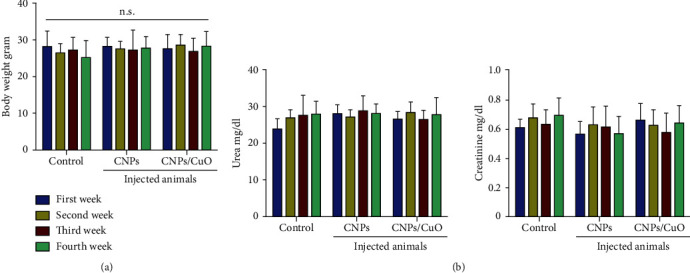
Copper oxide (CuO) nanoparticle- (NP-) decorated carbon NPs (CNPs) were produced as colloidal suspension through pulsed laser ablation technique in liquid (PLAL) medium. The antimicrobial activity of the produced NPs was tested against () and (), and anticancer activity was tested against breast cancer cell line, MCF-7, together with the biocompatibility assessment of these NPs. The X-ray diffraction (XRD) patterns of the obtained CNPs showed peaks at 26.58° and 43.78° (2) identical to (002) and (111) planes, respectively, of the carbon phases. It also displayed new peaks at 38.5° and 48.64° (2) after doping with CuO NPs. Transmission electron microscope (TEM) images revealed the crystalline nature with the spherical shape of the prepared CNPs with 5-40 nm diameter ranges. In addition, the NP effects on the bacterial cell walls and nucleic acid were confirmed using a scanning electron microscope (SEM) and microscopic fluorescence analysis. The NPs showed antibacterial activity through SEM examinations against the pathogenic microbial species, and . In the cellular material release assay, the optical density of the bacterial cells, treated with NPs, displayed a significant increase with the time of exposure to NPs, and the cytotoxicity reached more than 80% of the level for the CNPs decorated with CuO NPs. The morphology of the MCF-7 cells treated with NPs decreased numbers, and the loss of contact with the surrounding cells was observed. These results confirmed that the CNPs decorated with CuO NPs have no observable side effects and can be safely used for therapeutic applications. It is also noteworthy that it is the first report of preparation of CuO NPs decorated with CNPs (CuO NPs-CNPs) by PLAL, and the produced NPs showed antimicrobial antiproliferative activities against breast cancer cell lines, MCF-7. The main advantage of the PLAL technique of synthesizing CuO NPs-CNPs provided a two-step, cost-effective, and eco-friendly method.
氧化铜 (CuO) 纳米颗粒 (NP)- 修饰的碳纳米颗粒 (CNPs) 通过脉冲激光烧蚀技术在液体 (PLAL) 介质中制成胶体悬浮液。所制备的 NPs 的抗菌活性针对 和 进行了测试,抗癌活性针对乳腺癌细胞系 MCF-7 进行了测试,同时还评估了这些 NPs 的生物相容性。所获得的 CNPs 的 X 射线衍射 (XRD) 图谱在 26.58°和 43.78°(2)处显示出与碳相的 (002) 和 (111) 平面分别对应的峰。在掺杂 CuO NPs 后,它还显示出在 38.5°和 48.64°(2)处的新峰。透射电子显微镜 (TEM) 图像显示了具有 5-40nm 直径范围的球形的制备好的 CNPs 的结晶性质。此外,使用扫描电子显微镜 (SEM) 和微观荧光分析证实了 NP 对细菌细胞壁和核酸的影响。通过 SEM 检查,NP 对致病性微生物物种 和 表现出抗菌活性。在细胞物质释放试验中,用 NP 处理的细菌细胞的光密度显示出随着暴露于 NP 的时间的增加而显著增加,并且用 CuO NP 修饰的 CNPs 的细胞毒性达到了超过 80%的水平。用 NP 处理的 MCF-7 细胞的形态减少,并且观察到与周围细胞失去接触。这些结果证实,用 CuO NP 修饰的 CNPs 没有观察到副作用,并且可以安全地用于治疗应用。值得注意的是,这是首次通过 PLAL 制备氧化铜 NPs 修饰的碳纳米颗粒 (CuO NPs-CNPs) 的报告,所制备的 NPs 对 MCF-7 乳腺癌细胞系表现出抗菌和抗增殖活性。PLAL 技术合成 CuO NPs-CNPs 的主要优点是两步、具有成本效益且环保的方法。