College of Bioinformatics Science and Technology, Harbin Medical University, Harbin, 150086, China.
Department of Anatomy, Harbin Medical University, Harbin, 150081, China.
Commun Biol. 2022 Mar 17;5(1):198. doi: 10.1038/s42003-022-03135-z.
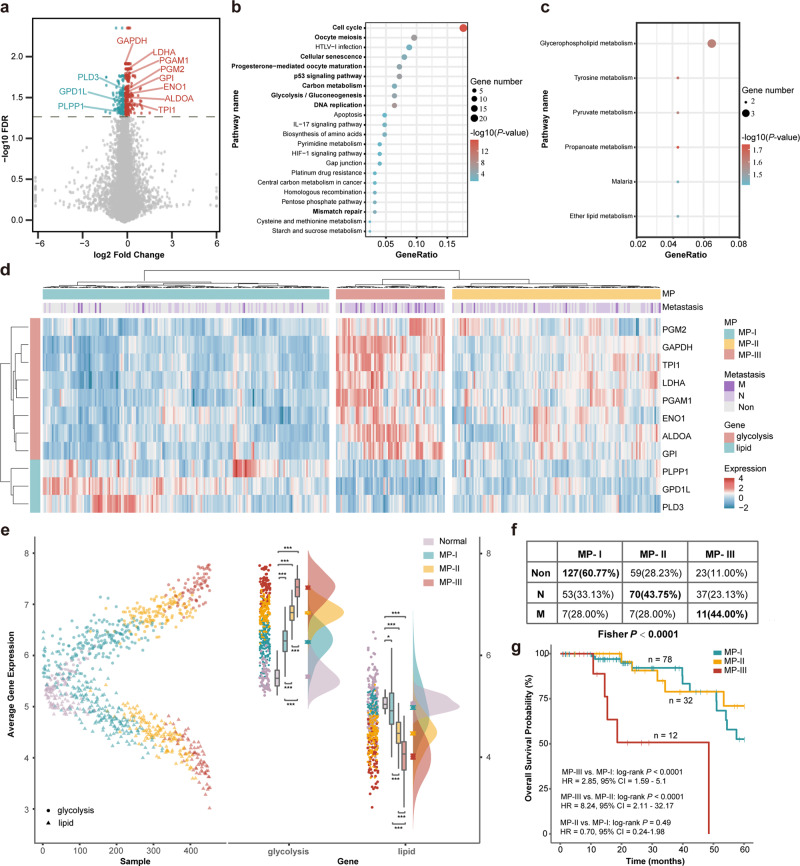
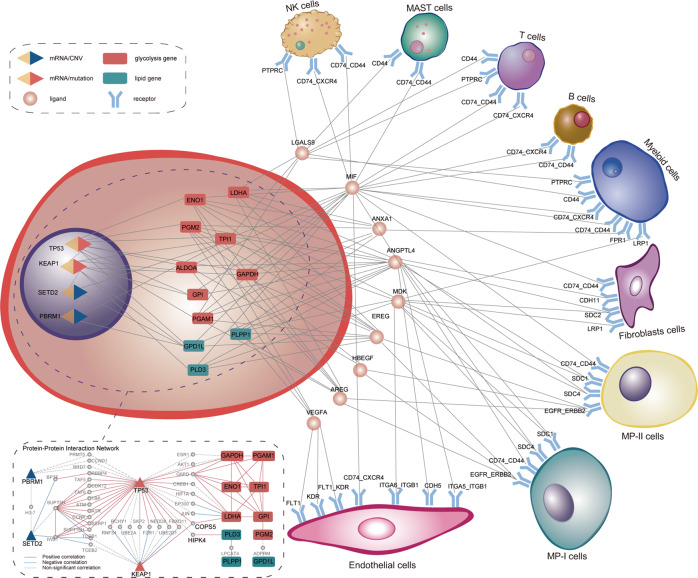
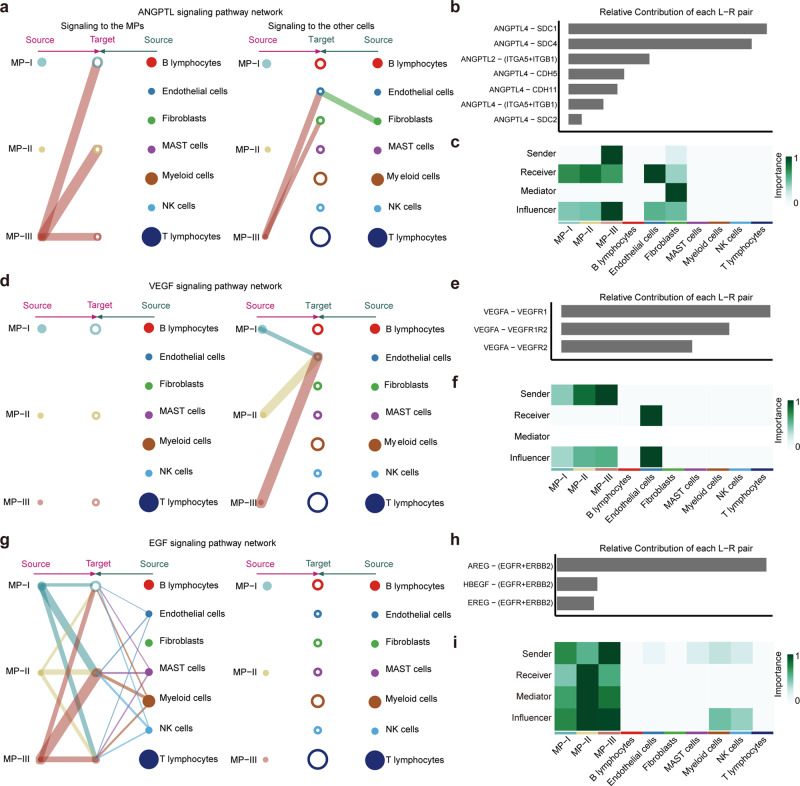
Tumor metastasis imposes metabolic requirements for escaping from primary tissues, producing vulnerability in treatment. This study aimed to explore the metabolic reprogramming relevant to lung adenocarcinoma (LUAD) metastasis and decode the underlying intercellular alterations. Using the gene expression profiles of 394 LUAD samples derived from The Cancer Genome Atlas (TCGA), we identified 11 metastasis-related metabolic genes involved in glycolysis and lipid metabolism, and defined three metabolic reprogramming phenotypes (MP-I, -II, and -III) using unsupervised clustering. MP-III with the highest glycolytic and lowest lipid metabolic levels exhibited the highest metastatic potency and poorest survival in TCGA and six independent cohorts totaling 1,235 samples. Genomic analyses showed that mutations in TP53 and KEAP1, and deletions in SETD2 and PBRM1 might drive metabolic reprogramming in MP-III. Single-cell RNA-sequencing data from LUAD validated a metabolic evolutionary trajectory from normal to MP-II and MP-III, through MP-I. The further intercellular communications revealed that MP-III interacted uniquely with endothelial cells and fibroblasts in the ANGPTL pathway, and had stronger interactions with endothelial cells in the VEGF pathway. Herein, glycolysis-lipid dysregulation patterns suggested metabolic reprogramming phenotypes relevant to metastasis. Further insights into the oncogenic drivers and microenvironmental interactions would facilitate the treatment of LUAD metastasis in the future.
肿瘤转移对逃避原发组织提出了代谢需求,使治疗变得脆弱。本研究旨在探讨与肺腺癌 (LUAD) 转移相关的代谢重编程,并解析潜在的细胞间改变。我们使用来自癌症基因组图谱 (TCGA) 的 394 个 LUAD 样本的基因表达谱,鉴定出了 11 个与糖酵解和脂代谢相关的转移相关代谢基因,并使用无监督聚类定义了三种代谢重编程表型 (MP-I、-II 和 -III)。在 TCGA 和六个独立队列(共 1235 个样本)中,具有最高糖酵解和最低脂质代谢水平的 MP-III 表现出最高的转移能力和最差的生存。基因组分析表明,TP53 和 KEAP1 的突变以及 SETD2 和 PBRM1 的缺失可能驱动 MP-III 的代谢重编程。来自 LUAD 的单细胞 RNA-seq 数据验证了从正常到 MP-II 和 MP-III 的代谢进化轨迹,通过 MP-I。进一步的细胞间通讯表明,MP-III 通过 ANGPTL 途径与内皮细胞和成纤维细胞独特地相互作用,并且在 VEGF 途径中与内皮细胞的相互作用更强。在此,糖酵解-脂质失调模式提示与转移相关的代谢重编程表型。进一步深入了解致癌驱动因素和微环境相互作用将有助于未来治疗 LUAD 转移。