Faculty of Food Science and Nutrition, Universiti Malaysia Sabah, Kota Kinabalu, Sabah, Malaysia.
Faculty of Fisheries and Marine Science, Universitas Brawijaya, Malang, East Java, Indonesia.
PeerJ. 2022 Mar 15;10:e13103. doi: 10.7717/peerj.13103. eCollection 2022.
Lizardfish ( Bloch, 1795) bone is a fish by-product generated during industrial surimi processing. This by-product is an important source of collagen production since the use of terrestrial animal-based collagens no longer sought due to concern regarding the transfer of infectious diseases and religious issues. Hence, this study was carried out to determine the biochemical analysis of collagens from the bone of lizardfish extracted with different acids.
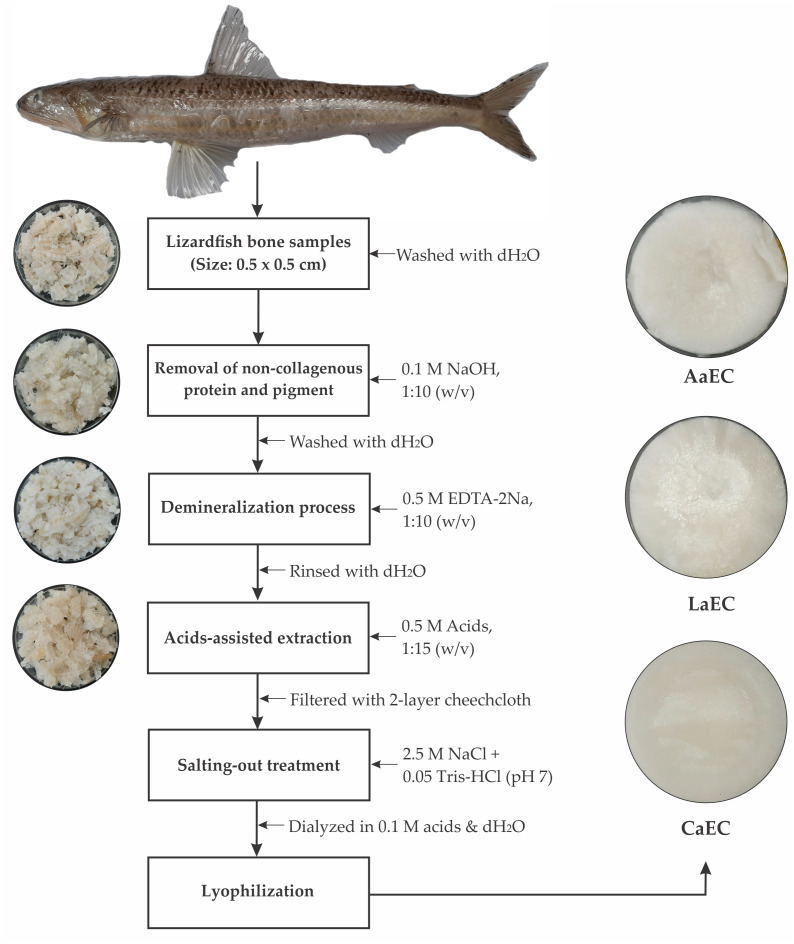
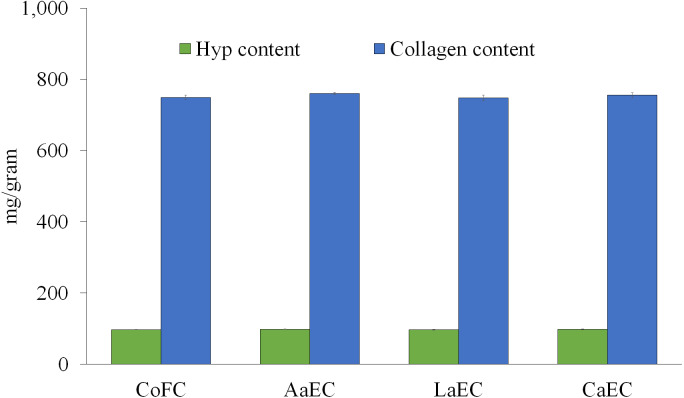
Lizardfish bone collagens were extracted with various acids (, acetic, lactic and citric acids). All extraction processes were conducted in a chiller room (4 °C). The extracted collagens were biochemically characterized, such as hydroxyproline content, Ultraviolet (UV) absorption, X-ray diffraction (XRD), Fourier transform infrared spectroscopy spectra (FTIR), Differential scanning calorimetry (DSC) and solubility in different pH values and NaCl concentrations.
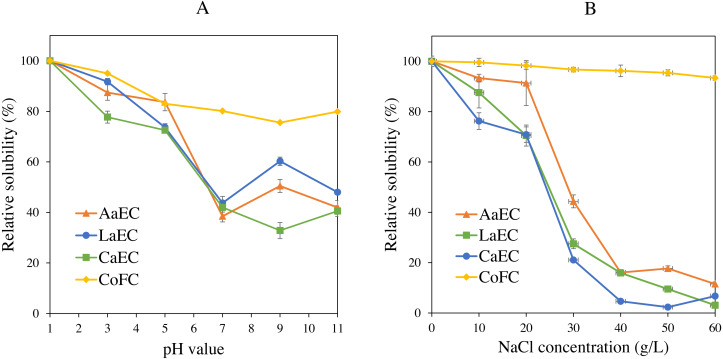
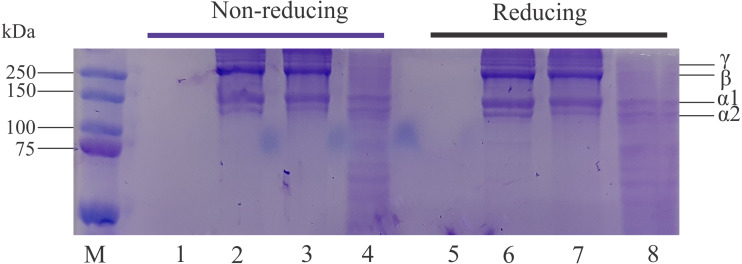
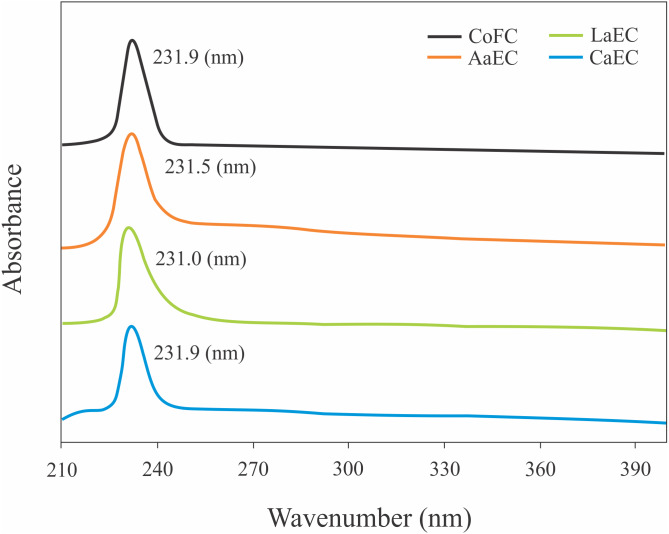
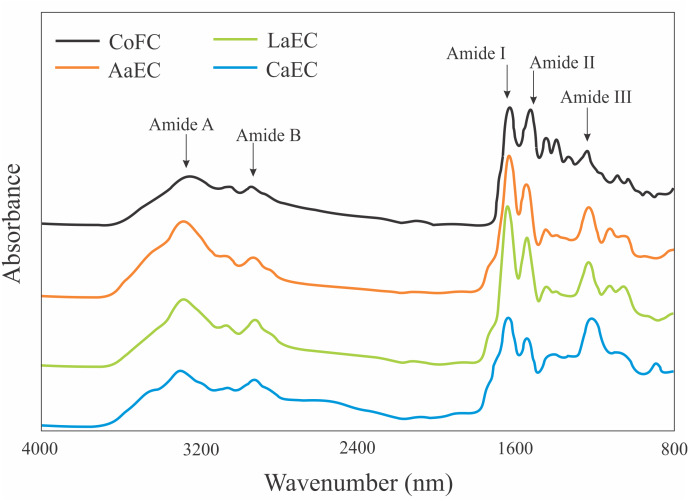
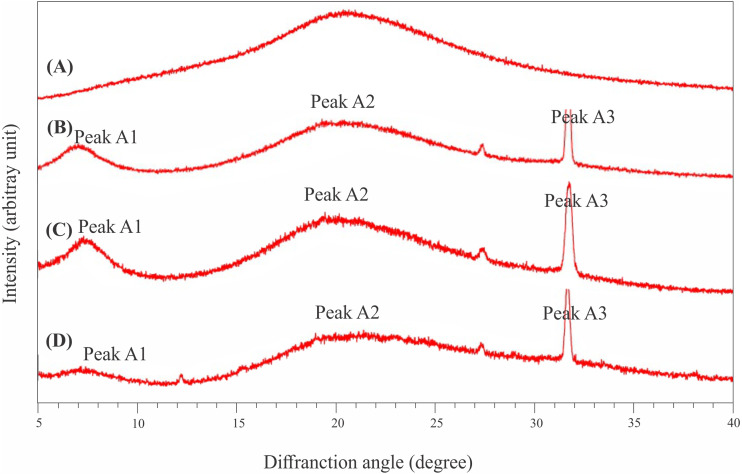
The yield of extracted collagens ranged between 1.73% and 2.59%, with the highest ( < 0.05) observed in citric acid-extracted collagen (CaEC). Protein patterns confirmed that all-collagen samples had two identical subunits, α1 and α2, representing type I collagen. The highest whiteness value was found in acetic acid-extracted collagen (AaEC), but there was no significant difference ( ≥ 0.05) compared to lactic acid-extracted collagen (LaEC). UV absorption and XRD analysis reflected the characteristics of the collagen, as reported in the literature. For the FTIR, all acid-extracted collagen samples presented a triple helical structure. The thermal transition temperature ( = 77.92-89.04 °C) was in accordance with collagen extracted from other fish species. All extracted collagens were highly soluble in acidic pH and low concentrations of NaCl (0-20 g/L). In conclusion, collagens extracted from lizardfish bone may be used as alternative sources of collagen in industrial settings, and AaEC would be considered superior in terms of the characteristics evaluated in this study.
蜥蜴鱼(Bloch,1795)鱼骨是在工业鱼糜加工过程中产生的一种鱼类副产品。由于担心传染病的传播和宗教问题,不再使用陆地动物来源的胶原蛋白,因此这种副产品是胶原蛋白生产的重要来源。因此,本研究旨在确定用不同酸从蜥蜴鱼骨中提取的胶原蛋白的生化分析。
用各种酸(醋酸、乳酸和柠檬酸)从蜥蜴鱼骨中提取胶原蛋白。所有提取过程均在冷室(4°C)中进行。对提取的胶原蛋白进行生化特性分析,如羟脯氨酸含量、紫外(UV)吸收、X 射线衍射(XRD)、傅里叶变换红外光谱(FTIR)、差示扫描量热法(DSC)以及在不同 pH 值和 NaCl 浓度下的溶解度。
提取胶原蛋白的产率在 1.73%至 2.59%之间,柠檬酸提取的胶原蛋白(CaEC)最高(<0.05)。蛋白质图谱证实所有胶原蛋白样品均具有两个相同的亚基α1和α2,代表 I 型胶原蛋白。在醋酸提取的胶原蛋白(AaEC)中发现了最高的白度值,但与乳酸提取的胶原蛋白(LaEC)相比,没有显著差异(≥0.05)。UV 吸收和 XRD 分析反映了胶原蛋白的特性,与文献报道的一致。对于 FTIR,所有酸提取的胶原蛋白样品均呈现出三螺旋结构。热转变温度(=77.92-89.04°C)与从其他鱼类提取的胶原蛋白一致。所有提取的胶原蛋白在酸性 pH 值和低浓度 NaCl(0-20 g/L)下均具有高溶解性。总之,从蜥蜴鱼骨中提取的胶原蛋白可能在工业环境中用作胶原蛋白的替代来源,并且在本研究评估的特性方面,AaEC 被认为更优越。