Zhao Zhenghuan, Li Muyao, Zeng Jie, Huo Linlin, Liu Kun, Wei Ruixue, Ni Kaiyuan, Gao Jinhao
College of Basic Medical Sciences, Chongqing Medical University, Chongqing, 400016, China.
State Key Laboratory of Physical Chemistry of Solid Surfaces, The Key Laboratory for Chemical Biology of Fujian Province, And Department of Chemical Biology College of Chemistry and Chemical Engineering Xiamen University, Xiamen, Fujian, 361005, China.
Bioact Mater. 2021 Oct 19;12:214-245. doi: 10.1016/j.bioactmat.2021.10.014. eCollection 2022 Jun.
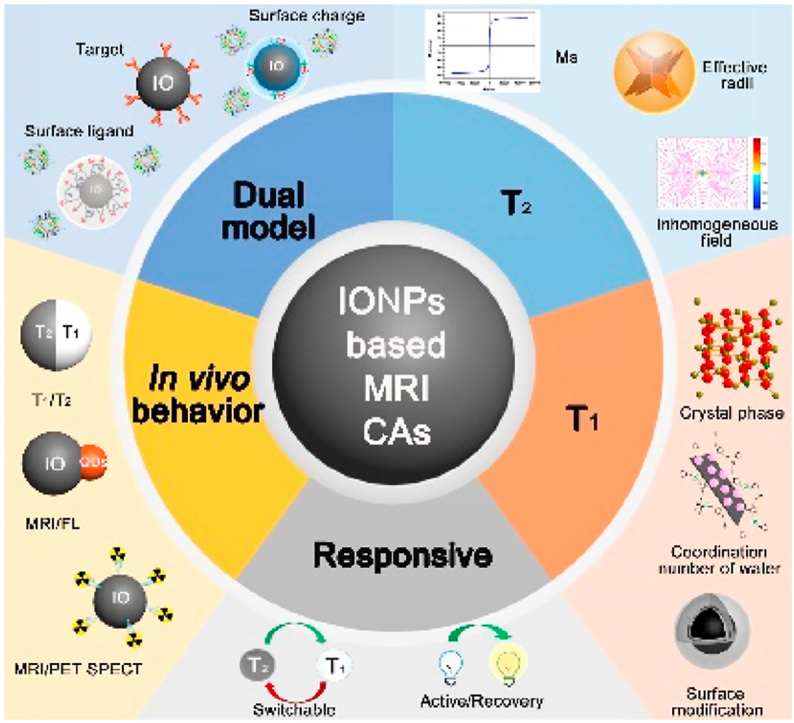
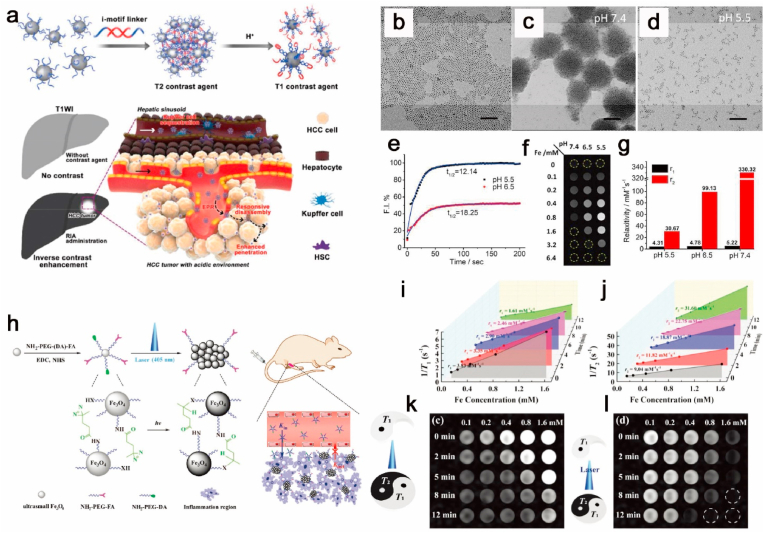
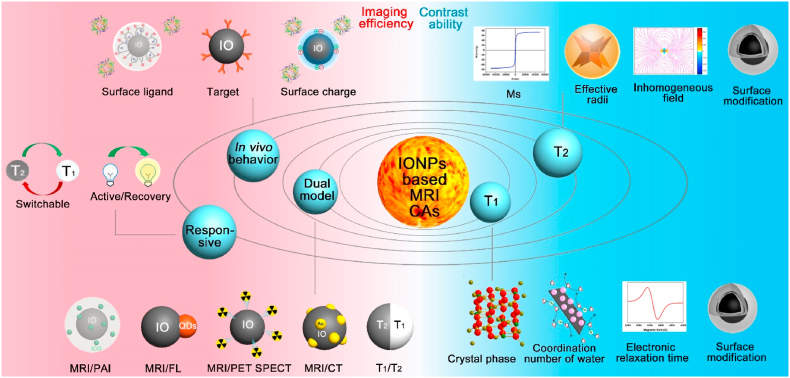
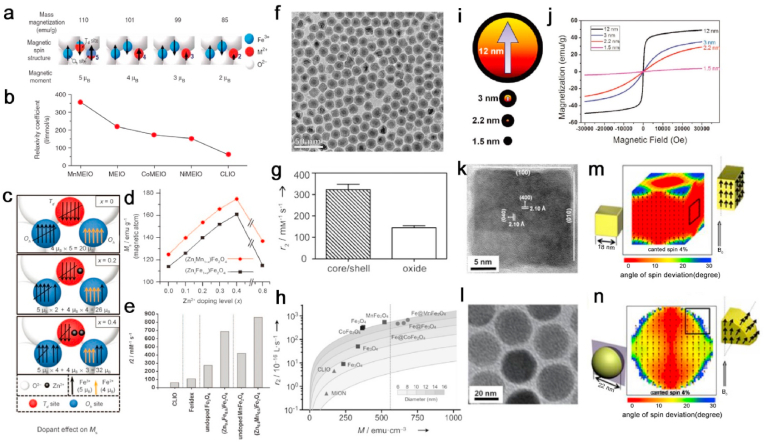
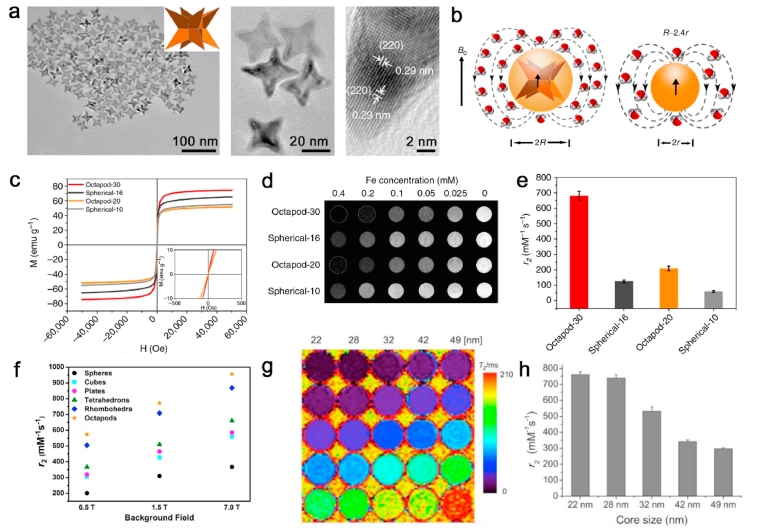
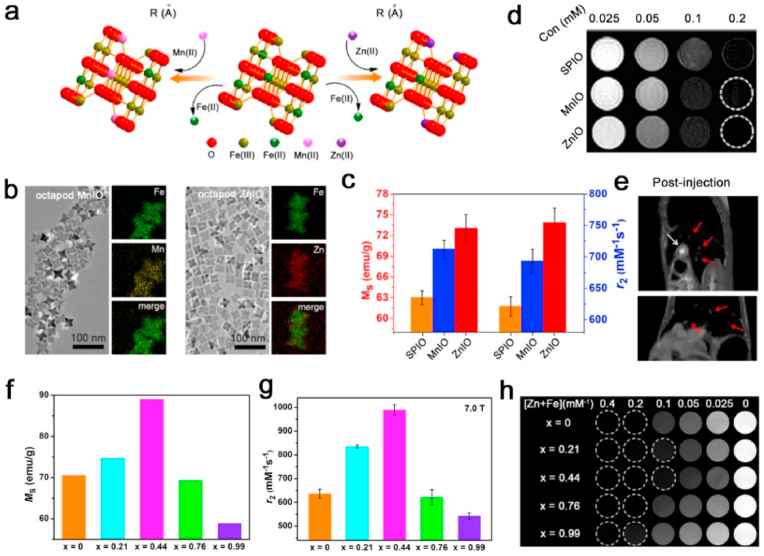
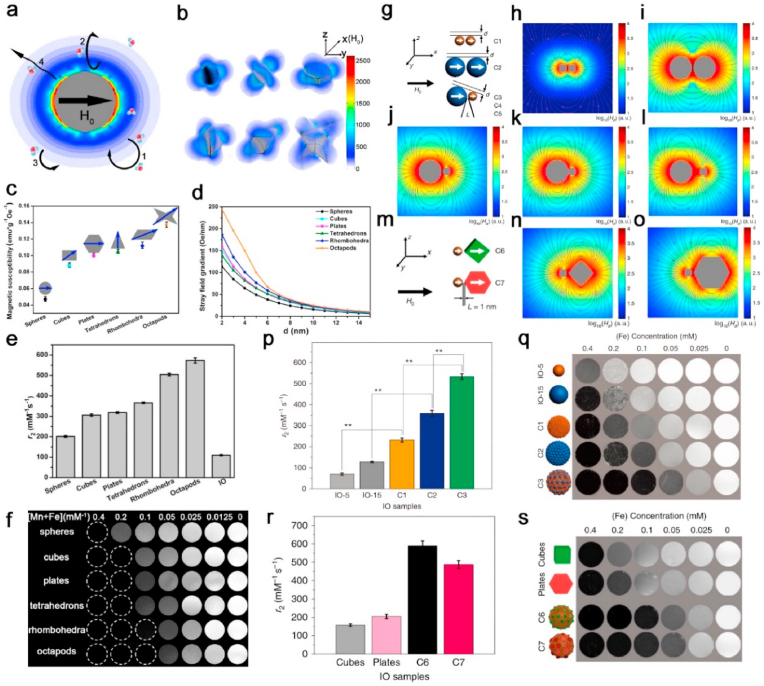
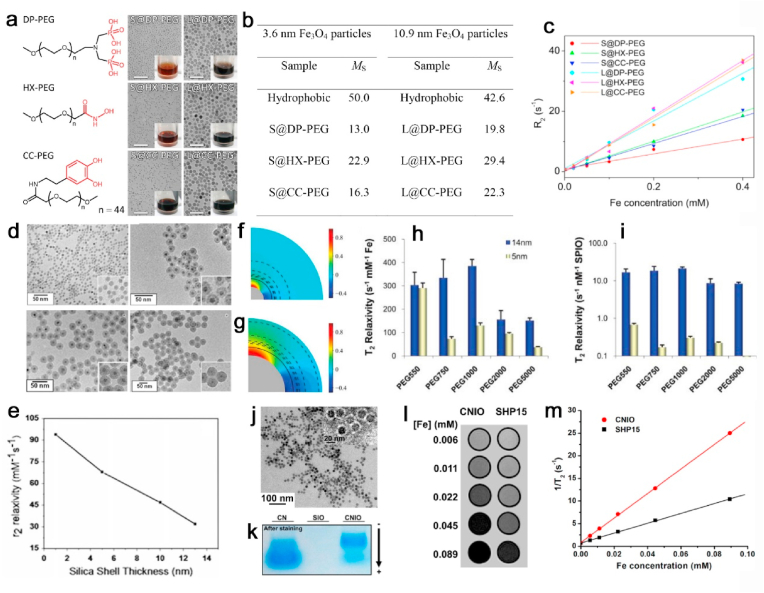
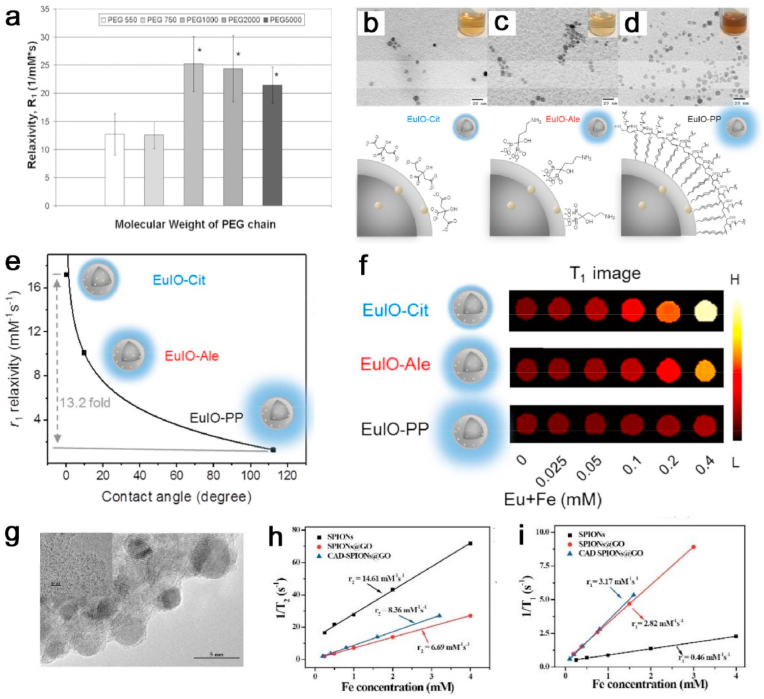
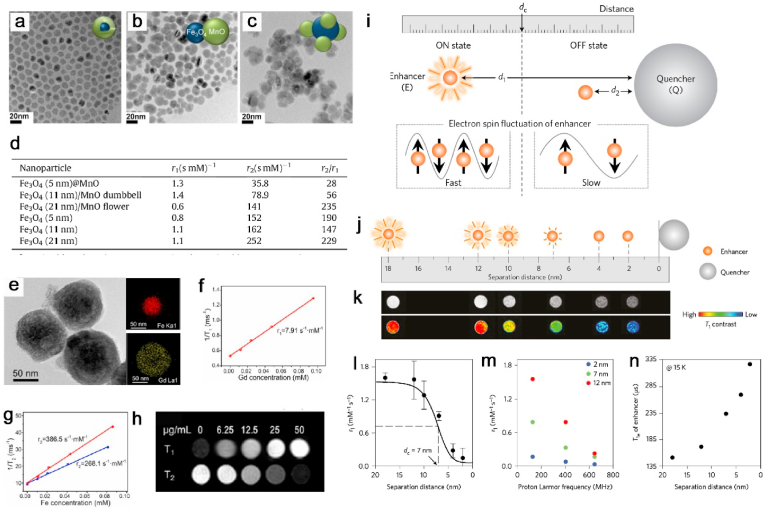
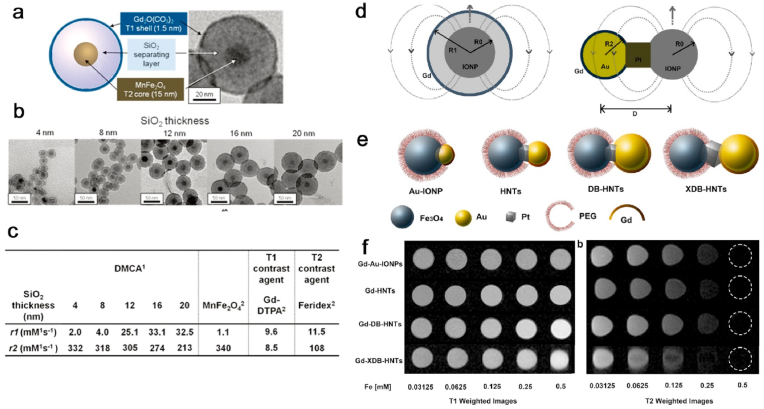
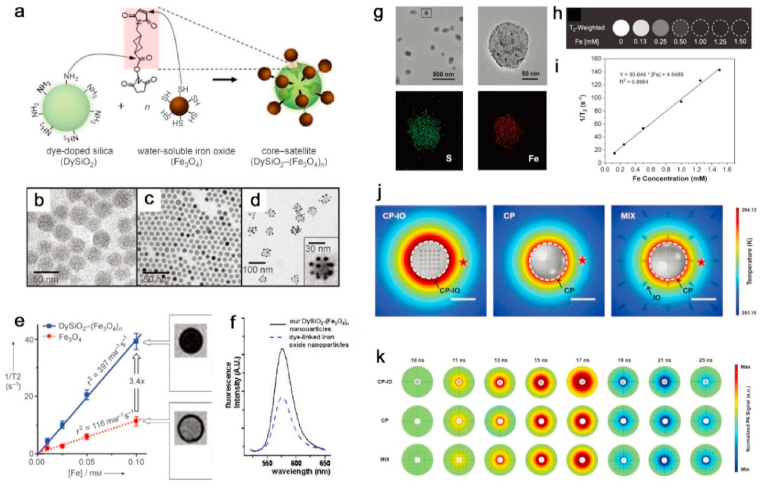
Iron oxide nanoparticle (IONP) with unique magnetic property and high biocompatibility have been widely used as magnetic resonance imaging (MRI) contrast agent (CA) for long time. However, a review which comprehensively summarizes the recent development of IONP as traditional CA and its new application for different modality of MRI, such as imaging, simultaneous / or MRI/other imaging modality, and as environment responsive CA is rare. This review starts with an investigation of direction on the development of high-performance MRI CA in both and modal based on quantum mechanical outer sphere and Solomon-Bloembergen-Morgan (SBM) theory. Recent rational attempts to increase the MRI contrast of IONP by adjusting the key parameters, including magnetization, size, effective radius, inhomogeneity of surrounding generated magnetic field, crystal phase, coordination number of water, electronic relaxation time, and surface modification are summarized. Besides the strategies to improve or values, strategies to increase the contrast efficiency of IONP have been reviewed from three different aspects, those are introducing second imaging modality to increase the imaging accuracy, endowing IONP with environment response capacity to elevate the signal difference between lesion and normal tissue, and optimizing the interface structure to improve the accumulation amount of IONP in lesion. This detailed review provides a deep understanding of recent researches on the development of high-performance IONP based MRI CAs. It is hoped to trigger deep thinking for design of next generation MRI CAs for early and accurate diagnosis.
具有独特磁性和高生物相容性的氧化铁纳米颗粒(IONP)长期以来一直被广泛用作磁共振成像(MRI)造影剂(CA)。然而,全面总结IONP作为传统CA的最新进展及其在不同MRI模式中的新应用(如成像、同时进行MRI/其他成像模式以及作为环境响应性CA)的综述却很少见。本综述首先基于量子力学外层球和所罗门 - 布洛姆贝根 - 摩根(SBM)理论,研究了在两种模式下高性能MRI CA的发展方向。总结了最近通过调整关键参数(包括磁化强度、尺寸、有效半径、周围产生磁场的不均匀性、晶相、水的配位数、电子弛豫时间和表面修饰)来提高IONP的MRI对比度的合理尝试。除了提高纵向或横向弛豫值的策略外,还从三个不同方面综述了提高IONP对比效率的策略,即引入第二种成像模式以提高成像准确性、赋予IONP环境响应能力以提高病变与正常组织之间的信号差异,以及优化界面结构以提高IONP在病变中的积累量。这一详细综述提供了对基于IONP的高性能MRI CA发展的最新研究的深入理解。希望能引发对下一代用于早期准确诊断的MRI CA设计的深入思考。