Jiang Wei, Hou Fushan, Gu Yong, Saiding Qimanguli, Bao Pingping, Tang Jincheng, Wu Liang, Chen Chunmao, Shen Cailiang, Pereira Catarina Leite, Sarmento Marco, Sarmento Bruno, Cui Wenguo, Chen Liang
Department of Orthopaedic Surgery, Orthopedic Institute, The First Affiliated Hospital of Soochow University, 708 Renmin Rd, Suzhou, Jiangsu, 215006, PR China.
Department of Orthopedics, The Second Hospital of Shanxi Medical University, No. 382 Wuyi Road, Taiyuan, Shanxi, 030001, PR China.
Bioact Mater. 2021 Oct 19;12:169-184. doi: 10.1016/j.bioactmat.2021.10.017. eCollection 2022 Jun.
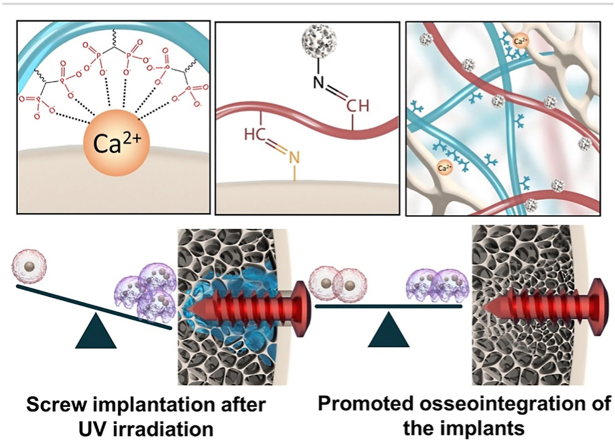
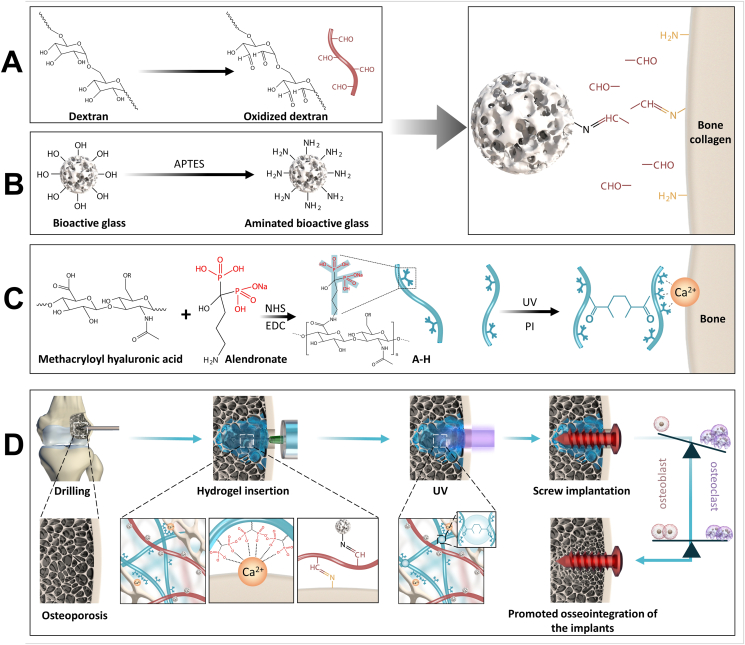
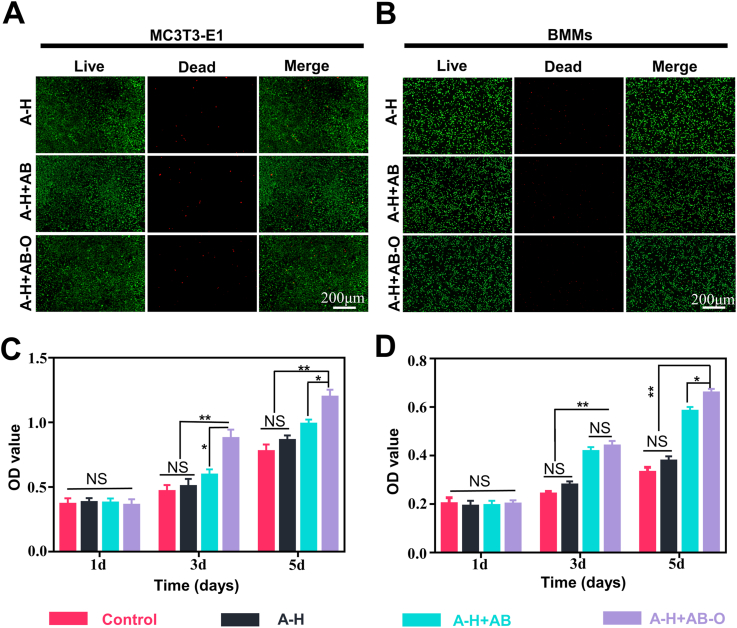
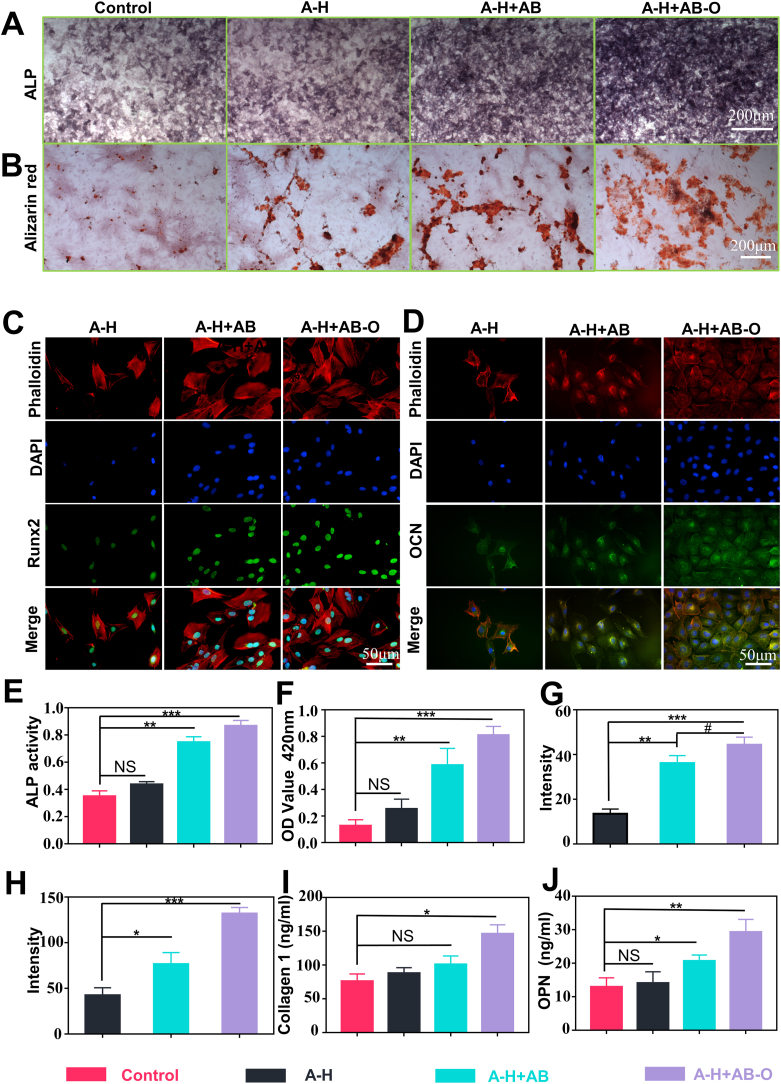
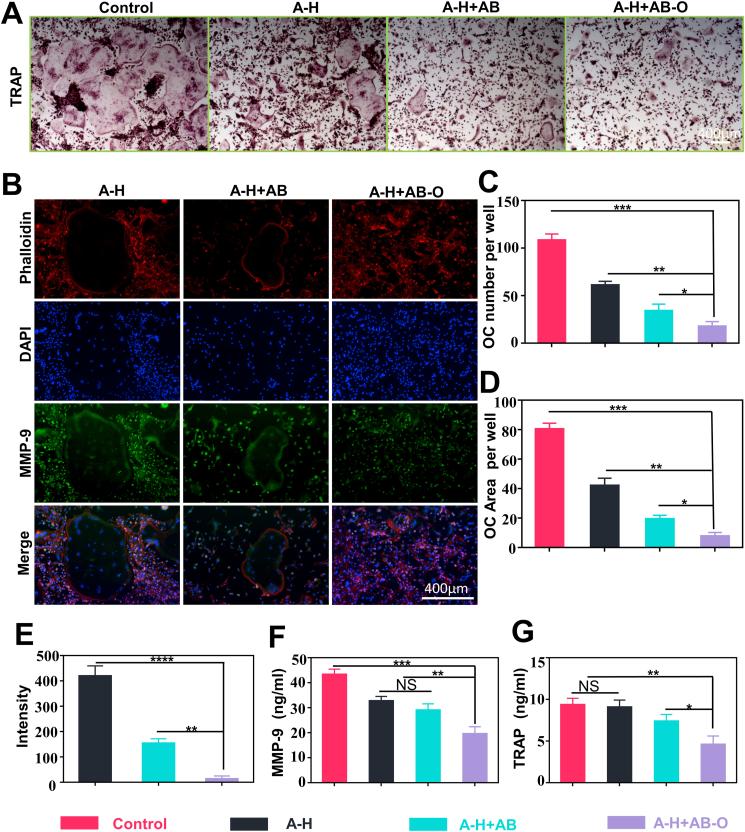
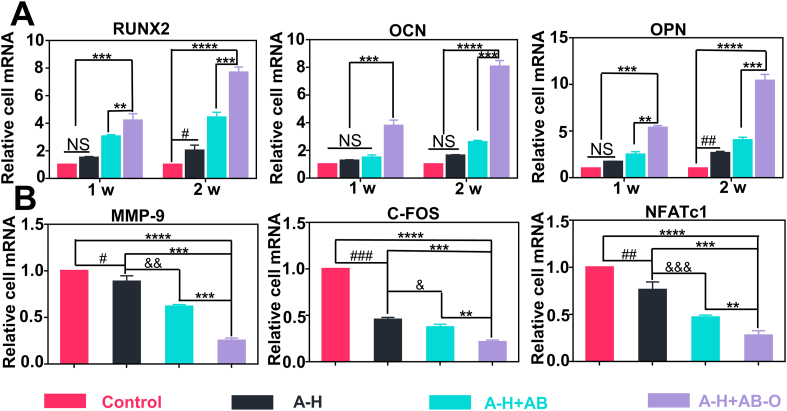
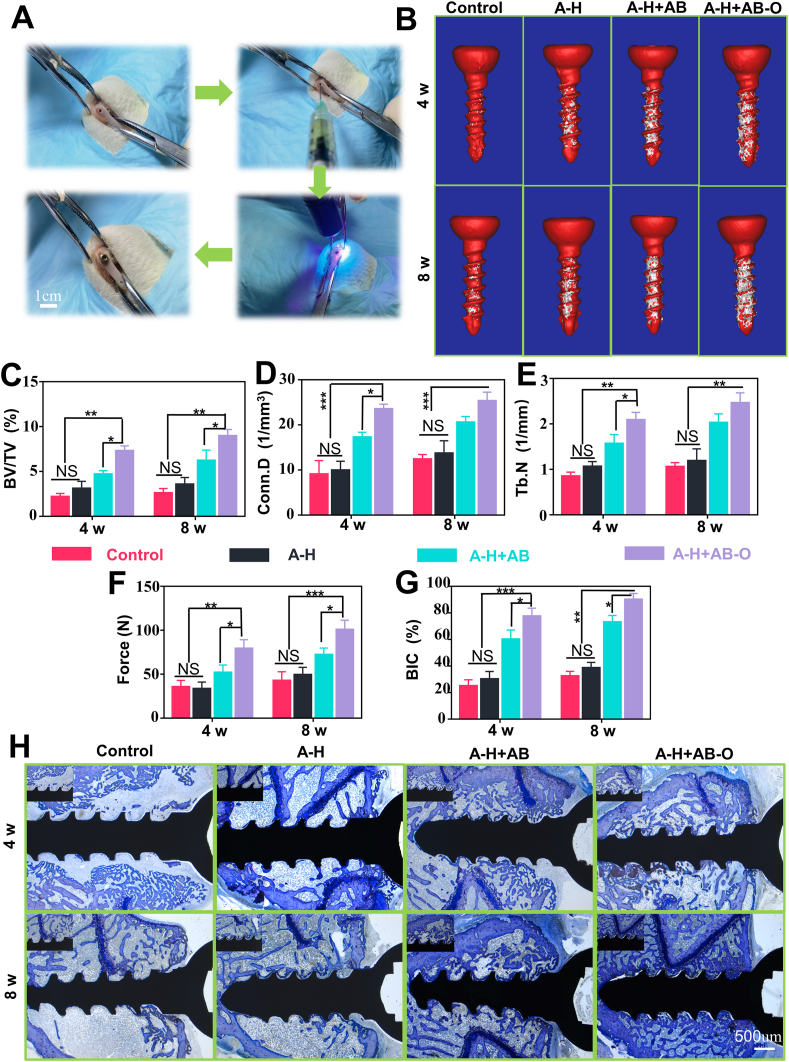
The effective osteointegration of orthopedic implants is a key factor for the success of orthopedic surgery. However, local metabolic imbalance around implants under osteoporosis condition could jeopardize the fixation effect. Inspired by the bone structure and the composition around implants under osteoporosis condition, alendronate (A) was grafted onto methacryloyl hyaluronic acid (H) by activating the carboxyl group of methacryloyl hyaluronic acid to be bonded to inorganic calcium phosphate on trabecular bone, which is then integrated with aminated bioactive glass (AB) modified by oxidized dextran (O) for further adhesion to organic collagen on the trabecular bone. The hybrid hydrogel could be solidified on cancellous bone under UV irradiation and exhibits dual adhesion to organic collagen and inorganic apatite, promoting osteointegration of orthopedic implants, resulting in firm stabilization of the implants in cancellous bone areas. , the hydrogel was evidenced to promote osteogenic differentiation of embryonic mouse osteoblast precursor cells (MC3T3-E1) as well as inhibit the receptor activator of nuclear factor-κ B ligand (RANKL)-induced osteoclast differentiation of macrophages, leading to the upregulation of osteogenic-related gene and protein expression. In a rat osteoporosis model, the bone-implant contact (BIC) of the hybrid hydrogel group increased by 2.77, which is directly linked to improved mechanical stability of the orthopedic implants. Overall, this organic-inorganic, dual-adhesive hydrogel could be a promising candidate for enhancing the stability of orthopedic implants under osteoporotic conditions.
骨科植入物的有效骨整合是骨科手术成功的关键因素。然而,骨质疏松条件下植入物周围的局部代谢失衡可能会危及固定效果。受骨质疏松条件下植入物周围骨结构和成分的启发,通过活化甲基丙烯酰透明质酸的羧基,将阿仑膦酸盐(A)接枝到甲基丙烯酰透明质酸(H)上,使其与松质骨上的无机磷酸钙结合,然后与经氧化葡聚糖(O)修饰的胺化生物活性玻璃(AB)整合,以进一步粘附到松质骨上的有机胶原蛋白上。这种混合水凝胶在紫外线照射下可在松质骨上固化,并对有机胶原蛋白和无机磷灰石具有双重粘附性,促进骨科植入物的骨整合,从而使植入物在松质骨区域牢固稳定。此外,该水凝胶被证明可促进胚胎小鼠成骨细胞前体细胞(MC3T3-E1)的成骨分化,并抑制核因子κB受体活化因子配体(RANKL)诱导的巨噬细胞破骨细胞分化,导致成骨相关基因和蛋白表达上调。在大鼠骨质疏松模型中,混合水凝胶组的骨-植入物接触(BIC)增加了2.77,这与骨科植入物机械稳定性的提高直接相关。总体而言,这种有机-无机双粘附水凝胶有望成为增强骨质疏松条件下骨科植入物稳定性的候选材料。