School of Basic Medicine, Health Science Center, Yangtze University, Jingzhou 434023, China.
Department of Epidemiology, School of Public Health, Cheeloo College of Medicine, Shandong University, Jinan 250012, China.
Cells. 2022 Mar 10;11(6):947. doi: 10.3390/cells11060947.
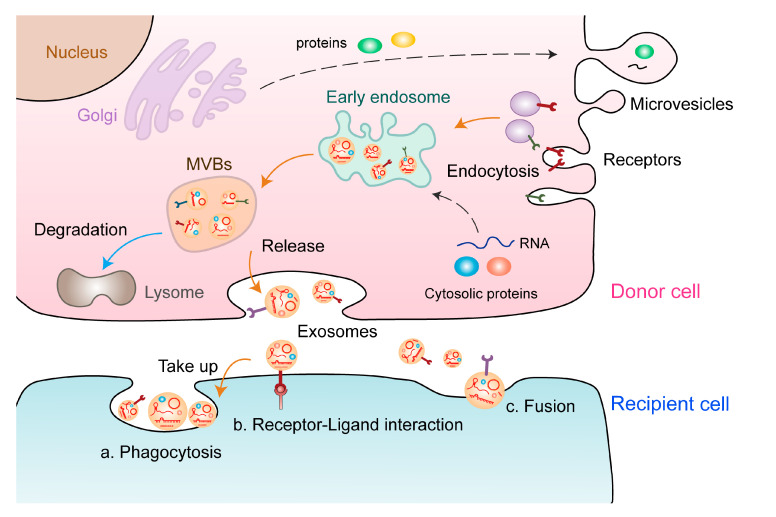
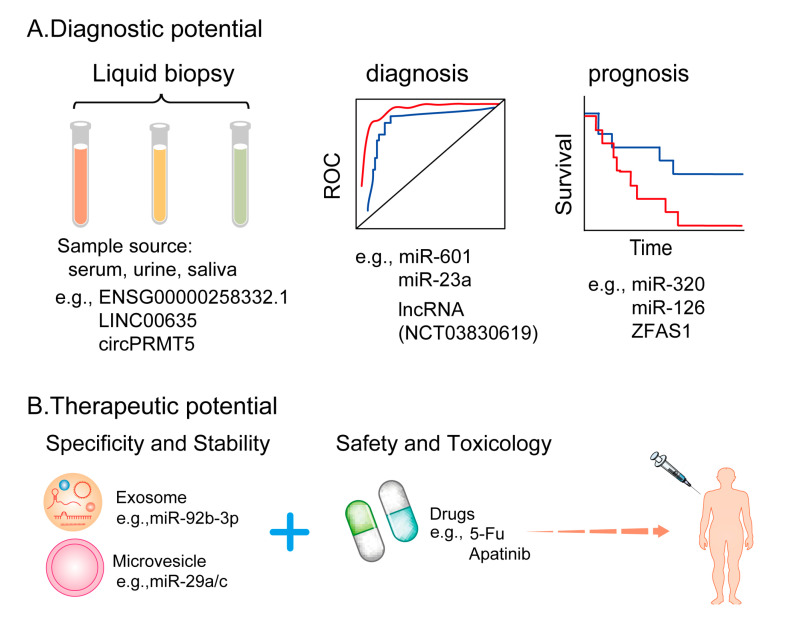
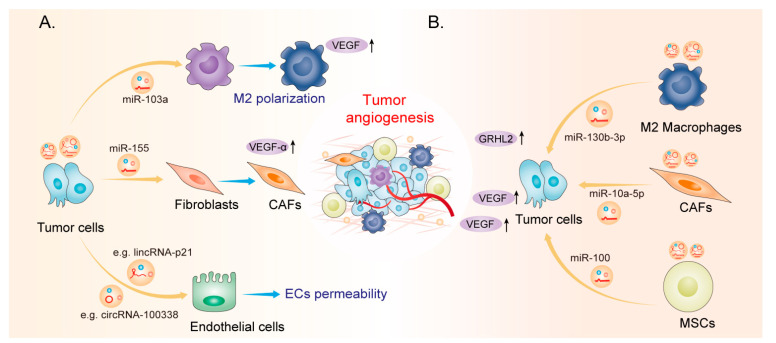
Extracellular vesicles (EVs) act as multifunctional regulators of intercellular communication and are involved in diverse tumor phenotypes, including tumor angiogenesis, which is a highly regulated multi-step process for the formation of new blood vessels that contribute to tumor proliferation. EVs induce malignant transformation of distinct cells by transferring DNAs, proteins, lipids, and RNAs, including noncoding RNAs (ncRNAs). However, the functional relevance of EV-derived ncRNAs in tumor angiogenesis remains to be elucidated. In this review, we summarized current research progress on the biological functions and underlying mechanisms of EV-derived ncRNAs in tumor angiogenesis in various cancers. In addition, we comprehensively discussed the potential applications of EV-derived ncRNAs as cancer biomarkers and novel therapeutic targets to tailor anti-angiogenic therapy.
细胞外囊泡 (EVs) 作为细胞间通讯的多功能调节剂,参与多种肿瘤表型,包括肿瘤血管生成,这是一个高度调节的多步骤过程,形成新的血管有助于肿瘤增殖。EVs 通过转移 DNA、蛋白质、脂质和 RNA,包括非编码 RNA(ncRNA),诱导不同细胞的恶性转化。然而,EV 衍生的 ncRNA 在肿瘤血管生成中的功能相关性仍有待阐明。在这篇综述中,我们总结了目前关于 EV 衍生 ncRNA 在各种癌症中肿瘤血管生成的生物学功能和潜在机制的研究进展。此外,我们还全面讨论了 EV 衍生 ncRNA 作为癌症生物标志物和新型治疗靶点在定制抗血管生成治疗中的潜在应用。