• 文献检索
  • 文档翻译
  • 深度研究
  • 学术资讯
  • Suppr Zotero 插件Zotero 插件
  • 邀请有礼
  • 套餐&价格
  • 历史记录
应用&插件
Suppr Zotero 插件Zotero 插件浏览器插件Mac 客户端Windows 客户端微信小程序
定价
高级版会员购买积分包购买API积分包
服务
文献检索文档翻译深度研究API 文档MCP 服务
关于我们
关于 Suppr公司介绍联系我们用户协议隐私条款
关注我们

Suppr 超能文献

核心技术专利:CN118964589B侵权必究
粤ICP备2023148730 号-1Suppr @ 2026

文献检索

告别复杂PubMed语法,用中文像聊天一样搜索,搜遍4000万医学文献。AI智能推荐,让科研检索更轻松。

立即免费搜索

文件翻译

保留排版,准确专业,支持PDF/Word/PPT等文件格式,支持 12+语言互译。

免费翻译文档

深度研究

AI帮你快速写综述,25分钟生成高质量综述,智能提取关键信息,辅助科研写作。

立即免费体验

用于区分胶质瘤与脑转移瘤的机器学习应用——系统综述

Machine Learning Applications for Differentiation of Glioma from Brain Metastasis-A Systematic Review.

作者信息

Jekel Leon, Brim Waverly R, von Reppert Marc, Staib Lawrence, Cassinelli Petersen Gabriel, Merkaj Sara, Subramanian Harry, Zeevi Tal, Payabvash Seyedmehdi, Bousabarah Khaled, Lin MingDe, Cui Jin, Brackett Alexandria, Mahajan Amit, Omuro Antonio, Johnson Michele H, Chiang Veronica L, Malhotra Ajay, Scheffler Björn, Aboian Mariam S

机构信息

Department of Radiology and Biomedical Imaging, Yale School of Medicine, 333 Cedar Street, P.O. Box 208042, New Haven, CT 06510, USA.

DKFZ Division of Translational Neurooncology at the WTZ, German Cancer Consortium, DKTK Partner Site, University Hospital Essen, 45147 Essen, Germany.

出版信息

Cancers (Basel). 2022 Mar 8;14(6):1369. doi: 10.3390/cancers14061369.

DOI:10.3390/cancers14061369
PMID:35326526
原文链接:https://pmc.ncbi.nlm.nih.gov/articles/PMC8946855/
Abstract

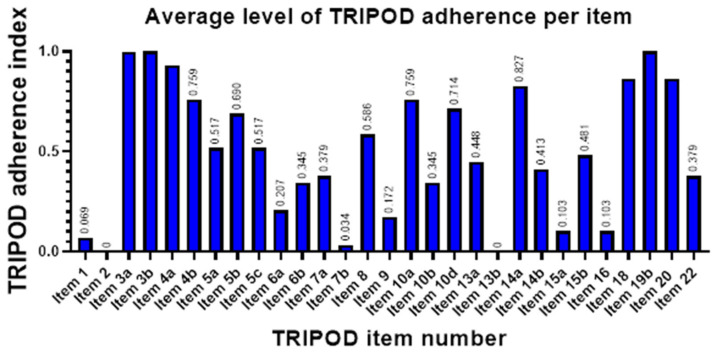
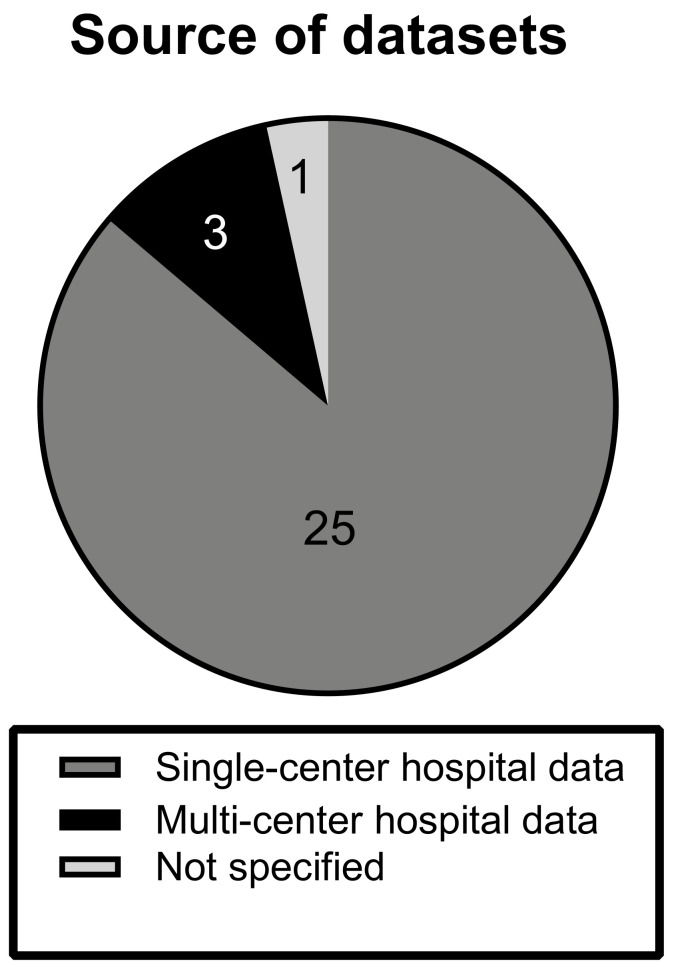
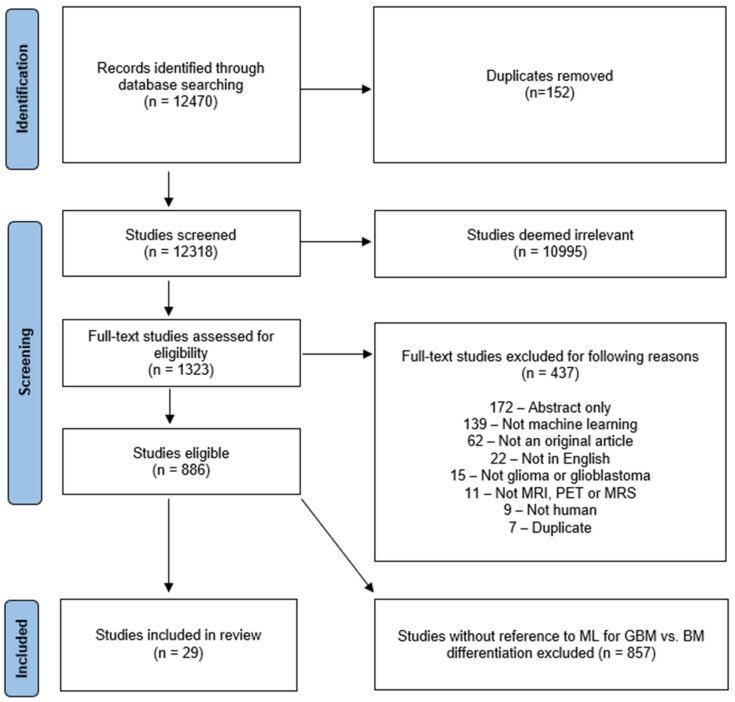
Glioma and brain metastasis can be difficult to distinguish on conventional magnetic resonance imaging (MRI) due to the similarity of imaging features in specific clinical circumstances. Multiple studies have investigated the use of machine learning (ML) models for non-invasive differentiation of glioma from brain metastasis. Many of the studies report promising classification results, however, to date, none have been implemented into clinical practice. After a screening of 12,470 studies, we included 29 eligible studies in our systematic review. From each study, we aggregated data on model design, development, and best classifiers, as well as quality of reporting according to the TRIPOD statement. In a subset of eligible studies, we conducted a meta-analysis of the reported AUC. It was found that data predominantly originated from single-center institutions (n = 25/29) and only two studies performed external validation. The median TRIPOD adherence was 0.48, indicating insufficient quality of reporting among surveyed studies. Our findings illustrate that despite promising classification results, reliable model assessment is limited by poor reporting of study design and lack of algorithm validation and generalizability. Therefore, adherence to quality guidelines and validation on outside datasets is critical for the clinical translation of ML for the differentiation of glioma and brain metastasis.

摘要

由于在特定临床情况下成像特征相似,胶质瘤和脑转移瘤在传统磁共振成像(MRI)上可能难以区分。多项研究探讨了使用机器学习(ML)模型对胶质瘤和脑转移瘤进行无创鉴别。许多研究报告了有前景的分类结果,然而,迄今为止,尚无研究应用于临床实践。在筛选了12470项研究后,我们在系统评价中纳入了29项符合条件的研究。我们从每项研究中汇总了关于模型设计、开发和最佳分类器的数据,以及根据TRIPOD声明的报告质量。在一部分符合条件的研究中,我们对报告的AUC进行了荟萃分析。结果发现,数据主要来自单中心机构(n = 25/29),只有两项研究进行了外部验证。TRIPOD依从性中位数为0.48,表明所调查研究的报告质量不足。我们的研究结果表明,尽管分类结果很有前景,但可靠的模型评估受到研究设计报告不佳以及缺乏算法验证和可推广性的限制。因此,遵守质量指南并在外部数据集上进行验证对于将ML用于胶质瘤和脑转移瘤鉴别的临床转化至关重要。
https://cdn.ncbi.nlm.nih.gov/pmc/blobs/8ffa/8946855/f8623e860abc/cancers-14-01369-g005.jpg
https://cdn.ncbi.nlm.nih.gov/pmc/blobs/8ffa/8946855/2ff24f9c1a8e/cancers-14-01369-g001.jpg
https://cdn.ncbi.nlm.nih.gov/pmc/blobs/8ffa/8946855/10a61819035b/cancers-14-01369-g002.jpg
https://cdn.ncbi.nlm.nih.gov/pmc/blobs/8ffa/8946855/ecd98b063439/cancers-14-01369-g003.jpg
https://cdn.ncbi.nlm.nih.gov/pmc/blobs/8ffa/8946855/185f95627962/cancers-14-01369-g004.jpg
https://cdn.ncbi.nlm.nih.gov/pmc/blobs/8ffa/8946855/f8623e860abc/cancers-14-01369-g005.jpg
https://cdn.ncbi.nlm.nih.gov/pmc/blobs/8ffa/8946855/2ff24f9c1a8e/cancers-14-01369-g001.jpg
https://cdn.ncbi.nlm.nih.gov/pmc/blobs/8ffa/8946855/10a61819035b/cancers-14-01369-g002.jpg
https://cdn.ncbi.nlm.nih.gov/pmc/blobs/8ffa/8946855/ecd98b063439/cancers-14-01369-g003.jpg
https://cdn.ncbi.nlm.nih.gov/pmc/blobs/8ffa/8946855/185f95627962/cancers-14-01369-g004.jpg
https://cdn.ncbi.nlm.nih.gov/pmc/blobs/8ffa/8946855/f8623e860abc/cancers-14-01369-g005.jpg

相似文献

1
Machine Learning Applications for Differentiation of Glioma from Brain Metastasis-A Systematic Review.用于区分胶质瘤与脑转移瘤的机器学习应用——系统综述
Cancers (Basel). 2022 Mar 8;14(6):1369. doi: 10.3390/cancers14061369.
2
Trends in Development of Novel Machine Learning Methods for the Identification of Gliomas in Datasets That Include Non-Glioma Images: A Systematic Review.在包含非胶质瘤图像的数据集中用于识别胶质瘤的新型机器学习方法的发展趋势:一项系统综述
Front Oncol. 2021 Dec 23;11:788819. doi: 10.3389/fonc.2021.788819. eCollection 2021.
3
Machine Learning in Differentiating Gliomas from Primary CNS Lymphomas: A Systematic Review, Reporting Quality, and Risk of Bias Assessment.机器学习在鉴别脑胶质瘤与原发性中枢神经系统淋巴瘤中的应用:系统综述、报告质量和偏倚风险评估。
AJNR Am J Neuroradiol. 2022 Apr;43(4):526-533. doi: 10.3174/ajnr.A7473. Epub 2022 Mar 31.
4
Machine Learning Models for Classifying High- and Low-Grade Gliomas: A Systematic Review and Quality of Reporting Analysis.用于区分高级别和低级别胶质瘤的机器学习模型:系统综述与报告质量分析
Front Oncol. 2022 Apr 22;12:856231. doi: 10.3389/fonc.2022.856231. eCollection 2022.
5
Machine learning applications to neuroimaging for glioma detection and classification: An artificial intelligence augmented systematic review.机器学习在神经影像学中用于胶质瘤检测和分类的应用:人工智能增强的系统评价。
J Clin Neurosci. 2021 Jul;89:177-198. doi: 10.1016/j.jocn.2021.04.043. Epub 2021 May 13.
6
Machine Learning for the Prediction of Molecular Markers in Glioma on Magnetic Resonance Imaging: A Systematic Review and Meta-Analysis.基于磁共振成像的机器学习预测脑胶质瘤分子标志物的系统评价和荟萃分析。
Neurosurgery. 2021 Jun 15;89(1):31-44. doi: 10.1093/neuros/nyab103.
7
The future of Cochrane Neonatal.考克兰新生儿协作网的未来。
Early Hum Dev. 2020 Nov;150:105191. doi: 10.1016/j.earlhumdev.2020.105191. Epub 2020 Sep 12.
8
Machine Learning Models to Forecast Outcomes of Pituitary Surgery: A Systematic Review in Quality of Reporting and Current Evidence.预测垂体手术结果的机器学习模型:报告质量与当前证据的系统评价
Brain Sci. 2023 Mar 15;13(3):495. doi: 10.3390/brainsci13030495.
9
Accuracy of Machine Learning Algorithms for the Classification of Molecular Features of Gliomas on MRI: A Systematic Literature Review and Meta-Analysis.用于基于MRI对胶质瘤分子特征进行分类的机器学习算法的准确性:一项系统文献综述和荟萃分析
Cancers (Basel). 2021 May 26;13(11):2606. doi: 10.3390/cancers13112606.
10
Machine learning imaging applications in the differentiation of true tumour progression from treatment-related effects in brain tumours: A systematic review and meta-analysis.机器学习成像在脑肿瘤中区分真性肿瘤进展与治疗相关效应的应用:系统评价和荟萃分析。
J Med Imaging Radiat Oncol. 2022 Sep;66(6):781-797. doi: 10.1111/1754-9485.13436. Epub 2022 May 22.

引用本文的文献

1
Diagnostic, Therapeutic, and Prognostic Applications of Artificial Intelligence (AI) in the Clinical Management of Brain Metastases (BMs).人工智能(AI)在脑转移瘤(BMs)临床管理中的诊断、治疗及预后应用
Brain Sci. 2025 Jul 8;15(7):730. doi: 10.3390/brainsci15070730.
2
Predictive modeling for metastasis in oncology: current methods and future directions.肿瘤学中转移的预测模型:当前方法与未来方向。
Ann Med Surg (Lond). 2025 May 21;87(6):3489-3508. doi: 10.1097/MS9.0000000000003279. eCollection 2025 Jun.
3
From pixels to prognosis: leveraging radiomics and machine learning to predict IDH1 genotype in gliomas.

本文引用的文献

1
FDA-regulated AI Algorithms: Trends, Strengths, and Gaps of Validation Studies.FDA 监管的人工智能算法:验证研究的趋势、优势和差距。
Acad Radiol. 2022 Apr;29(4):559-566. doi: 10.1016/j.acra.2021.09.002. Epub 2021 Dec 27.
2
What's Needed to Bridge the Gap Between US FDA Clearance and Real-world Use of AI Algorithms.弥合美国食品药品监督管理局(FDA)批准与人工智能算法实际应用之间差距所需的条件。
Acad Radiol. 2022 Apr;29(4):567-568. doi: 10.1016/j.acra.2021.10.007. Epub 2021 Nov 20.
3
Transfer Learning in Magnetic Resonance Brain Imaging: A Systematic Review.
从像素到预后:利用影像组学和机器学习预测胶质瘤中的异柠檬酸脱氢酶1(IDH1)基因型
Neurosurg Rev. 2025 Apr 29;48(1):396. doi: 10.1007/s10143-025-03515-z.
4
Magnetic resonance spectroscopy for enhanced multiparametric MRI characterization of [F]FET PET-negative gliomas.磁共振波谱用于增强[F]FET PET阴性胶质瘤的多参数MRI特征分析
EJNMMI Res. 2025 Apr 7;15(1):37. doi: 10.1186/s13550-025-01224-8.
5
Current state and promise of user-centered design to harness explainable AI in clinical decision-support systems for patients with CNS tumors.以用户为中心的设计在中枢神经系统肿瘤患者临床决策支持系统中利用可解释人工智能的现状与前景。
Front Radiol. 2025 Jan 13;4:1433457. doi: 10.3389/fradi.2024.1433457. eCollection 2024.
6
Autophagy in brain tumors: molecular mechanisms, challenges, and therapeutic opportunities.脑肿瘤中的自噬:分子机制、挑战与治疗机遇
J Transl Med. 2025 Jan 13;23(1):52. doi: 10.1186/s12967-024-06063-0.
7
Multidimensional Proteomic Landscape Reveals Distinct Activated Pathways Between Human Brain Tumors.多维蛋白质组图谱揭示人脑肿瘤之间不同的激活通路。
Adv Sci (Weinh). 2025 Feb;12(7):e2410142. doi: 10.1002/advs.202410142. Epub 2024 Dec 24.
8
Enhancing clinical decision-making: An externally validated machine learning model for predicting isocitrate dehydrogenase mutation in gliomas using radiomics from presurgical magnetic resonance imaging.增强临床决策:一种经过外部验证的机器学习模型,用于利用术前磁共振成像的影像组学预测胶质瘤中的异柠檬酸脱氢酶突变。
Neurooncol Adv. 2024 Oct 3;6(1):vdae157. doi: 10.1093/noajnl/vdae157. eCollection 2024 Jan-Dec.
9
Deep Learning for MRI Segmentation and Molecular Subtyping in Glioblastoma: Critical Aspects from an Emerging Field.胶质母细胞瘤中用于MRI分割和分子亚型分析的深度学习:新兴领域的关键方面
Biomedicines. 2024 Aug 16;12(8):1878. doi: 10.3390/biomedicines12081878.
10
Uses of artificial intelligence in glioma: A systematic review.人工智能在胶质瘤中的应用:一项系统综述。
Med Int (Lond). 2024 May 20;4(4):40. doi: 10.3892/mi.2024.164. eCollection 2024 Jul-Aug.
磁共振脑成像中的迁移学习:系统综述
J Imaging. 2021 Apr 1;7(4):66. doi: 10.3390/jimaging7040066.
4
Development of a Machine Learning Classifier Based on Radiomic Features Extracted From Post-Contrast 3D T1-Weighted MR Images to Distinguish Glioblastoma From Solitary Brain Metastasis.基于从增强后三维T1加权磁共振图像中提取的影像组学特征开发机器学习分类器以鉴别胶质母细胞瘤与孤立性脑转移瘤
Front Oncol. 2021 Jul 13;11:638262. doi: 10.3389/fonc.2021.638262. eCollection 2021.
5
Distinct tumor signatures using deep learning-based characterization of the peritumoral microenvironment in glioblastomas and brain metastases.基于深度学习的脑胶质瘤和脑转移瘤瘤周微环境特征分析,揭示肿瘤异质性特征。
Sci Rep. 2021 Jul 14;11(1):14469. doi: 10.1038/s41598-021-93804-6.
6
Protocol for development of a reporting guideline (TRIPOD-AI) and risk of bias tool (PROBAST-AI) for diagnostic and prognostic prediction model studies based on artificial intelligence.基于人工智能的诊断和预后预测模型研究报告指南(TRIPOD-AI)和偏倚风险工具(PROBAST-AI)制定方案。
BMJ Open. 2021 Jul 9;11(7):e048008. doi: 10.1136/bmjopen-2020-048008.
7
Reporting of prognostic clinical prediction models based on machine learning methods in oncology needs to be improved.基于机器学习方法的肿瘤预后临床预测模型报告需要改进。
J Clin Epidemiol. 2021 Oct;138:60-72. doi: 10.1016/j.jclinepi.2021.06.024. Epub 2021 Jun 29.
8
Handcrafted and Deep Learning-Based Radiomic Models Can Distinguish GBM from Brain Metastasis.基于手工制作和深度学习的放射组学模型可区分胶质母细胞瘤和脑转移瘤。
J Oncol. 2021 Jun 3;2021:5518717. doi: 10.1155/2021/5518717. eCollection 2021.
9
Machine learning based differentiation of glioblastoma from brain metastasis using MRI derived radiomics.基于机器学习的 MRI 放射组学鉴别脑胶质母细胞瘤与脑转移瘤。
Sci Rep. 2021 May 18;11(1):10478. doi: 10.1038/s41598-021-90032-w.
10
Checklist for Artificial Intelligence in Medical Imaging (CLAIM): A Guide for Authors and Reviewers.医学影像人工智能清单(CLAIM):作者和审稿人指南
Radiol Artif Intell. 2020 Mar 25;2(2):e200029. doi: 10.1148/ryai.2020200029. eCollection 2020 Mar.