Bao Jiayu, Tian Lei, Meng Yifan, Wu Binge, Wang Jingyi, He Jing, Shao Qiyan, Wang Chengshuo, Jie Ying, Zhang Luo
Beijing Institute of Ophthalmology, Beijing TongRen Eye Center, Beijing Key Laboratory of Ophthalmology and Visual Sciences, Beijing Tongren Hospital, Capital Medical University, Beijing, China.
Department of Otolaryngology Head and Neck Surgery, Beijing TongRen Hospital, Capital Medical University, Beijing, China.
Clin Transl Allergy. 2022 Mar;12(3):e12139. doi: 10.1002/clt2.12139.
Although immunoglobulin E (IgE) increases significantly in tears and serum during seasonal allergic conjunctivitis (SAC), it is unclear whether tear total IgE can reflect the severity and prognosis of SAC more accurately than serum total IgE. We aimed to investigate the usefulness of measuring the total IgE in tears to evaluate the severity and determine the treatment of SAC.
This prospective, nonrandomized study involved 55 patients with SAC and 10 age- and sex-matched healthy controls. Serum and tears were collected before and after treatment to analyze the total IgE. SAC patients received the same topical anti-allergy treatment and were followed-up every 2 weeks for 1 month. The relationship of tear and serum total IgE concentrations with pollen concentrations and symptom severity before and after treatment was assessed.
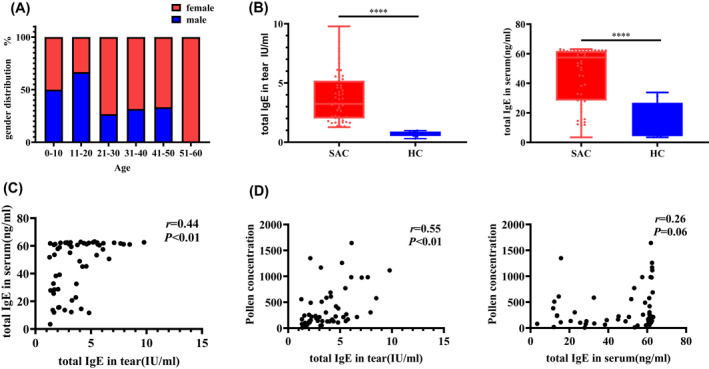
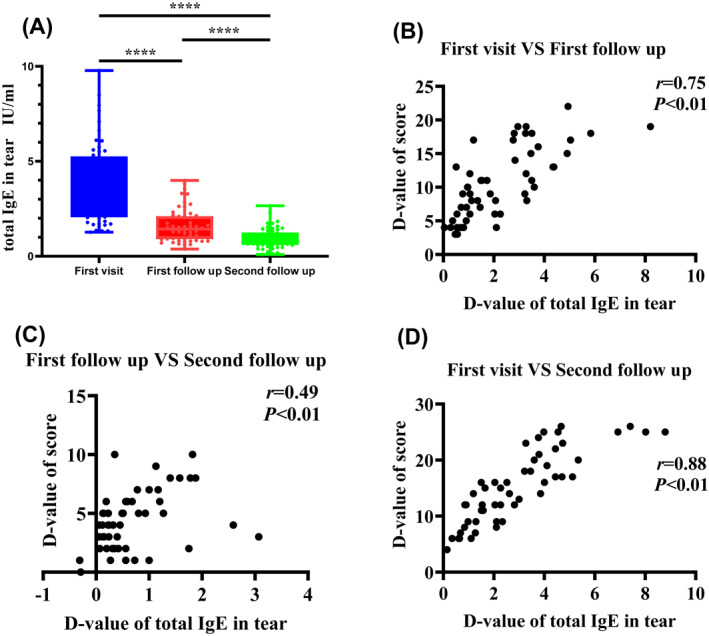
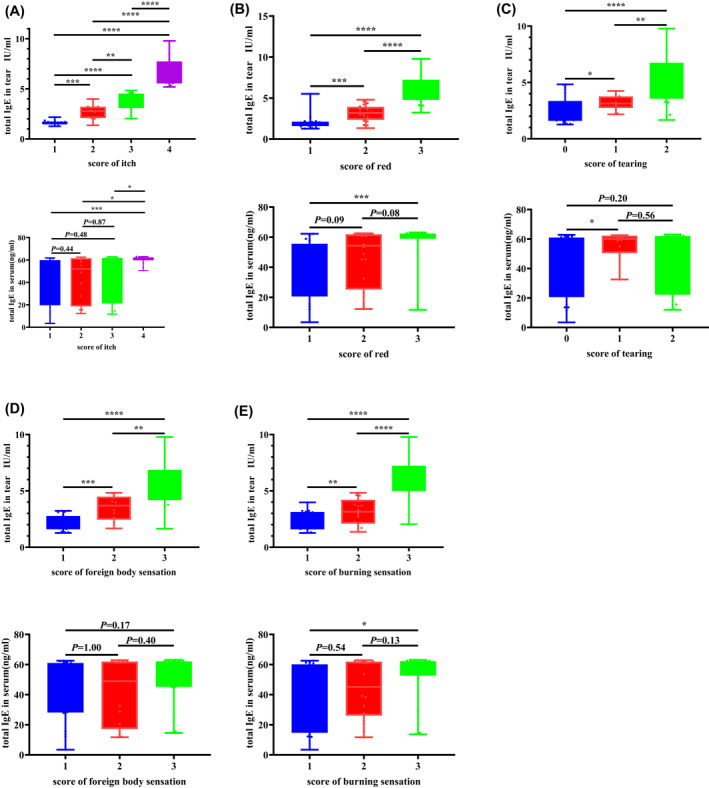
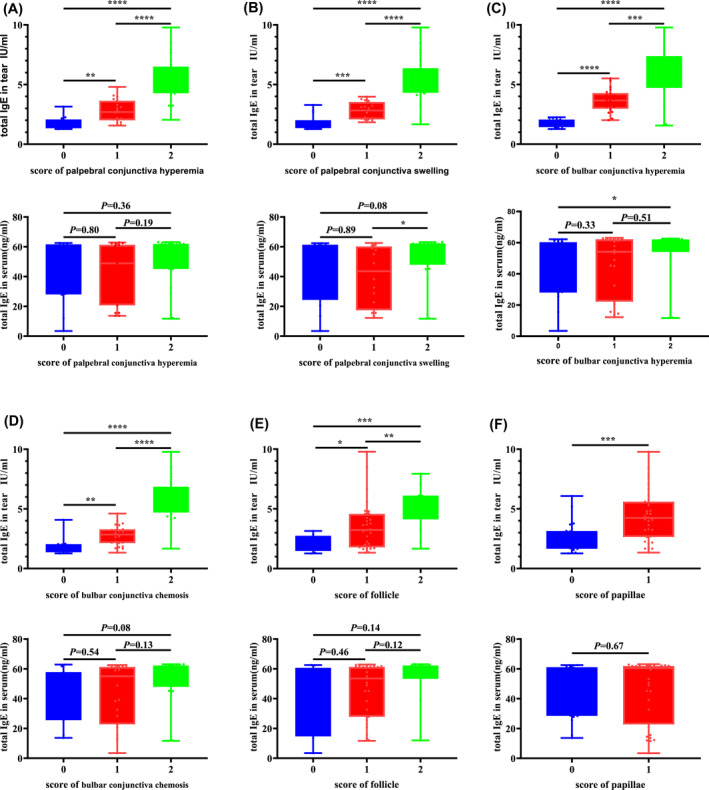
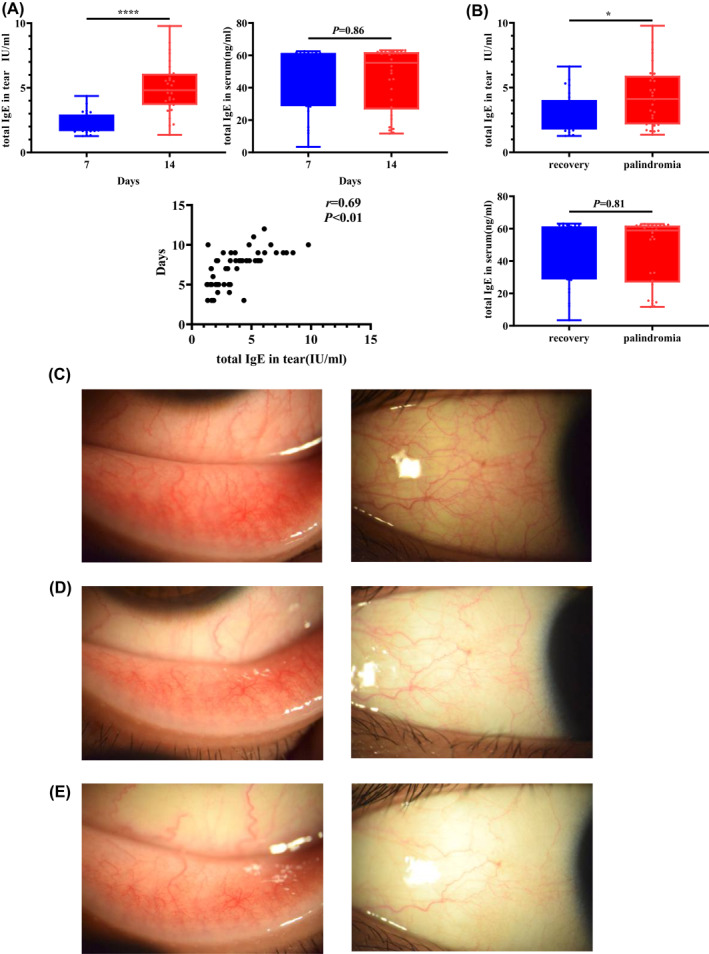
The total IgE concentration in tears was higher in SAC patients than in healthy participants with significant correlations between tear and serum total IgE concentrations. The total IgE concentration in tears, but not in serum, correlated with the pollen concentration and severity of ocular symptoms and reactions in SAC. Treatment-associated improvements in symptoms and reactions in SAC correlated with decreased concentrations of the tear total IgE. Patients with disease recurrence following treatment demonstrated significantly higher tear total IgE concentrations than patients with no recurrence.
The total tear IgE level can indicate the severity and predict the prognosis of SAC more accurately than the serum total IgE.
尽管在季节性变应性结膜炎(SAC)期间,泪液和血清中的免疫球蛋白E(IgE)显著增加,但尚不清楚泪液总IgE是否比血清总IgE更能准确反映SAC的严重程度和预后。我们旨在研究检测泪液总IgE对评估SAC严重程度和确定治疗方案的实用性。
这项前瞻性、非随机研究纳入了55例SAC患者和10名年龄及性别匹配的健康对照者。在治疗前后采集血清和泪液以分析总IgE。SAC患者接受相同的局部抗过敏治疗,并每2周随访1个月,为期1个月。评估治疗前后泪液和血清总IgE浓度与花粉浓度及症状严重程度之间的关系。
SAC患者泪液中的总IgE浓度高于健康参与者,泪液和血清总IgE浓度之间存在显著相关性。SAC患者泪液中的总IgE浓度与花粉浓度以及眼部症状和反应的严重程度相关,而血清中的总IgE浓度则无此相关性。SAC患者治疗相关的症状和反应改善与泪液总IgE浓度降低相关。治疗后疾病复发的患者泪液总IgE浓度显著高于未复发的患者。
泪液总IgE水平比血清总IgE更能准确指示SAC的严重程度并预测其预后。