Herst Patries M, Carson Georgia M, Eccles David A, Berridge Michael V
Department of Cell Biology, Malaghan Institute of Medical Research, Wellington, New Zealand.
Department of Radiation Therapy, University of Otago, Wellington, New Zealand.
Front Oncol. 2022 Mar 17;12:857686. doi: 10.3389/fonc.2022.857686. eCollection 2022.
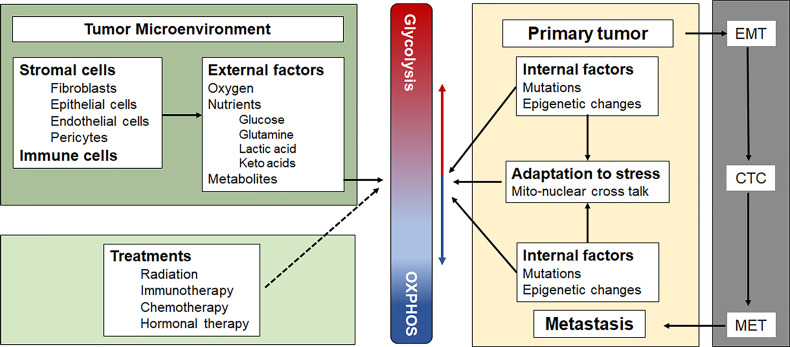
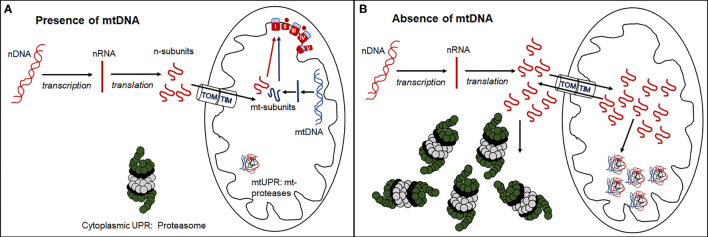
The ability of cancer cells to adjust their metabolism in response to environmental changes is a well-recognized hallmark of cancer. Diverse cancer and non-cancer cells within tumors compete for metabolic resources. Metabolic demands change frequently during tumor initiation, progression and metastasis, challenging our quest to better understand tumor biology and develop novel therapeutics. Vascularization, physical constraints, immune responses and genetic instability promote tumor evolution resulting in immune evasion, opportunities to breach basement membrane barriers and spread through the circulation and lymphatics. In addition, the unfolded protein response linked to the ubiquitin proteasome system is a key player in addressing stoichiometric imbalances between nuclear and mitochondrially-encoded protein subunits of respiratory complexes, and nuclear-encoded mitochondrial ribosomal protein subunits. While progressive genetic changes, some of which affect metabolic adaptability, contribute to tumorigenesis and metastasis through clonal expansion, epigenetic changes are also important and more dynamic in nature. Understanding the role of stromal and immune cells in the tumor microenvironment in remodeling cancer cell energy metabolism has become an increasingly important area of research. In this perspective, we discuss the adaptations made by cancer cells to balance mitochondrial and glycolytic energy metabolism. We discuss how hypoxia and nutrient limitations affect reductive and oxidative stress through changes in mitochondrial electron transport activity. We propose that integrated responses to cellular stress in cancer cells are central to metabolic flexibility in general and bioenergetic adaptability in particular and are paramount in tumor progression and metastasis.
癌细胞响应环境变化调整其新陈代谢的能力是癌症一个公认的标志。肿瘤内不同的癌细胞和非癌细胞会争夺代谢资源。在肿瘤起始、进展和转移过程中,代谢需求频繁变化,这对我们更好地理解肿瘤生物学和开发新型疗法的探索构成了挑战。血管生成、物理限制、免疫反应和基因不稳定促进肿瘤进化,导致免疫逃逸、突破基底膜屏障并通过循环和淋巴系统扩散的机会。此外,与泛素蛋白酶体系统相关的未折叠蛋白反应是解决呼吸复合物的核编码和线粒体编码蛋白亚基以及核编码线粒体核糖体蛋白亚基之间化学计量失衡的关键因素。虽然渐进性基因变化(其中一些影响代谢适应性)通过克隆扩增促进肿瘤发生和转移,但表观遗传变化在本质上也很重要且更具动态性。了解肿瘤微环境中的基质细胞和免疫细胞在重塑癌细胞能量代谢中的作用已成为一个越来越重要的研究领域。从这个角度出发,我们讨论癌细胞为平衡线粒体和糖酵解能量代谢所做的适应性改变。我们讨论缺氧和营养限制如何通过线粒体电子传递活性的变化影响还原应激和氧化应激。我们提出,癌细胞对细胞应激的综合反应总体上是代谢灵活性的核心,特别是生物能量适应性的核心,并且在肿瘤进展和转移中至关重要。