School of Public Health, Guangdong Pharmaceutical University, Guangzhou 510310, China.
Molecules. 2022 Mar 31;27(7):2288. doi: 10.3390/molecules27072288.
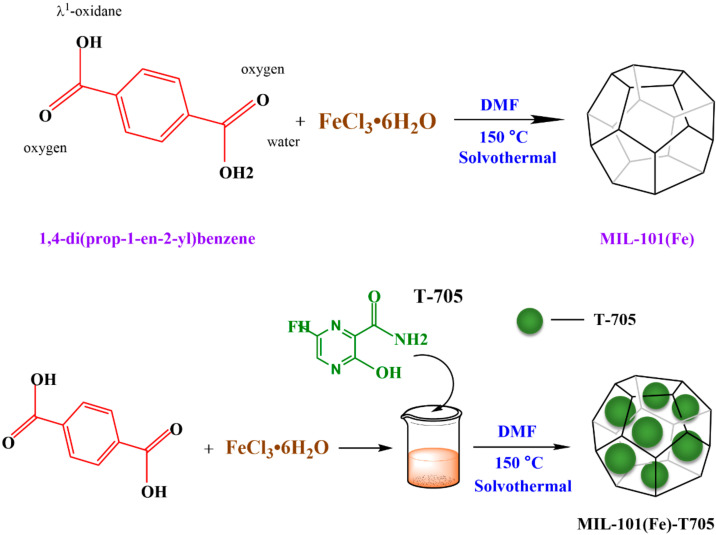
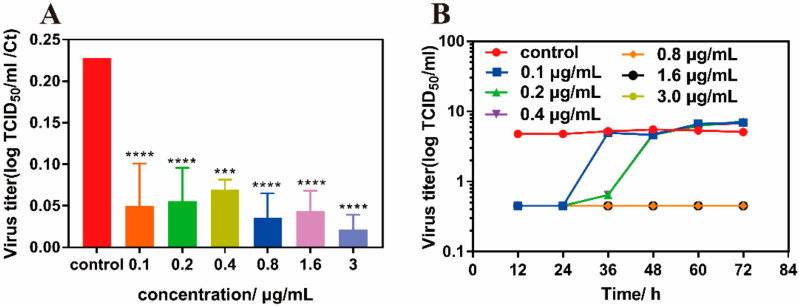
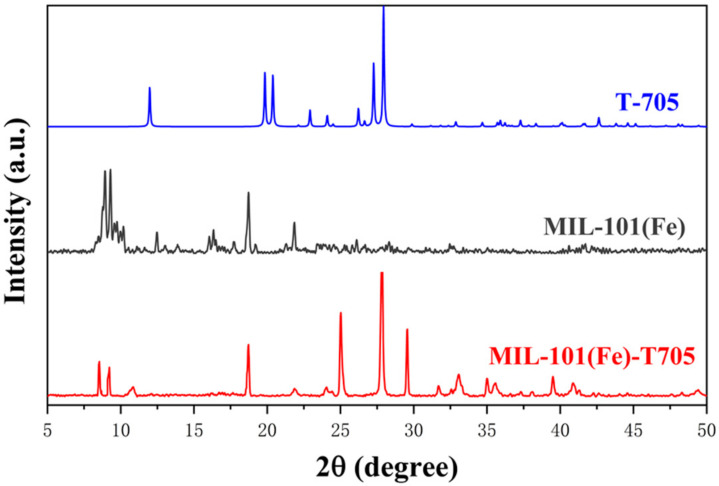
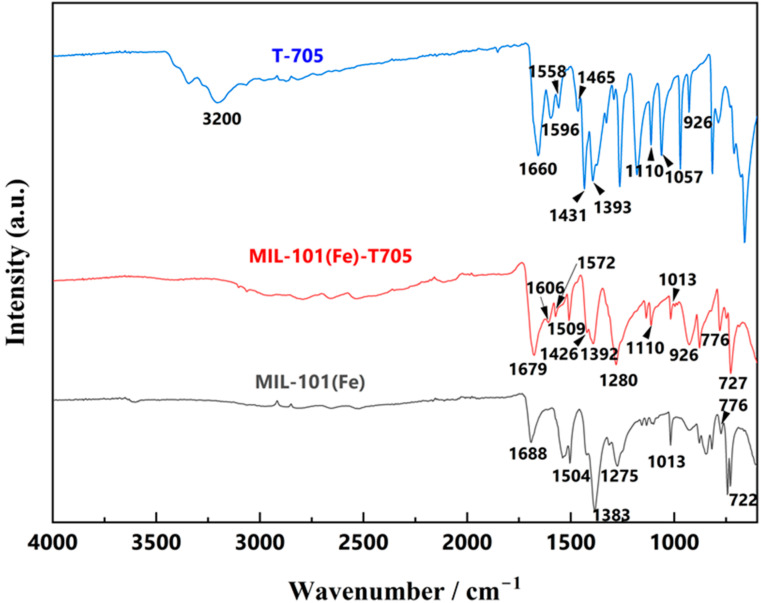
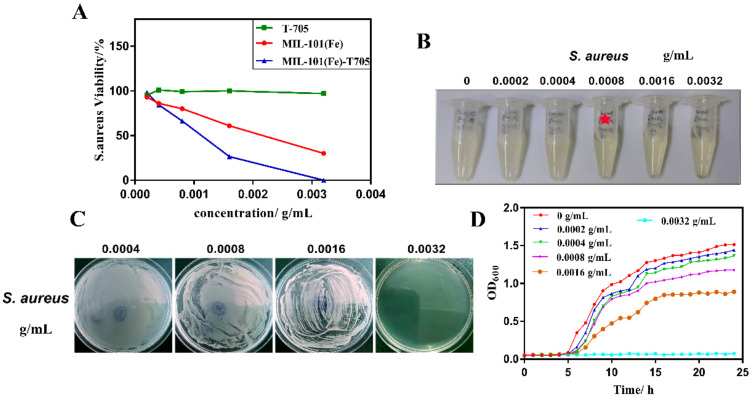
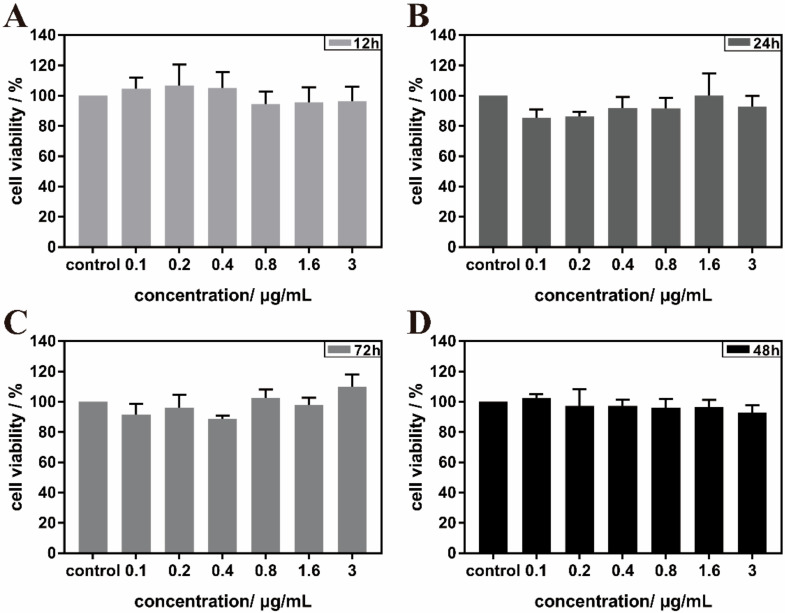
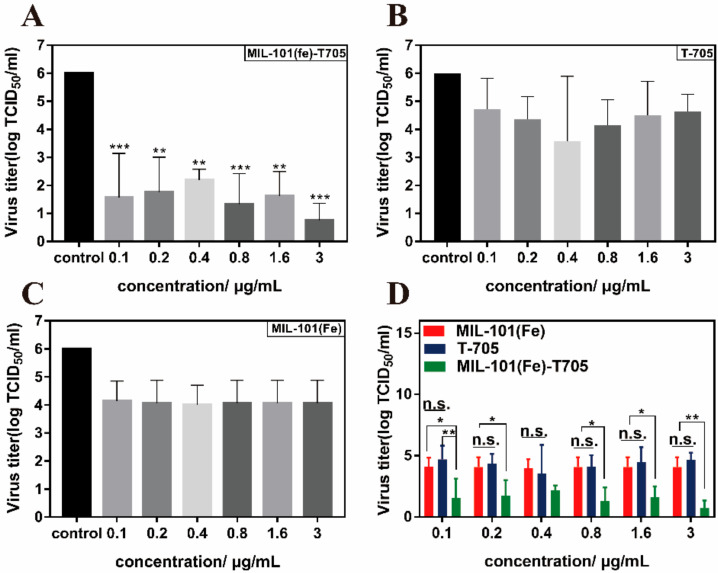
Nanomaterial technology has attracted much attention because of its antibacterial and drug delivery properties, among other applications. Metal-organic frameworks (MOFs) have advantages, such as their pore structure, large specific surface area, open metal sites, and chemical stability, over other nanomaterials, enabling better drug encapsulation and adsorption. In two examples, we used the common pathogenic bacterium and highly infectious influenza A virus. A novel complex MIL-101(Fe)-T705 was formed by synthesizing MOF material MIL-101(Fe) with the drug favipiravir (T-705), and a hot solvent synthesis method was applied to investigate the in vitro antibacterial and antiviral activities. The results showed that MIL-101(Fe)-T705 combined the advantages of nanomaterials and drugs and could inhibit the growth of at a concentration of 0.0032 g/mL. Regarding the inhibition of influenza A virus, MIL-101(Fe)-T705 showed good biosafety at 12, 24, 48, and 72 h in addition to a good antiviral effect at concentrations of 0.1, 0.2, 0.4, 0.8, 1.6, and 3 μg/mL, which were higher than MIL-101(Fe) and T-705.
纳米材料技术因其抗菌和药物输送等特性而备受关注。金属有机骨架(MOFs)在孔结构、大比表面积、开放金属位和化学稳定性等方面优于其他纳米材料,能够更好地包裹和吸附药物。在两个实例中,我们使用了常见的致病菌 和高度传染性的流感 A 病毒。通过合成 MOF 材料 MIL-101(Fe)与药物法匹拉韦(T-705),形成了一种新型的复合物 MIL-101(Fe)-T705,应用热溶剂合成法研究了其体外抗菌和抗病毒活性。结果表明,MIL-101(Fe)-T705 结合了纳米材料和药物的优势,能够在 0.0032 g/mL 的浓度下抑制 的生长。关于对流感 A 病毒的抑制作用,MIL-101(Fe)-T705 在 12、24、48 和 72 h 时表现出良好的生物安全性,在 0.1、0.2、0.4、0.8、1.6 和 3 μg/mL 的浓度下表现出良好的抗病毒效果,均高于 MIL-101(Fe)和 T-705。